
Dynamic diversification: CalSTRS’ One Fund approach navigates uncertainty

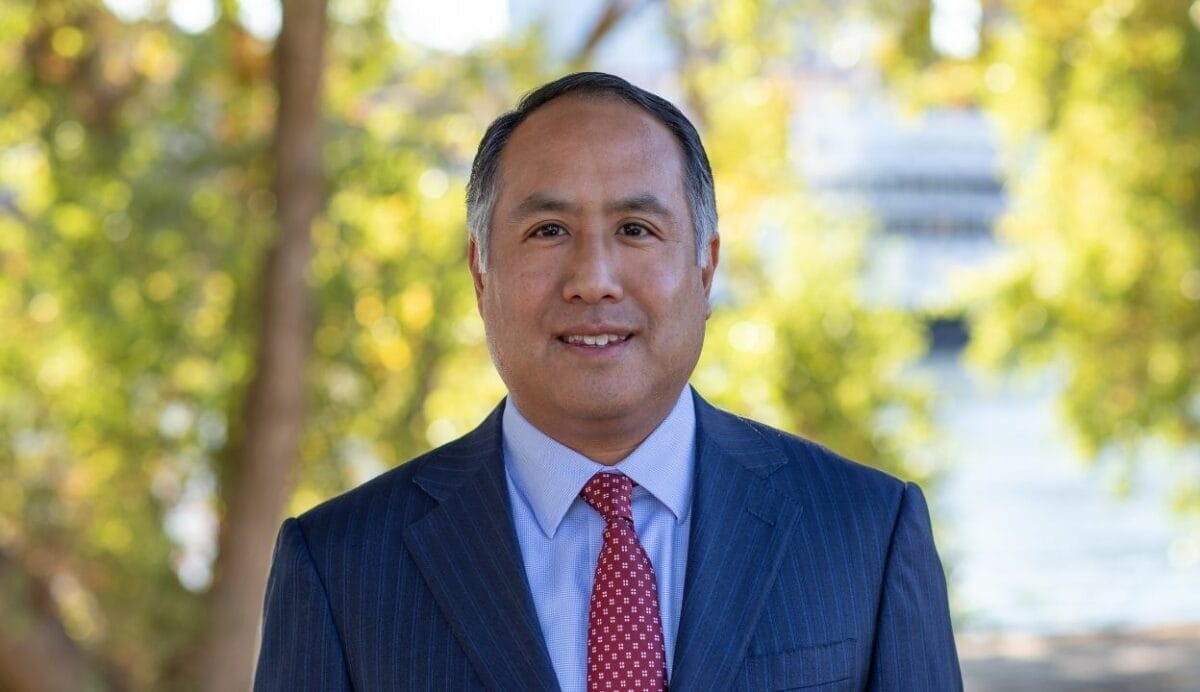
Scott Chan is shocked the market hasn’t reacted more to the crisis emulating from the US-Israel-Iran conflict. But the CalSTRS CIO is confident its one fund approach allows it to position dynamically and ensure diversification no matter what is presented.

So warned CalSTRS’ CIO Scott Chan speaking at the $392 billion pension fund’s March investment committee meeting, explaining to trustees that many unknowns lie below that will impact global trade flows, the equity bull market, and in the shape of currents like AI and America’s burgeoning housing crisis, young people’s ability to tap into the American dream.

The impact of the conflict in Iran is also gathering force below the surface of an apparently benign market.

Chan said he “was shocked” that the market hasn’t reacted more to the crisis – notwithstanding the sharp rise in oil prices. He attributed the absence of a market reaction to enduring uncertainty of how events will play out.

“The market is pricing efficiently what it knows,” he said, adding: “Right now with the uncertainty, I don’t care who you talk to, if they tell you they know what’s going to happen, you should probably walk the other way.”

In the first few weeks of the conflict, CalSTRS strategy has involved rebalancing from its slight overweight to growth assets, ensuring “ample” liquidity and staying mindful of emerging opportunities. For example, the energy crisis potentially opens the door to investment opportunities in markets that are net importers of oil through the Strait of Hormuz like India, Japan, China and South Korea, where sharp falls in the KOSPI represented a potential buying opportunity.

Sponsored Content

Away from geopolitics, Chan noted other currents building like trends in fiscal policy intervention and the formation of new trade alliances that are rewriting supply chains and redirecting how capital flows. As governments grapple to manage huge deficits, he flagged the risk and opportunity in interest rate volatility and the importance of diversification, discipline and staying dynamic.

Reflecting on market impacts closer to home, Stephen McCourt, managing principle and co-CEO, Meketa, argued that new Fed chair Keven Warsh won’t necessarily push for lower rates. “If Trump’s interest is to get the Fed to lower interest rates irrespective of data, Warsh is an unusual selection.” Coupled with inflationary concerns, he said it explains why markets have priced in fewer rate cuts for 2026.

Chan said the CalSTRS’ One Fund approach, its version of a total portfolio approach, will support the investor’s demand to dynamically allocate and diversify to maximise returns in the current complex environment. It allows the team to invest tactically to position the portfolio to benefit from volatility and has required putting in place cultural and organisational structures, notably a total fund team that maps a common language of risk, and how portfolio risk is shifting.

Recent strategies include increasing capital to asset backed private credit that is less cyclical, more stable and adds diversification with a similar return to other forms of private credit. Elsewhere, strategies include rebalancing the portfolio and pursuing opportunities when the markets are discounted.

CalSTRS generated an unofficial 13 per cent return over the last calendar year, well above the 7 per cent actuarial goal, with the value of the portfolio increasing by $42.5 billion, net of fees, contributions and benefits.

The global equity portfolio rose 22.8 per cent, led by strong non-U.S. equity market performance and interest rates fell, driving strong performance in fixed income markets.

The $58.8 billion private equity portfolio yielded a positive return over the past six months and outperformed the Custom State Street Index, which is used to evaluate performance against other institutional investors.  Staff have increased co-investments, which now represent 24.6 per cent of the private equity allocation and continue to work toward the goal of 33 per cent co-investments.


Leave a Comment

The ‘space economy’ is a legal and literal vacuum for investors

The ‘space economy’ is a legal and literal vacuum for investors

The looming SpaceX IPO has put the spotlight firmly on the so-called ‘space economy’, but asset owners have been urged to exercise caution about investing in a sector that still resembles the wild west, with no legal or governance framework to protect capital. That’s not to say money will not be made, but it might not be in the areas investors first expect.

Sort content by

URS bets on nuclear to power AI and lower emissions

Next-generation nuclear energy, and the money pouring into it, will truly change the world, according to CIO of Utah Retirement System John Skjervem. It’s a lonely position as the CIO of a public pension fund but one Utah is embracing as it builds out early-stage investments in nuclear energy as part of its alternative energy portfolio. He speaks to Sarah Rundell in an exclusive interview about how investing in transformational energy technologies can be part of prudent investment management.

Managing volatility and inflation: Constant rebalancing shores up UK’s lifeboat fund

A keen focus on rebalancing, and best in class systems, allows the UK’s £31.2 billion Pension Protection Fund to effectively implement a dynamic hedging strategy for one of the UK's biggest LDI portfolios. Sarah Rundell reports.

Velliv reset: More Danish funds lean into low cost DC model

In Denmark’s fiercely competitive commercial pension industry, Velliv was quick to take action with a root-and-branch overhaul of its pension provision when it experienced a drop in returns in the first half of 2024. It sacked its active equity managers, scaling up internal active strategies and low-cost, index-based investments instead, and stopped allocating to its $4.3 billion alternatives allocation. Thor Schultz Christensen, deputy chief investment officer at Velliv, unpacks the change.

Ohio sounds warning bells on PE liquidity logjam

Farouki Majeed, chief investment officer of the $23 billion Ohio School Employees Retirement System, has highlighted worrying signs in private equity that resulted from a backlog of exits, including industry murmurs that some GPs are having to borrow money to operate their business because LP fees are drying up. In an interview with Top1000funds.com, Majeed unpacks why its 12 per cent PE allocation is shielded from the rout.

Temasek likely to miss 2030 climate target dragged by aviation, energy investments

Temasek chief executive Dilhan Pillay says the sovereign investor is likely to miss its 2030 interim climate target, as exposures to the aviation and power generation sectors are crimping the investor’s ability to reduce portfolio target emissions. But the $339 billion fund is sticking to its net zero by 2050 goal, stressing the slower decarbonisation pace "reflects the realities of the broader global economy."

Funds SA cuts active risk as CIO puts stable beta first

Australia’s $36 billion Funds SA has slashed tracking error in its equities book and is reorienting its philosophy around stable beta, as chief investment officer Con Michalakis argues the role of alpha in a multi-asset portfolio needs a fundamental rethink.

Previous



