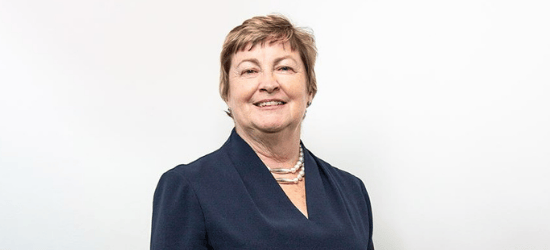

DEI and ESG in manager ratings: Clarke’s legacy

Mercer will incorporate DEI considerations into its manager research the same way it pioneered the incorporation of ESG factors in its manager ratings process back in 2012. The integration of DEI is a parting gift from long-term global head of investment research, Deb Clarke, who retired yesterday. Amanda White spoke to her about her legacy and the investment industry’s unfinished business.

For nearly 10 years to get a high ESG rating from Mercer, fund managers have had to demonstrate ESG considerations across the generation of ideas, construction of portfolios, implementation of active ownership and a firm-wide commitment to ESG.

Now Deb Clarke, one of the most senior women in the global investment industry and a trailblazer in manager research, says the consultant will give more emphasis to DEI issues in its manager assessments.

“We want to integrate the DEI data. If we are going to give our highest conviction then DEI will need to be evident at the asset manager,” she says.

Clarke, who says quotas just encourage portfolio managers to consider diversity as an HR problem, says Mercer is tackling the issue by focusing on data transparency.

“We will be more intentional. Diverse teams make better decisions and so deliver better returns for clients;  if you don’t have a diverse team, we will be less likely to have high conviction in the strategy. And it must be genuinely diverse and not just ‘bringing along a female to the finals’,” she says, quoting a fund manager who sought her counsel on diversity. (Her response was “don’t bother coming to the finals”.)

Sponsored Content

The focus of the data will not be on a certain point in time, but what the manager is doing about the pipeline of talent to increase diversity of thought.

For many years Clarke has been advocating ESG and DEI issues and after her retirement will continue to campaign for change.

“While I have been in the industry there has been a shift away from a star fund manager towards the team. Recent events have also shown that people are more comfortable if there is a team effort and oversight. People want to feel their money is secure, and they are dealing with people with integrity.”

Similarly, she’s observed the evolution of ESG from nascent beginnings to universal claims.

“When Jane [Ambachtsheer] and I first started looking at ESG, many PMs didn’t even know what ESG stood for. We’d ask them if they incorporated ESG into their process and they’d say, ‘absolutely not’. They didn’t want to be associated with it,” she says. “In the last three years PMs are now saying ‘of course we do’. It’s totally reversed.”

Clarke’s hope is that in five years’ time there is no conversation around ESG because it is just embedded into everything investors do.

But between then and now there is a lot of work to do, like other consultants Clarke believes many investors have made a commitment to net zero without any real idea on how to get there.

“If you just sell the companies that you think will do badly it’s like throwing your rubbish over your neighbour’s wall,” she says. “The only way to solve this is through industry cooperation.”

Clarke retired this week after 16 years as global head of investment research leading more than 125 manager research specialists covering hedge funds, fixed income and equities.

“One of the things that strikes me about what has changed in that time is that information is now so freely available. When I started there was still a prize around people getting really good information, now there is a deluge of information. The important thing is not the information but the way you use it,” she says. “The skill set of managers has changed in that time and will continue to change. There is a synthesis of information and having someone who can step back and join the dots is a skill.”

“Many investors have made a commitment to net zero without any real idea on how to get there.”

And while there has been some evolution, her reflection on the industry is one that is very slow to innovate, with a difficulty in identifying any real innovation.

“The industry hasn’t been very good at innovation really. It’s created some new asset classes like LDI and secured finance to meet client needs, and there has been a move from indexing to ‘solutions’ but I’m not sure it’s really innovation. Even something like AI is not really innovative,” she says.

Clarke believes the industry is at risk of disruption and calls for the industry to be inventive.

Fees are an area that are ripe for disruption, and under Clarke’s guidance Mercer has presented some radical ideas for a fee structure revolution including fixed amounts, loyalty fees, share of alpha and cost of capital.

“We were trying to solve for a different fee structure; managers are using the clients’ capital so they should give some of the return upfront. There were some challenges with this around how managers would need more cash on their balance sheet, but the principle is right. You don’t know in advance which managers will do well or badly and there is no alignment of interest. It’s skewed to when the manager does well, and it feels like someone could disrupt that.”

Clarke points to the last 15 months as a case study for the need to create alignment of interest between the industry and the people whose money they are managing.

“The industry has done really well over the past year, while in many other industries people have been furloughed or have lost jobs. We don’t want to see headlines of our industry getting the biggest bonuses ever. Does that feel right? At times I worry the industry can appear tone deaf.”

Clarke does however think there is a sea change in the industry, moving back to focusing on the end client.

“It’s not about the portfolio managers but about creating genuine value for the police, teachers and fireman whose money they are managing. For too long the industry was focused on the PM.”

“Don’t take too many meetings with managers, don’t waste time on things that don’t fit your values and beliefs.”

Clarke leaves Mercer’s global investment research role to Jo Holden, and while genuine retirement beckons, she has taken a non-executive director role with Blackrock EMEA.

“We have a great team and a good inclusive culture where people can progress. We have taken our research to the next level and had good results with that. So that is a good legacy to leave.”

After a lifetime researching managers, Clarke has some parting advice to asset owners regarding their asset manager partners, centred around values and beliefs.

“Really understand what it is you want from your asset manager and hold them to account on that. Do you want them to act like an owner on your behalf? What are they doing that aligns with your values and is not just them managing your money in a silo? Don’t take too many meetings with managers, don’t waste time on things that don’t fit your values and beliefs. Partner with the people that culturally fit with you,” she says. “Use tech to your advantage as best you can, and definitely take the long-term perspective, there could be something creative in the fees that way.”


Leave a Comment

Finland’s Elo: Larger equity allocations promise new media scrutiny

Finland’s Elo: Larger equity allocations promise new media scrutiny

As Finland's pension funds prepare to increase their equity allocations to unprecedented levels compared to global peers, they must also navigate a new and unfamiliar risk. Elo's chief investment officer Jonna Ryhänen explains the fund's investment approach going forward and how it will manage stakeholder and media scrutiny as they react to swinging volatility and returns.

Sort content by

Dutch DC reform: Eyes on the bond markets as funds step up risk

The Dutch pension sector's switch to a defined contribution system will have big consequences for Europe’s bond market, as funds push up the risk curve with their investment strategies. It comes at a time when European governments face record funding needs.

CPP Investments on how AI redefines core investing roles and processes

CPP Investments’ trials show AI agents can handle key investment tasks end-to-end. In an interview, chief operating officer Jon Webster says tight governance, and the right human oversight, is the difference between breakthroughs and mistakes.

Distinct LP roles drive scale in impact investing market

A new report found large allocators favour established managers for impact mandates due to their track record, while foundations and insurers play a vital role in supporting early-stage managers that need time to develop an institutional grade offering.

In-house investment and alternatives: How Germany’s WPV sets itself apart

Germany's WPV stands out amongst peers for its in-house investment management and the fact that half of its €6 billion ($6.9 billion) portfolio is invested in alternatives. Managing director Sascha Pinger explains how these characters give the fund an edge in Germany's competitive environment for industry pension funds.

Thinking Ahead Institute co-founder exits amid deeper integration with WTW

Tim Hodgson, co-founder of WTW’s Thinking Ahead Institute, has left the prolific research network as it seeks closer ties with the broader consultancy. The network's head Marisa Hall rejected the suggestion of any fundamental restructuring but said TAI needs more resources as it takes on more TPA projects.

Proxy voting: Trump tightens the screws, but sole reliance on proxies rare

Institutional investors have played down the impact that President Trump's executive order to limit the power of proxy advisors will have on their investment processes, with pension funds suggesting proxy inputs only form a part of their voting decisions. However, the development feeds into an ongoing crimping of investor power.

Previous




