
Bridgewater: The complexity of assessing corporate decarbonization

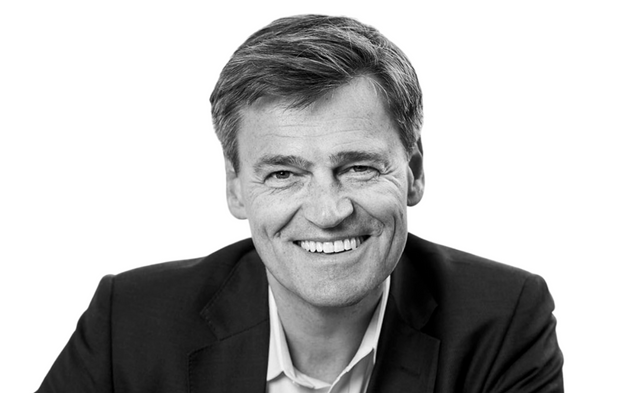
Assessing the credibility of carbon transition targets is multi-dimensional and complex. Investors should be wary of pitfalls such as being “too ambitious on [carbon] metrics” in their portfolios to the detriment of helping to change the real world by engaging with high emitters, said Carsten Stendevad, the co-chief investment officer for sustainability at Bridgewater Associates.

“Too much focus on your own portfolio and not enough focus on the real world in terms of your goal setting is very dangerous,” said Stendevad, in a discussion about investors’ role in the transition to a low carbon economy at Conexus Financial’s Sustainability in Practice Forum at Harvard University.

Industries such as metals and mining are unsustainable in their current practices and critical to emissions reduction as they produce the zinc and copper that are needed in solar panels and electric vehicles, he said, in conversation with Amanda White, director of institutional content at Conexus Financial.

Investors need to look at the impact and potential future impact of the carbon transition on individual companies or countries, not just to figure out the potential risk to their portfolios but also with the aim of proactively deploying capital in a way that is financing the transition, Stendevad said.

“It’s critical to be able to understand at the security level, which company is, so to speak, a part of the solution and which companies are part of the problem.”

Stendevad presented statistics showing the most-carbon-intensive 30 per cent of global market capitalisation represents 90 per cent of corporate emissions and 60 per cent of all emissions. The 20 most emitting companies represent around 20 per cent of global corporate emissions, he said.

Sponsored Content

Pinpointing these pain points is relevant because these industries are susceptible to policy shocks and direct environmental shocks. They are also the companies that will need the most financing to change.

“They’re also the ones that need most of the financing, they’re the ones that need to change the most,” Stendevad said. “They really are at the centre of the transition story.”

Problematically, when looking at the science-based targets that companies have announced, total emissions aren’t moving much in his projections because most of the companies with ambitious targets tend to be in industries outside of those mentioned above.

“It’s wonderful if a pharma company reaches net zero…but it’s not the most critical thing for the world in terms of reaching net zero,” Stendevad said.

500 top emitters

Most critical, is action from the top 500 emitters, “who by-and-large don’t really have concrete plans,” Stendevad said.

Investors can look at three types of companies that are part of the solution, which he labelled broadly as leaders, enablers and improvers.

‘Leaders’ are not part of the problem, and may have either been “born emissions light” or have made a successful transition. ‘Enablers’ are companies that are critical for other companies making the transition, such as green technology companies and others providing solutions to aid in the transition.

But it is the ‘improvers’ that Bridgewater is particularly focussed on, as they are entities that currently are not sustainable. A key question is whether they are on a forward-looking path to becoming sustainable. Many of the companies in this category will not actually turn out to be improvers, he said.

“This group of companies is very tricky because…you can’t just sit back and assume that everyone is going to figure it out,” Stendevad said.

The challenge for asset owners is credibly identifying those that will turn out to be improvers. Investors also must deal with the potential impact to their own image and carbon metrics by getting involved with these companies which “don’t look good today.”

“So it requires you to lean in to companies that are unsustainable today,” Stendevad said. “It may even hurt your portfolio metrics, carbon metrics and others, but if you care about real-world outcomes, they’re the most important ones for the transition.”

This leads to the pitfall of “being almost too ambitious on metrics, like in my portfolio I want to have a perfect emissions metric by next year.”

An ongoing research effort by Bridgewater over the last five years has involved building a systemic sustainability assessment at the company level. It looks at where companies are now and where they will probably be in the future.

Assessing the credibility of improvement plans is critical. Is there a proven way that this company can reduce its emissions?

“If there is a proven technical way of doing it, but it just hasn’t been done yet, that of course makes a plan more credible,” Stendevad said. “If it’s effectively an unproven technology that we hope will come in 2040 and we will wait until it happens, that makes a plan less credible.”

Credibility

Other questions to ask when assessing credibility include looking at how economic is that abatement plan, and how specific are the targets.

It is also important to look at whether it is reflected in the corporate strategy. “When you actually hear CEOs talk to investors, is this front and centre of what the company is actually doing and talking to markets about?”

Additionally, is it reflected in how the companies are spending their money? Is it aligned with the company’s financial strategy?

Assessing the auto sector, for example, is relatively easy as “it’s pretty clear what needs to get done.” Electric vehicles technology is already proven, and making this transition is realistic, he said.

Conversely, metals and mining is “a much more multi-dimensional and complex industry to assess,” because its products are critical for electric vehicles, solar panels and other technologies that are part of the solution, but its current practices are unsustainable.

An ongoing challenge includes dealing with the inherent ambiguity and imprecision of forward-looking assessments, he said.

Some companies may be doing all they can to transition and may not succeed, while others “will just legitimately say we just don’t know how we’re going to transition.”

“We feel we have enough [information] to start directing capital in this manner. We’re trying to be very humble but [we have] enough to make the relative assessments of who’s on a good track and who’s not.”

Leave a Comment

Finland’s Elo: Larger equity allocations promise new media scrutiny

Finland’s Elo: Larger equity allocations promise new media scrutiny

As Finland's pension funds prepare to increase their equity allocations to unprecedented levels compared to global peers, they must also navigate a new and unfamiliar risk. Elo's chief investment officer Jonna Ryhänen explains the fund's investment approach going forward and how it will manage stakeholder and media scrutiny as they react to swinging volatility and returns.

Sort content by

Asset owners report half of all costs

Asset owners are reporting only half of their true total costs according to analysis by CEM Benchmarking exclusively for Top1000funds.com. This means tens of billions of dollars across the industry is not being reported. The authors look at case studies and make suggestions for industry best practice.

RI at core of manager relationships

When leading asset owners work with managers, they incorporate ESG issues into contracts and threaten to terminate relationships due to materialising ESG issues. To help make ESG considerations mainstream in investment management contracts the PRI has released a guide for investors on the manager selection and monitoring process.

Opportunity for FI to be more impactful

As more investors look to align with the SDGs, Andrew Parry, says there is a huge opportunity for the fixed income market to be more impactful and innovative.

Car industry divided by race to zero

The car industry is a stark case study in the unstoppable momentum in a race to zero that will leave behind old-school manufacturers. According to champion of COP26, Nigel Topping, Detroit’s car manufacturers risk Armageddon by staying in the fossil fuel industry while European and Chinese.

Time to change the curriculum

Finance education needs to move away from neo-classical economics towards a more holistic approach including sustainability, philosophy and ethics. Robeco is actively engaging with leading universities in The Netherlands to change the curriculum.

COVID-19 hits retirement system adequacy

COVID-19 has exacerbated retirement insecurity and governments need to use this as an opportunity to examine their system inadequacies and make improvements according to David Knox, partner at Mercer and author of the annual Mercer CFA Institute Global Pension index which measures adequacy, sustainability and integrity of 39 retirement systems.

Previous



