
Behind CalSTRS’ cost savings: Better returns and control of risks

CalSTRS has saved more than $1.6 billion in costs since 2017 thanks to its collaborative model approach, which brings more assets in-house and encourages the use of different investment vehicles, including co-investment, joint ventures, SMAs, direct ownership and revenue share. Now, as it sets its targets for the next five years, it’s looking to measure the other benefits of the program, including boosted returns and more control over risks.

As institutional investors around the world invest in more private assets, facing liquidity risks and resourcing pressures, they are often looking at how to evolve and adapt into a more direct-investing model. For CalSTRS, the $304 billion fund for Californian teachers, the evolution into private markets took on a slightly different approach through a collaborative model that focuses on partnerships and innovative structures.

Since the fund moved into this model five years ago, it has achieved average annual savings of $273.5 million and has now set an internal target of an additional estimated $200 to $300 million a year of savings over the next five years.

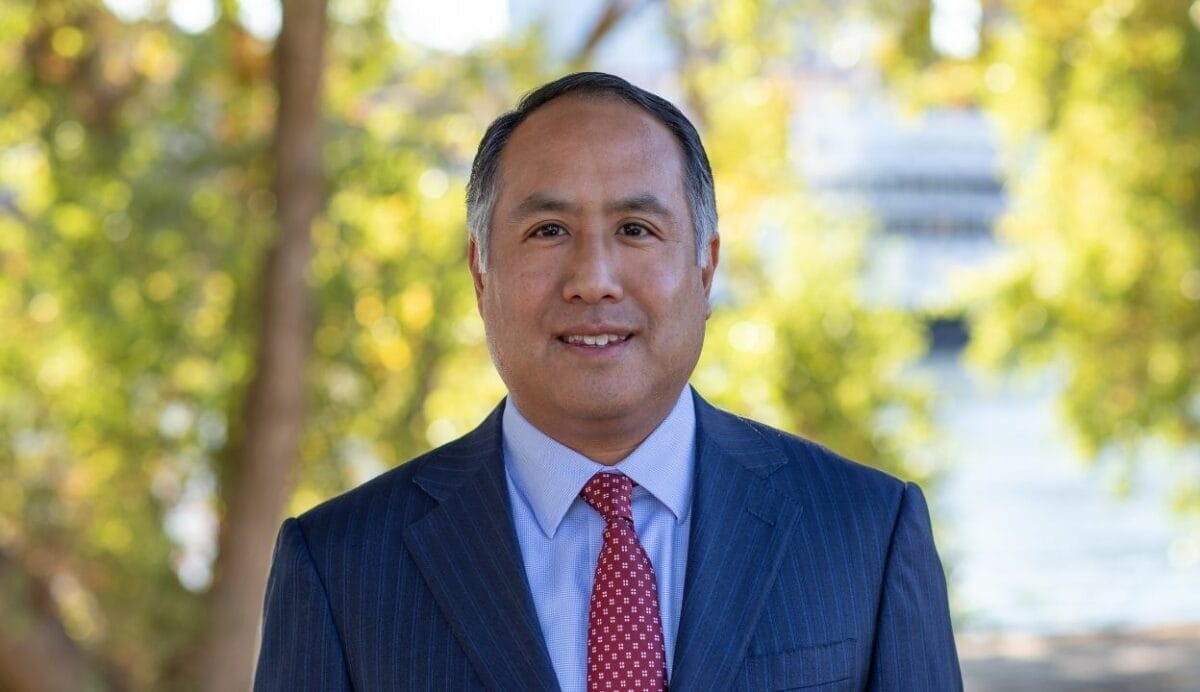
In an interview with Top1000funds.com from his Sacramento office, deputy chief investment officer Scott Chan says the fund will also consider measuring more directly the other benefits of increased returns and control over risks.

The collaborative model includes more internally managed assets, with 62 per cent of the portfolio now managed internally. But as the fund moves more into private assets, the collaborative model focuses not just on internal management but how CalSTRS can partner with external providers in innovative ways to achieve similar benefits.

“As we shifted more into private assets we didn’t think we could build an ‘internal Blackstone’, so we decided to build a model to leverage our partners,” Chan says. “We desire to be the partner of choice, and that is not just a term of hubris, but a term for our partners to know we want to develop a relationship with them. It’s reciprocal.”

Sponsored Content

Chan says this means the team at CalSTRS is very active in its work with fund manager partners, aiming to be nimble, responsible and knowledgeable.

“We want to be trusted experts and be nimble. For example, if they have a co-investment request we want to come back in the same day,” he says.

The model includes a whole toolkit of flexible structures including SMAs, comingled funds, co-investment, joint ventures with managers and peers, minority or majority interests and full ownership.

In the first year the fund participated in 106 collaborative model transactions, and in the past year that has grown to 371 including 309 collaborative private structures, 60 internally managed funds and two rebate agreements, resulting in $428 million of savings in 2022 alone (growing from $134 million in savings in the first year of the model).

While Chan says the cost savings “get the headlines” what is less talked about are the benefits to returns and managing risks.

“We have to look holistically. We are net-return investors and are trying to create value in the costs savings and returns through innovative structures,” he says.

“The evolution is we will do more SMAs and co-investment, but we will also do joint ventures, revenue shares, minority shares and outright ownership, in an order that looks like a pyramid. They all have resourcing needs that are sophisticated at the top of the pyramid. When you own an asset manager you need two staff full-time to manage that organisation strategically. The goal of that would be adding 3 to 7 per cent to the IRR, which is significant.”

According to Chan the collaborative model has been a contributor to net value added, with alpha-above-benchmark over three years of 97 basis points, five-year alpha of 67 basis points and 29 basis points over 10 years.

He says it is also contributing to a fuller understanding of risk.

“It is helping to move the dial on risk because as we get to know and partner with managers on the ground floor, our PMs end up understanding the risks a lot better,” he says.

“Out of that we want to own this risk long-term and sell that risk to the market. We want to inherently know what to retain and sell. For an investor with 43 per cent in private assets it is important to manage the risks.”

Execution risk

A direct result of the collaborative model is that CalSTRS internally is taking on more execution risk, which has a direct implications for the size and quality of the team.

“We are taking on more execution risk and that falls on having more staff and more resources but also more sophisticated resources to be able to manage those risks and mitigate them. The good news about execution risk is you can mitigate it, versus market risk where you’re just taking the beta.”

In its 2021-22 five-year plan the fund outlined 91 new hires and has developed a plan to hire more staff to manage and mitigate the execution risk and to train and equip the current staff. The CalSTRS investment team currently numbers 231.

“We need people who have more of a background to suit those types of investments,” Chan says.

“We are powering up the co-investment unit and recently hired an ex-VP from KKR, and a PM from ADIA.

“All the credit goes to the team; they have executed this excellently. We have a great team and culture, they feel empowered and have delegation up and down the chain. We have a streamlined decision-making process and they can be nimble in the marketplace.”

Next phase: Evolving structures

The first phase of the collaborative model was to get every division and team executing collaborative model deals in their own way.

Five years ago about 2.5 per cent of the private equity book was co-invested, now it’s about 25 per cent with a new target of 35 per cent.

Other asset classes take on a different look. In real estate about 80 per cent of the portfolio is in joint ventures with managers, and CalSTRS also owns majority interests in a few real estate operating companies, in what is a more strategic move.

“Each of our partners is unique and the transactions are unique, so we go to the partners and say let’s be innovative, they have the canvas,” Chan says.

A lot of the opportunities in the fund’s sustainable investment portfolio were falling between asset classes, so a collaborative model was adopted from the outset.

“Now, because we have expertise across the whole organisation, we can execute a collaborative model straight away,” Chan says.

“We have a partnership with Just Climate, which is part of Generation, where we co-invest and have a strategic stake in the business. The exciting thing is we have the expertise to do any of these structures and can map it to new endeavours that we see coming up.”

Private credit is another area the fund is looking at strategically. It recently made a 2 per cent strategic allocation and it’s approaching the investments innovatively.

“Private credit is where we want to drive a lot of co-investment and as the industry grows we can take some shots at owning and growing with these organisations,” Chan says. “Where we have taken an ownership stake or revenue share is in areas where we want to grow together with the organisation, be strategic and on the ground. We think private credit will continue to grow and an area we want to grow with a select number of groups and we’ve done some revenue shares, owning the managers.”

Chan says as the fund moves into the next phase of the collaborative model it will move more into joint ventures and revenue share and ownership.

“Doing co-investment is something we can do well and at scale, joint ventures, revenue share or ownership takes more time and we can get more efficient and be more prolific. As we evolve we will likely be evolving from SMAs and co-investment to be doing more revenue share and minority and majority ownership. It will look like a pyramid. It’s got be strategic for us to have that stake, we won’t do it very often but it’s an area we are growing into.”

Leave a Comment

The twin forces rewriting the rules of investing

The twin forces rewriting the rules of investing

Portfolios built for the old world will be severely tested as emerging forces rewrite the rules of investing. The Fiduciary Investors Symposium heard that geopolitical and macroeconomic upheaval, together with the disruption wrought by AI, should force asset owners to rethink the structure and composition of portfolios.

Sort content by

CERN risk appetite keeps assets liquid

The CHf4 billion CERN pension fund maintains a dynamic, tactical strategy that takes into account the market environment and the fund’s liabilities. Once risk levels are set, CIO Elena Manola-Bonthond tweaks and adjusts to stay on target, employing strict due diligence in areas such as private equity and hedge funds.

Austrian APK smells equity opportunities

Top-performing APK Pensionskasse is examining different regions and sectors, looking to increase its allocation to equity if markets decline in the second quarter. Chief executive Christian Boehm expects technological developments and geopolitical influences to affect markets, including in Europe’s financial sector.

Illinois looks inward for new portfolio

The $42 billion Illinois Municipal Retirement Fund is using its enhanced internal management capabilities to start a quantitative portfolio applying multifactor strategies. The strategy is designed to build some downside protection into the fund’s equities allocation.

PMT’s new index shakes up its equities

The €72 billion Dutch metal industry pension fund has developed its own benchmark that combines ESG, long-term returns and current beneficiaries’ sensibilities with its previous passive strategy. The index’s various criteria have screened out many companies PMT previously held and reduced its allocation to US equities.

Most popular stories of 2018

We are also pleased to say that you, our readers, are spending more time on our site, as evidenced by our 10 most read stories, which averaged 4.2 minutes per article. Thank you to all our interview subjects, readers and supporters over the last year. Below is a look at the 10 most popular stories of 2018.

Washington works to be the best LP

Private equity has been a stand out for the $130 billion Washington State Investment Board and CIO Gary Bruebaker says the real trick is attracting the top general partners. That means making sharp investments, being true to your word and nurturing the relationship.

Previous



