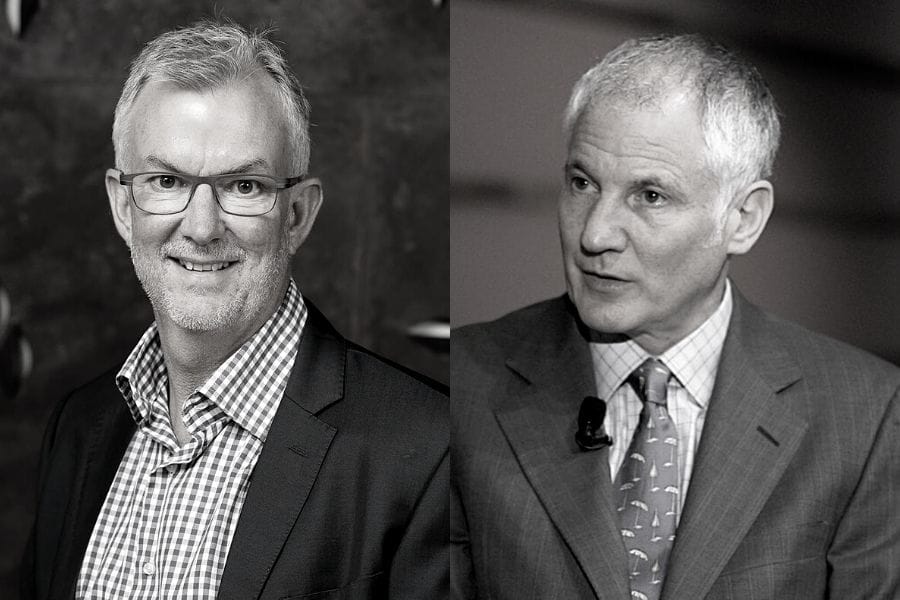

Investors call for more transparency in climate disclosures

Investors are calling for more quantitative metrics around corporate climate change disclosure, with Olivier Rousseau, executive director of the French sovereign wealth fund FRR, calling for mandatory disclosure.

“Data is still lacking and dis-harmonised, which is why we want compulsory disclosure in a number of fields around transition and physical related risks,” he said.

“Besides GHG on a relative and absolute basis, the path for emissions and plans to emit or transition is crucial. It would massively help the investment community.”

Rousseau, who called ESG the financial risk of the future, called for a carbon price as a nice neat solution.

Speaking at the Bank of International Settlements Green Swan conference alongside Rousseau, head of ESG at MSCI, Remy Briand, outlined the lack of basic disclosure around scope 3 emissions.

He said in the universe of 10,000 companies across mid, large and small cap in emerging and developed countries about 40 per cent are disclosing scope 1 and 2 emissions but only 20 per cent are disclosing scope 3.

Sponsored Content

“Scope 1 and 2 are basic ingredients. We think that is an element that should be mandatory because it is a basic ingredient,” Briand said. “Net zero targets and alignment with a 1.5 degree trajectory will be the centre of this dialogue going forward. Without the core ingredient it is without precision.”

Herman Bril the former executive director of the United Nations Staff Pension Fund who is incoming CEO at Arabesque, says the TCFD is a good candidate to become the global standard but lacks the explicit mention of targets in its framework.

“The TCFD would be a really good candidate to become the global standard, it was launched by a voluntary initiative led by Mike Bloomberg and Mark Carney and it has been been broadly embraced, but something is missing. We can’t win the race to net zero without long term and short term targets,” he said.

Bril points out the guidance for institutional investors by the Net Zero Asset Owner Alliance which shows how to incorporate climate risk across all asset classes in the short term and long term.

“That is helpful for investors, and it would be more effective if corporates could also embrace science-based targets.”

He said while the momentum is moving in the right direction he urged regulators and policymakers to step in to accelerate the process.

“The clock is ticking, that is not realised so much by everyone.  This is not a relative game. It is an absolute race,” he said. “The bottom line is we will not win the race to net zero without mandatory disclosure, or emissions data or explicit targets.”

Meanwhile this month IIRC and SASB formerly merged to create the Value Reporting Foundation which offers a comprehensive suite of resources designed to help businesses and investors develop a shared understanding of enterprise value and how it is created, preserved or eroded over time.

Chief executive of the Value Reporting Foundation, Janine Guillot, said the merger was a response to the call from business and investors for more clarity and simplicity in the corporate reporting landscape.

“This merger also better positions us to support key bodies such as the IFRS Foundation and continue to work with our colleagues around the world to drive progress towards a comprehensive corporate reporting system,” she said.

The resources available include the Integrated Thinking Principles which look at how value is created in the short, medium and long term, the Integrated Reporting Framework which supports effective reporting on strategy, governance, performance, prospects and business model through a multi-capital lens, and the SASB Standards which provide investors with consistent, comparable, reliable data on the ESG factors most relevant to financial performance and enterprise value.

Leave a Comment

America’s net zero opportunity

America’s net zero opportunity

Research from Princeton University plots a Blueprint for how the US can achieve net zero emissions in the next decade showing the key is overcoming execution challenges including the infrastructure deployment and the mobilisation of capital and labour.

Sort content by

The need for urgent action on climate

Nigel Topping who was appointed by the UK Government as the High Level Climate Action Champion for United Nations climate talks, COP26 joins Fiona Reynolds, chief executive of the PRI, in conversation with Amanda White, editor of Top1000funds.com This episode focuses on climate change and how, amongst and despite, the short-term focus of this COVID-19 crisis, we can mobilise government, business and investors into action around this important issue of climate change.

Investor collaboration on sustainability

How can investors be a catalyst for change and have an active voice in a sustainable recovery? This episode explores the role of investors and how they can collaborate for effective collective action. It includes the work of one of the leaders in sustainable investing and the biggest pension fund in Europe, APG. It invites investors to have an active voice in a sustainable recovery.

US public pension funds lag on climate

Only 16 of the 74 largest public pension plans in the US mention ESG or responsible investing in their public documents. Scott Kalb looks at why the US is so far behind.

NY State Common’s climate plan

The New York State Common Decarbonization Advisory Panel, set up to advise the Comptroller, as trustee of the $209.1 billion New York State Common Retirement Fund, on how best to mitigate investment risks stemming from climate change and maximise opportunities from the new, low-carbon economy, has handed down its report this week. It has clear lessons for all asset owners.

Previous