
Sensitive intervention points

Conventional approaches to mitigating climate change are not working. Despite the actions pledged under the 2015 Paris Agreement, actual progress is falling well short. Given limited time and resources, traditional efforts such as the climate stabilization wedge approach are unlikely to be effective on their own. Physical science has shown how complex adaptive systems can cross critical thresholds (“tipping points”), such that a relatively small change can trigger a larger change that becomes irreversible, where nonlinear feedback effects act as amplifiers. We propose to examine how to exploit similar sensitive intervention points (SIPs) and amplification mechanisms in socioeconomic, technological, and political systems to advance climate change mitigation. We focus on research and policies in which an intervention kicks or shifts the system so that the initial change is amplified by feedback effects that deliver outsized impact.

Click here to read the full article

Sponsored Content

Leave a Comment

China ESG risk: the next unknown

China ESG risk: the next unknown

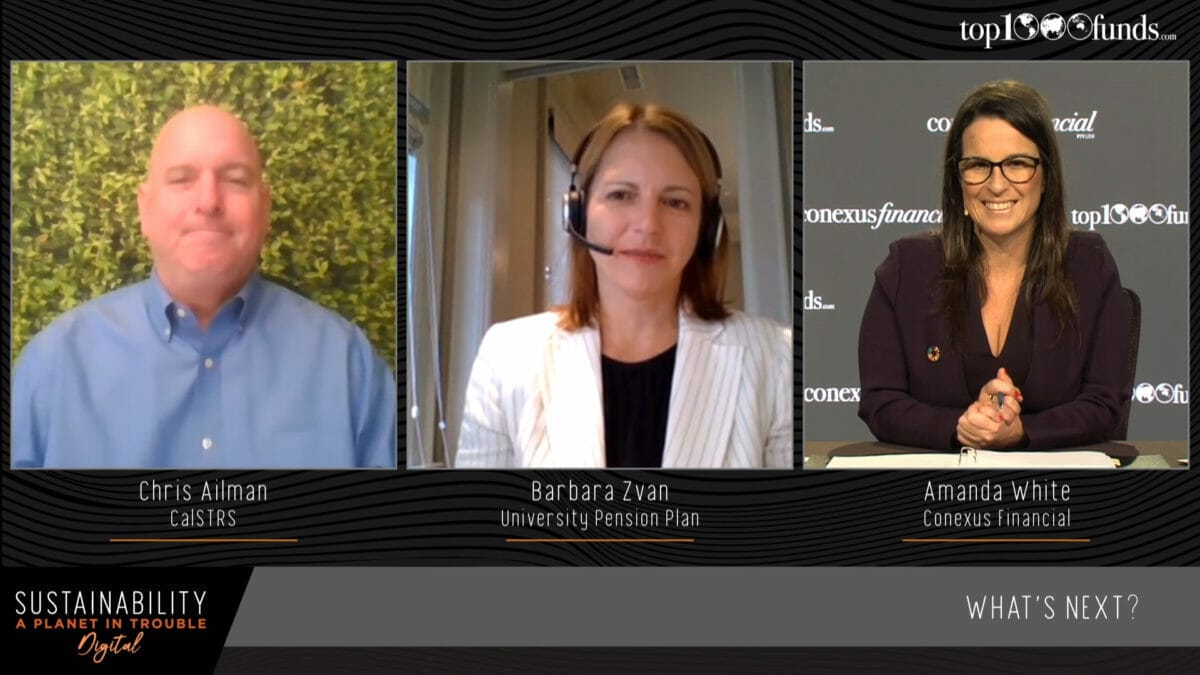
One of the most important, upcoming challenges at CalSTRS is how the fund should evaluate Chinese investments from a human capital and environmental standpoint, says Chris Ailman, chief investment officer at the giant pension fund.

Sort content by

Investor case studies

This session looks at case studies of investors who have integrated sustainability practices into their investment decision making and portfolio construction, their outlook for the next five to 10 years, and what they think ESG 2.0 will look like in their portfolios.

Responsible investing

This session will examine the importance of impactful stewardship to deliver sustainable wealth creation and its potential to transform financial, social and environmental outcomes.

Investor action on climate change

This session will look at the the importance of net zero 2050 and the opportunity for a turning point post COVID-19.

COP26 – What to expect

This session looks at the areas of focus for the meeting and how within the short term focus of this COVID-19 crisis we can mobilise government, business and investors into action around the important issue of climate change.

The need for a price on carbon

This session looks at the expected sustainability policies in 2021 and the important role of a price on carbon as part of that.

Green stimulus and building back better

This session looks at green stimulus measures and the ingredients of success that will generate economic growth, create jobs and bring about environmental benefits.

Previous