
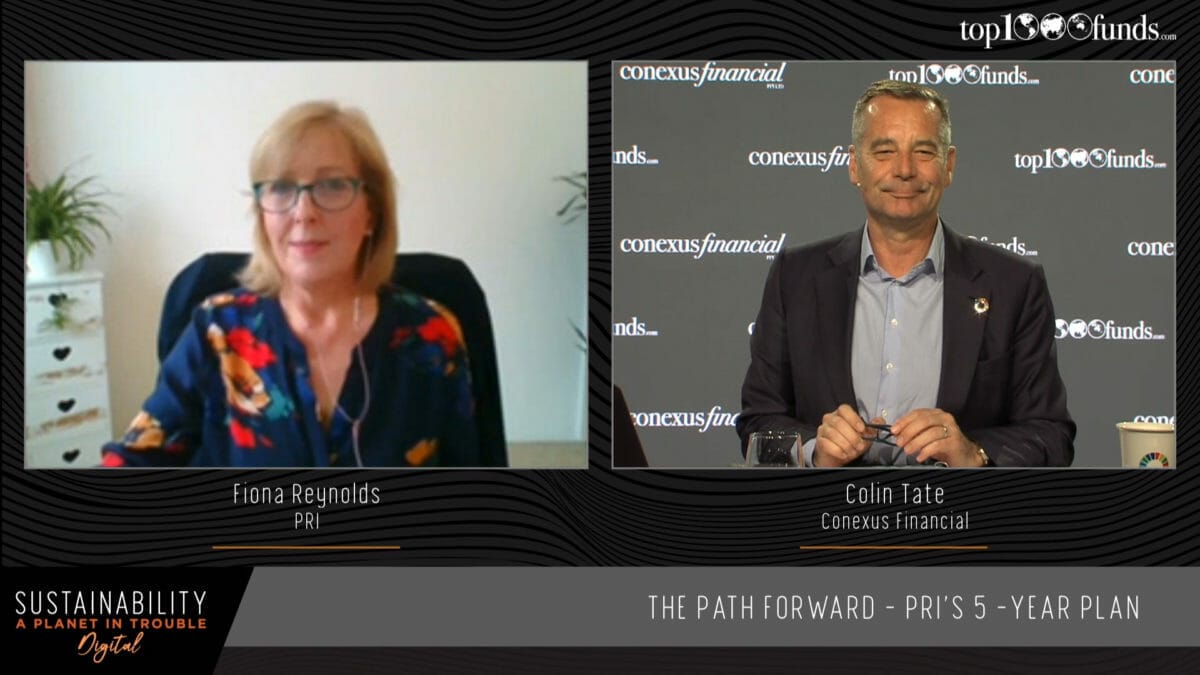

The PRI will focus on a number of key areas in the years ahead including helping signatories invest in line with the SDGs and social issues, and pushing for more engagement.
Over the next five years, the PRI aims to drive real world outcomes in line with the SDGs. Speaking at Sustainability Digital, Fiona Reynolds, CEO of the UN-backed organisation, said the SDGs are the world’s business plan and have never been more important, adding that there is no need for a new plan – the world needs to implement and fund the one it has.
Estimating that the funding required to meet the SDGs from the private sector is between $5-7 trillion a year, she urged delegates to think about how they could shape outcomes. She also pointed to the PRI’s ongoing work on fiduciary duty regarding sustainability: if investors are going to implement sustainability, she said the law needs to catch up.
Elsewhere, she outlined the PRI’s ambition to improve data on sustainability. Calling the lack of data “a roadblock,” she said the PRI will work harder to help plug the gap.
The PRI also aims to elevate social issues, said Reynolds. Over the years social issues have taken a “back seat” compared to governance and climate issues. She said many institutional investors are both unaware and unclear as to how to work with investee companies to improve their record on social issues and human rights. With the COVID-19 crisis providing momentum, the PRI is launching a new five-year program on human rights that will push these issues centre stage.
Reynolds said she also wanted to introduce a new era of stewardship that moves beyond box ticking to focus on the most pressing systemic issues facing the world. Investors can’t engage on everything. It means the need for a clear agenda is all the more compelling, ensuring investors effectively use their leverage. She added that the PRI will also focus engagement on net zero commitments.
“This is the future of engagement,” she said.
Regarding net zero, she also urged investors themseleves to commit to net zero by 2050 across their entire portfolios. Shorter term targets should mark the route, she said.
Reynolds said that the PRI was going to increase accountability amongst its signatories. From next January, signatories will be asked to report on outcomes and the PRI will also increase the minimum standards needed to join the organisation. She noted that although the PRI is a “big tent” organisation that doesn’t want to set the bar too high for new signatories, it had to be made “harder.”
Reynolds explained that the PRI’s new focus comes in the wake of rapid take up in ESG in recent years. The PRI launched in 2006 with 50 asset owners and the aim to bring sustainability to the capital markets. After slow progress, in the last three to five years ESG has gone mainstream and responsible investment activities have matured, she said.
Although there is much more to be to be done, she said the PRI is beginning to widen its focus to investors’ role in driving real world outcomes that impact the world we live in. She noted that this required a different way of approaching and implementing responsible investment which, in one silver lining, has received a boost from COVID-19.
“The world has finally woken up to the importance of sustainability and the interconnectedness of the world we live in,” she said.
For all the conference sessions, stories and white papers visit the Sustainability content hub here.







Leave a Comment
You must be logged in to post a comment.
Login