
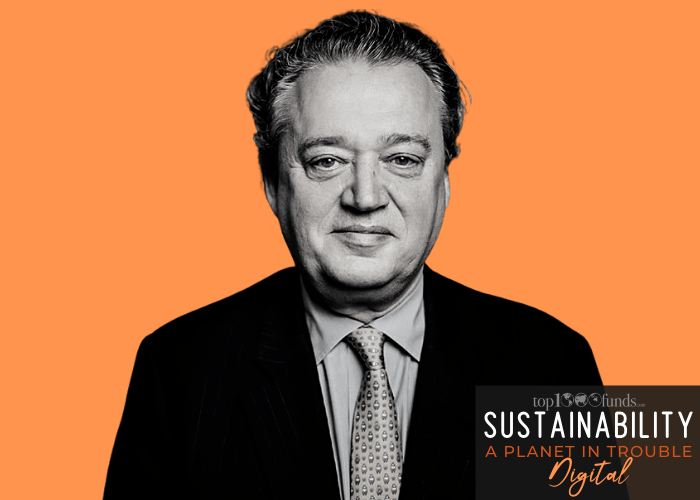

Robeco chief executive Gilbert van Hassel opened the ‘Sustainability Digital: A Planet in Trouble’ conference with a reminder of the opportunities in sustainability and the importance of working with others. At Robeco this now includes engaging directly with sovereign governments.
Influential investors are increasingly working with sovereign governments on sustainability. In a new initiative, Dutch asset manager Robeco is engaging directly with the Brazilian government on deforestation. The asset manager has held two meetings with Brazil’s vice president and other government members in an investor policy dialogue focused on better implementation of the country’s environmental laws so that companies that break them are suitably punished.
“Brazil has very good laws on deforestation,” said Gilbert van Hassel who has been chief executive at Robeco since 2016. “It is about applying them, and we want to make sure criminal behaviour gets in the courts.”
Speaking during the opening session of ‘Sustainability Digital: A Planet in Trouble’ van Hassel explained that sovereign engagement is now a key tenet of Robeco’s strategy. Working with the PRI, the asset manager is exploring how best to influence sustainable policies at government level: next on the list is Indonesia, where van Hassel plans to engage on deforestation and fires. To encourage other investors to follow, Robeco is drawing up a sovereign engagement framework that will detail which countries to contact and which SDGs to engage on.
“When the policy is ready, we will share it. Engaging with sovereigns is the next level of engagement,” he told delegates.
The CEO urged attendees of the two-day digital conference to embrace the complexity of sustainability. This means grasping the many different angles to sustainable investment, extensive research and not “pushing away” from the challenges. Partnerships and acting in unison are also central.
Above all, he urged for less talk and more action to reverse climate change, calling on investors to integrate ESG into their investment decisions and look for outcomes and financial gains that also create wellbeing which he called “as important” as wealth creation.
“If we embrace complexity and act together, we can reverse these trends. As investors we really need to stop talking about these issues and start acting. It has to be mainstream, and it has to have scale,” he said.
Action should include investing in sustainable companies and divesting from unsustainable companies, as well as finding innovative ways of investing in sustainability by evaluating a company’s contribution to ESG.
“Companies that make progress on ESG should have access to the capital markets,” he said. In a next step investors need to measure and report impact “in a whole different game.”
Opportunities
He also espoused the opportunity sustainability holds for investors. Despite the frightening evidence of the consequences if the natural world can no longer support humanity, he said it also presents opportunities that are clearly enshrined in the UN’s SDG.
“The issues of the future are no different,” he said. Of the 17 goals he said climate, labour rights and inequality are mentioned most by Robeco clients.
“In the next 10 years there will be tremendous innovation to ensure we reverse the trend,” he forecast.
Partnerships also lie at the heart of Robeco’s sustainability strategy. Alongside working with sovereign governments and the PRI on how best to influence climate policy, the asset manager has partnered with others to bring about change at oil giant Shell, and also works with universities like Cambridge and Erasmus. And partnerships with clients on appropriate strategies are another central seam. Most recently this has included looking at ways to use clients’ risk budgets to ensure portfolios have better ESG integration than the index, or put another way, using the risk budget not to deviate from the index.
“Alone is alone, together is more powerful,” he says.
He concluded by saying the asset manager’s offices remain closed, with long-term consequences on culture, innovation and employee connection worrying and unknown.
“It is much better to sit and work together,” he said. “We will only see what the consequences are in the long-term.”








Leave a Comment
You must be logged in to post a comment.
Login