
Social conditions and the economy

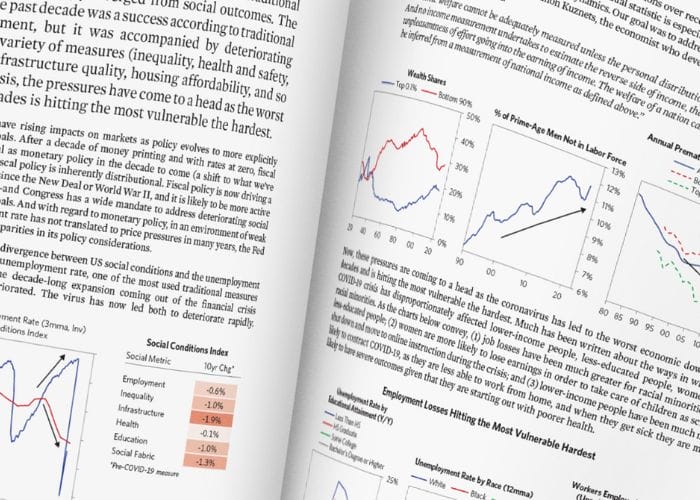
The ultimate goal of economic policy is simple and timeless—to ensure prosperity and maximize living standards. Broad macroeconomic measures such as GDP growth, the unemployment rate, and inflation had for decades been a good proxy of rising prosperity, so they have dominated economic policy making and are enshrined in most central bank mandates. But even before the COVID-19 crisis, it had become clear that traditional economic measures have increasingly diverged from social outcomes. The economic expansion of the past decade was a success according to traditional measures of full employment, but it was accompanied by deteriorating social conditions across a variety of measures (inequality, health and safety, educational attainment, infrastructure quality, housing affordability, and so on). With the COVID-19 crisis, the pressures have come to a head as the worst economic downturn in decades is hitting the most vulnerable the hardest.

Click here to read the full paper.

Sponsored Content

Leave a Comment

Climate the No.1 priority for 2021

Climate the No.1 priority for 2021

Climate is by far the number one sustainability priority for investors in 2021 according to a poll of asset owners from more than 32 countries which came together for the Top1000funds.com online Sustainability event in March.

Sort content by

Insurance giants push for more impact

The experience of the collaboration between six large US insurers to successfully invest in affordable multi-family rental housing is a lesson for any institutional investor looking to impact investing.

Foundation puts diversity first

Bert Feuss, senior vice president, investments at the $13.5 billion Silicon Valley Community Foundation, SVCF, explains why diversity is so important, the steps the impact investor has taken to address the institutionalised lack of diversity, and the impact on performance.

Diversity means embracing whole identity

Why even good inclusion and diversity policies will miss their mark unless corporates have a better understanding of their employees.

Why diversity is important: Calif. funds

CalPERS and CalSTRS recently hosted over 400 attendees from academia, business, and investment to explore the connection between diversity, human capital and performance. And gave participants tangible next steps on how to increase diversity within their workplace and fresh momentum to push the diversity cause.

Dutch fund prioritises labour rights

The €9 billion ($10 billion) Dutch fund for disabled workers, PWRI, has introduced a proprietary index that tilts towards companies that prioritise workers’ rights and health and safety issues. It’s a revolutionary approach to reflect the fund’s distinctive ESG priorities and a guide for other investors wanting to prioritise the “s” in ESG.

Industry inflection point on diversity

On International Women’s Day we spoke to Mass PRIM CIO, Michael Trotsky about diversity and inclusion. He was part of the CFA Institute’s diversity and inclusion project and believes the industry is at a perfect inflection point to make inroads into improving its score on diversity.

Previous