
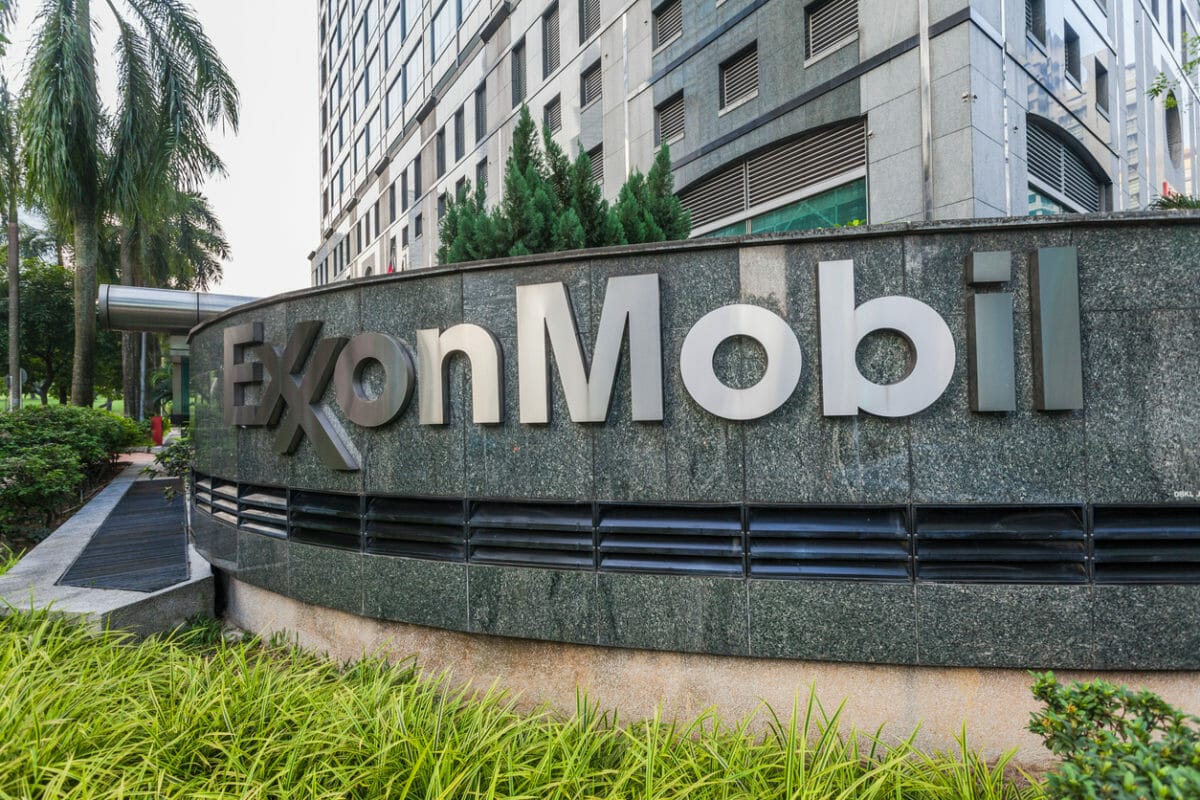

The $255 billion Californian pension fund, CalSTRS, has embarked on a new era of “activist stewardship” which will see it take on large companies such as Exxon Mobil which have not responded to shareholder engagement.
ExxonMobil is a significant company for any global investor. It has held a position in the global index since 1928 and despite its more recent fall from grace – exiting the Dow Jones Industrial average in August last year – it’s hard to avoid such a company as a universal owner.
CalSTRS clearly articulates that one of its four stewardship priorities is the low-carbon transition, and famously ExxonMobil is failing on this account with a very modest investment of $3 billion over five years in carbon capture and lower-emission energy technologies. As Bob Eccles and Colin Mayer point out in the Harvard Business Review article “the company’s poor capital allocation decisions are based on decades of denial about climate change on the company’s strategy”.
For long-term investors, like CalSTRS that are interested in its investee companies’ long-term strategies to adapt to a changing world, this is not adequate. But all of the traditional shareholder engagement strategies used by CalSTRS with regard to Exxon have failed.
“Last year we voted against the entire board and we increased opposition to directors but they’ve ignored shareholder proposals and dismissed engagements from coalitions like Climate Action 100+,” says Aeisha Mastagni, who leads the fund’s stewardship activities.
To this end, CalSTRS is supporting an alternative director slate put forward by activist hedge fund Engine No.1. The new alternative directors they suggest have deep expertise in energy and other industries undergoing transformation that will address ExxonMobil’s financial underperformance and better prepare for the global energy transition, all the while aligning incentives with shareholder value creation. The argument is that while the current board are all accomplished, they don’t have the expertise in energy, or industry transformation, to steer the company through what is inevitable.
“This hits on all our stewardship priorities and how we make these companies more resilient,” Mastagni says. “We are not trying to argue with them about when this low carbon transition will happen, but it will happen. The biggest risk for Exxon is assuming the status quo – that is a very risky bet for us. Most companies should be preparing for multiple scenarios.”
Mastagni says activist stewardship gives the fund a full suite of tools that can be embedded into financial analysis in order to create value.
“Part of this is our answer to the divestment advocates,” she says. “For some people we will never satisfy them unless we are fossil fuel free. We have a plan for low carbon transition and need the big oil and gas companies to be part of the solution. With traditional divestment you end up divesting from the whole industry or sector and can throw out the good with the bad. We have a whole suite of tools available as shareholders from proxy voting to shareholder proposals, collaborative engagement and now the other side is activist stewardship where the resources get more intensive.”
David v Goliath
Engine No.1 is a relatively small investment firm, built with big ambition. The firm was founded on the belief that a company’s ability to create long-term shareholder value depends on the investments it makes in jobs, workers, communities and the environment.
CalSTRS doesn’t invest with Engine No.1 but Mastagni and one of the firm’s executives, Charlie Penner have known each other for years and been aligned on strategies to improve shareholder value, including a campaign in 2018 to get Apple to improve parental control tools on their smartphones.
“This is the idea of how using our role as an engaged constructive shareholder and combine that with the tools of an activist investor and have that be based on the foundation of good deep fundamental analysis,” Mastagni says. “This type of strategy takes a lot of resources so has to be a path to value creation.”
CalSTRS only owns about $300 million of Exxon’s shares, but Mastagni isn’t necessarily phased by this.
“It’s not about the size of your investment, it’s about the credibility of your argument,” she says.
“I have met all the board candidates and looked at their qualifications, so we felt very comfortable coming out with the alternative slate. This slate has the right skills and expertise to make Exxon become a more competitive company, turn around the performance and make it a more resilient firm.”
The credibility of their argument will be tested at the annual shareholder meeting in May. While CalSTRS may only hold a small relative holding, the three index funds – SsgA, Vanguard and Blackrock – hold 25 per cent of the company, and there is hope these and other investors will back the proposal.
Earlier this month Exxon added a new board member, but for CalSTRS that was too little too late. Instead, it says significant change is needed. For now that means new board members, but if the slate is successful Mastagni sees that as a signal of shareholder discontent that could trigger more action.
“At the end of the day the board and directors around that table are representatives inside the board room so the responsibility does rest on them,” she says. “If we are successful in May that means there is still a lot of shareholder discontent, and the board has to take a look at the executive leadership.”
Mastagni makes it clear this is a long-term strategy and there is still a long road ahead.
“Even if we are successful and get the new directors on the board, they still need time to make change. As a long-term investor we have time, and we want them to be successful,” she says.
Because such a strategy is so resource intensive, this activist stewardship can only target one or two companies per year. Mastagni has been talking to ExxonMobil for about 12 years, and she says the tone of the conversation has changed significantly with this new activist strategy.
“For other companies it may not get to this point, it might just be something in the press or quiet engagement,” she says. “We were worried we might be seen to be a bit aggressive, a Californian fund going after big bad oil. But the financial analysis and idea has really resonated. It’s focused on the financial case.”
Aiesha Mastagni will speak at the Top1000funds.com Sustainability conference online on March 9-10. For more information and to register, click here.








Leave a Comment
You must be logged in to post a comment.
Login