
Board control critical to ESG stewardship in unlisted infrastructure

Investors can de-risk and increase the long-term returns of unlisted infrastructure assets by enacting forward-looking ESG transitions, investors say, but they need to ensure sufficient control at the board level.

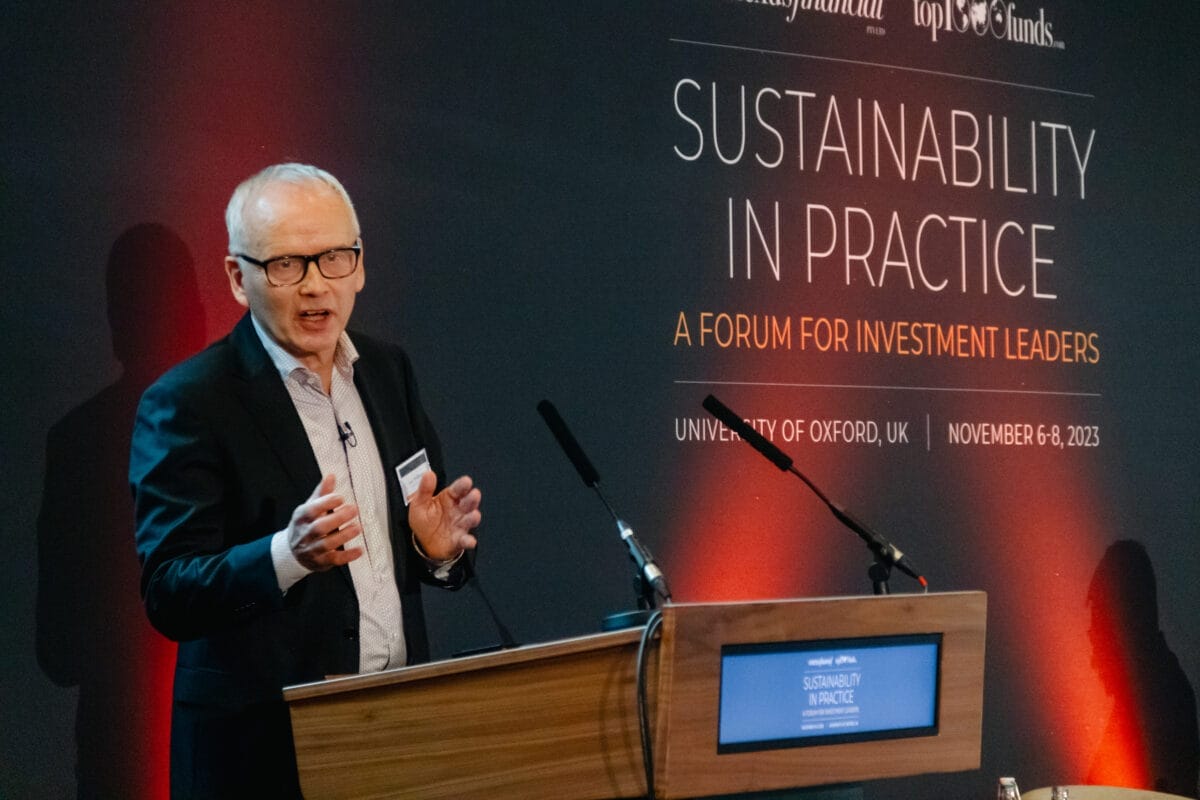
In a panel session looking at sustainability in unlisted infrastructure, Sophie Durham, head of ESG, Europe, at Igneo Infrastructure Partners in the United Kingdom, said Igneo always ensures board positions in its investments, and takes a proactive approach to asset management.

“We don’t call it engagement at Igneo, it is just our job to oversee these companies every single day,” Durham said, speaking at the Sustainability in Practice conference held at Oxford University.

Igneo invests mostly in the power, utilities and transport sectors, and has about €16 billion in assets under management. It is normally a 100 per cent shareholder in the companies it owns, or the lead or co-lead investor. Igneo is also a long-term investor with funds that are at least 15 years in length. Igneo is part of the global First Sentier Investors group.

Infrastructure is completely essential to a successful energy transition, Durham said, and Igneo invests both in renewables and in traditional sectors. It is sectors that are considered harder to decarbonise that offer the biggest opportunities to have a positive impact on the energy transition, she said, giving several examples.

One was MVV Energie, a 130-year-old integrated utility company that is the fourth-largest provider of district heating in Germany, with some exposure to coal and gas. Igneo invested in 2019 noting the company had a pathway to reach net zero by 2050 that was built into the business plan, and had the City of Mannheim as a shareholder.

Sponsored Content

There was a competitive auction when bidding for the business, but Igneo realised the relationship with the City was more important than the price.

“The City was really, really concerned about decarbonisation and wanted to do this faster,” Durham said. “We were the only bidder that submitted a business plan that involved decarbonising faster than the company was already planning to.”

The company is now producing “fantastic returns” for investors and is a good result for the transition, she said.

“It’s literally millions of tons of carbon that will be taken out of the atmosphere 10 years earlier than would have been the case if we’d just screened MVV out and said: ‘Oh no, they’ve got coal, we can’t do that.’”

Igneo was also an investor in ForSea–a high-frequency ferry running between Denmark and Germany–and oversaw its conversion from diesel engine ferries to electric ferries. Igneo divested in November 2022 by selling to Molslinjen, Denmark’s largest passenger ferry company.

Part of the conversion to fully electric ferries involved a robotic arm that can find the power socket on the ferry, plug itself in and charge within seven minutes without human intervention. The technology paid off, and the fact that the company was decarbonised generated interest from buyers, Durham said, in part due to the European Union’s emissions trading system.

“[Electrification] reduced emissions by about 70 per cent, saved on operational costs and created value on exit as well,” Durham said.

Igneo now owns another ferry business, Scandlines, which is building the world’s largest electric ferry that will run between Denmark and Germany.

Also on the panel was Chris Rule, chief executive, LPPI in the United Kingdom, which manages about £24.2 billion of pension fund assets.

LPPI has a “buy and hold” approach to infrastructure, Rule said, viewing it as useful for long-term income generation. LPPI holds renewable generation assets, toll roads, digital infrastructure among other assets.

When assessing potential investments, some things like airports and traditional energy come up as “red”–meaning LPPI won’t invest–while others are “green,” but most assets are not so straightforward, he said.

Some investments that generate energy from waste do not meet sustainability criteria, for example, while LPPI does have some exposure to waste management.

“We tend to be minority investors, but significant minority investors,” Rule said, meaning LPPI needs to “think very carefully about who we invest with alongside” in order to have some control over important decisions.

Design of the shareholders agreement is also important, he said, so LPPI may set critical reserved matters at 80% of the board, which gives it the ability to block decisions with a 20% holding. 

Leave a Comment

Meeting multiple objectives: The pension fund addressing mental health

Meeting multiple objectives: The pension fund addressing mental health

With the right governance models pension funds can play a role in broader societal issues, such as mental health in the workplace, while still delivering financial security for members. A unique “democratic governance structure” at the Danish Velliv Association allows it to manage multiple objectives, chief executive Lars Wallberg said.

Sort content by

Products and services, not operations, key to assessing ESG

Global asset management firm Robeco has differentiated its ESG assessment methodology to give a more accurate picture of the impact investors have on sustainable development goals (SDGs), according to Rachel Whittaker, the firm’s head of sustainable investment research.

Thoughtful ESG engagement the epitome of good active management: Pictet

Investors’ approach to ESG has evolved considerably, particularly in the area of engagement with portfolio companies, and encouraging change through active and targeted engagement is “the epitome of what active managers can do”, the Sustainability in Practice conference at Oxford university has heard.

Politicisation, poor governance to blame for backlash against ESG

CIOs need to fight back against the politicisation of ESG in the United States by adopting sound governance principles and not allowing their funds to be “pinned down to one side of the [political] spectrum”, the Sustainability in Practice conference at Oxford University has heard.

The unique challenge of decarbonising real estate as the population grows

Demand for more agricultural land alongside the need for greater biodiversity and zero deforestation will drive investment in responsible land management practices and natural capital says Abi Dean, global head of strategic insights, at Nuveen Real Assets. 

Why these impact investing veterans don’t care about ESG ratings

BlueOrchard and Schroders Capital’s impact investing veteran, Maria Teresa Zappia, isn’t a fan of using ESG performance to evaluate her portfolios, suggesting that investors are limiting their options if they are not willing to consider companies with lesser ratings.

Why a successful transition to a low energy world is likely within 20 years

The world is shifting from a regime where climate change is viewed as a shared burden or a hot potato, to one where it is a “business opportunity that everyone should be scrambling to make money from,” according to Oxford Professor J. Doyne Farmer, citing probabilistic assessments by his team.