
The pandemic has exposed harsh new equalities warns ITUC

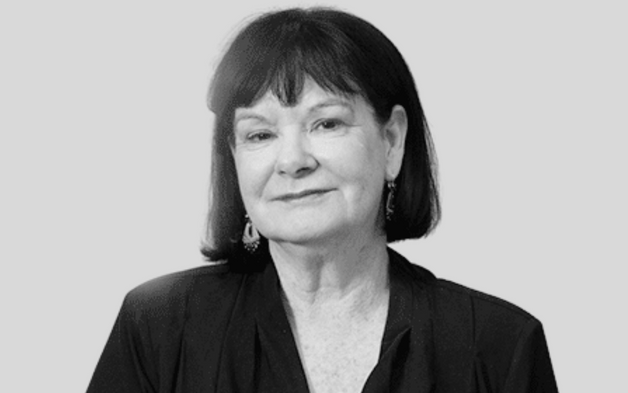
The pandemic has exposed tragic fault lines and new levels of inequality, said Sharan Burrow, general secretary, International Trade Union Confederation, speaking at FIS Maastricht on the eve of her departure from the organisation where she has been general secretary since 2012.

Fault lines visible in the number of informal workers and the loss of women from the workplace. While inflation in food and energy following in its wake has made life much more challenging for families, causing more inequality and poverty, and pushing back the transition, she said.

Burrow linked companies’ struggle for talent to a “broken” labour market. Over half of the global economy works in the informal sector, with another large proportion of the world’s workforce in insecure work.

“The world of work is not serving anyone well,” she said. In a new Social Contract, she outlined key demands for workers spanning jobs, rights, social protection, equality and inclusion.

Returning to full employment is key for people to trust economies and governments again. She stressed the importance of creating more jobs in sectors spanning care to green infrastructure and technology. Without this kind of investment, the divisions between nations will grow, and with it discontent. “Trust in democratic institutions is so low,” she warned.

Companies need to be prepared to pay minimum living wages to build confidence in the economy and to ensure people can afford to support themselves through increasing shocks, whether climate or health-related. She said that more than half the world’s population has no social protection.

Sponsored Content

Burrow also sounded the alarm on progress around diversity. Women have lost out during the pandemic and involuntarily left the labour force in a damaging development for women and the global economy. Elsewhere, she noted a rise in racism, made worse by the lack of policy around refugees and inclusion.

SDGs

Burrow said the world will only deliver on the SDGs with global cooperation. But she noted “low ambition” at COP27, particularly around developed countries paying for damages inflicted on the economies of poorer countries. “Countries are not serious about the notion of a Just Transition,” she said.

The SDGs represent solutions but require countries to put people and planet first. “We are creating the seeds of our own destruction,” she said, highlighting how some US investors now  “rage” against integrating ESG.

“What is it they value?” she asked, urging delegates to value people, homes and an economy wrapped in democracy that gives everyone a fair go in the world. She said leaders have made a promise to achieve net zero, but are now forgetting the commitments they made.

She highlighted the role of the union movement in supporting the SDGs, particularly around equality and inclusion. Creating a shared future of common security and prosperity involves including people, and the unions that represent them, in that vision.

She noted how union uptake in the US is at record lows; workers are bullied to not join unions and employers close down operations to avoid unionized workers.

“Companies will do anything to oppress workers and keep them poor; to not sit at the table and not work with them,” she said. She concluded that many CEOs are not aware of the conditions for workers making their products further down their supply chain in a “hidden workforce.”


Leave a Comment

Impact investing’s case for scale

Impact investing’s case for scale

Impact investing has come a long way in the past two decades, going from a niche strategy to a $1.5 trillion industry, but there are still challenges for it to reach institutional scale due to the lack of products and insufficient evidence of outperformance in some parts of the market.

Sort content by

How CPP’s active equities team delivers pure alpha

The active equities team at CPP Investments has abandoned antiquated investment categorisations, such as style and size, and views companies through a more holistic “domain” interpretation. Global head Frank Ieraci discusses the team’s approach and the contributions it makes to the total fund, including capital efficiency, agility and pure alpha.

Why internal management at Canada’s BCI includes ESG

For pension funds with large in-house teams that are also navigating the risk and opportunity of sustainable investment, a global head of ESG can play a vital role. Jennifer Coulson, the investor's first global head of ESG, explains why.

Cross-checking data, wringing necks: the ESG journey

Making a portfolio more resilient to climate change, and playing a role in decarbonising the real economy, requires a range of creative solutions to complex problems, along with a good measure of determination, said a panel of leaders driving ESG efforts at GIC, New Zealand Super and APG.

Investors need better ways to measure and integrate ESG outcomes

Returns have been disconnected with the social returns of ESG-related and impact investments, leading to confusion around different targets and how to integrate them into an investment framework. A case study demonstrates how investors can better allocate their capital by explicitly incorporating impact preference and returns into portfolio theory.

Eyes on SE Asia, divergent views on China among global funds

Australia’s second-largest superannuation fund, the A$240 billion Australian Retirement Trust, will likely “do more, not less” investing in China, said the fund’s head of strategy, following significant internal debate over geopolitical developments and how they will impact the portfolio.

Funds build resilience with private assets while managing liquidity risks

Global pension funds are increasingly looking to private assets to build resilience, stress testing various scenarios to manage the liquidity risks that come with increasing private market allocations.

Previous



