


Identifying best practice in pension asset management is not a straightforward task. As much as asset allocators may want there to be a definitive answer, differences in size, mandate and resources between different pension funds means an investment approach that works for one may not work for others.
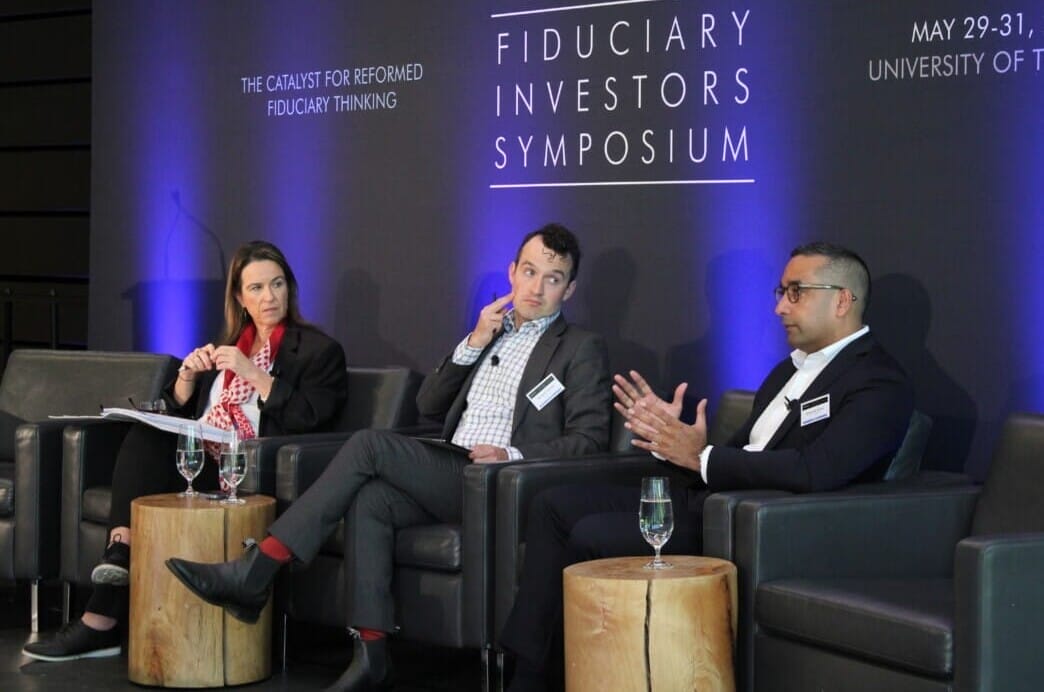
At the recent Fiduciary Investors Symposium in Toronto, defined contribution and defined benefits pension funds from four different countries came together to discuss 30 years’ worth of governance, cost and performance insights collected by CEM Benchmarking, and it was clear that investors are still split on key issues such as the benefits of active management and scale.
CEM data shows that active management has on average added 22 basis points of net value and 75 basis points of gross value per annum between 1992 and 2022 for asset owners. In public markets, the highest active risk and average one-year gross value added has been achieved in US small-cap equities strategies.
It’s clear that there are benefits to active management in public markets, but South Carolina Retirement System Investment Commission is one fund that still decided to shift its entire public equities portfolio to passive, and chief executive officer Michael Hitchcock said it is not regretting the decision.
“We had a significant amount of active management in the public equity portfolio – we had active managers, we had enhanced passive, we had GTAA [global tactical asset allocation], which was kind of a mix of public equity and bonds,” Hitchcock said.
“And we really realised…out of humility that we’re really not that good at this. Because what we found is that we were underperforming the benchmark, at about the same amount that we were paying in fees.
“We were able to shift to all passive, but we were able to do it in a way where through the structures that we have with our external partners [we can] pretty much lock in about a 30 to 40 basis point spread above the performance of the index, because of the efficiencies that these large managers have when it comes to securities lending, and the tax recaptured.”
Hence, the fund is now outperforming by about the same amount that it was underperforming in the same part of the portfolio, Hitchcock said, and shifting to passive allowed the fund to utilise its resources better.
“We decided that we really needed to put that energy into the private market asset classes, where we really felt like we would have the opportunity to outperform,” he said.
However, UK’s Railpen doesn’t consider active management fees as a big issue. The fund has internalised two-thirds of its investment management.
“On the public market side, we’ve got to about 50 per cent in equities; of that 50 per cent, we’ve got about 60 per cent in quantitative strategies and 40 per cent in fundamental portfolios,” said director of real assets and private markets Anna Rule.
“Given I’ve seen their performance – yes, passive is cheap – but my fundamental team would argue that they’re both cheap.
“They’ve been running that internal strategy for about the last eight years and have had about an outperformance versus ACWI of about 130 basis points.”
The question of scale
When it comes to the scale discussion, the sentiment among funds is weighted heavily in favour of having greater scale, due to the potential access to deals, influence and cost structure benefits it may bring. CEM Benchmarking head of research Chris Flynn said the firm has not found evidence of diseconomies of scale so far.
PSP Investments chief investment officer Eduard van Gelderen said being big has brought the fund many perks.
“What I see happening in practice is that we are invited for specific deals, and there are only a handful of investors around the table [and] because we’re sitting at a table, we also dictate the terms of those deals,” he said.
“Is there a limit to this? Well, we all know Norges Investment Bank, they’re so big that they have to basically invest passively all over the world.
“I can only say for us there is a limitation on the public side, because I am not convinced that every active strategy we pursue actually has the capacity to do it. On the private side, at this point…there is no limit.”
This view is echoed by Australian Retirement Trust, which gained massive scale in a short period of time from the merger of two Queensland-based pension funds, Sunsuper and QSuper.
“Having spent the last couple of years on integration, we found that we really needed to focus on things that we’re going to be able to do well consistently – strategies that we won’t outgrow,” said the fund’s senior portfolio manager of investment strategy, Anne Blayney.
“On the public market side, perhaps there will be some diseconomies of scale in that… as you get bigger and bigger, it’s going to be harder and harder to harness that alpha in some asset classes or some strategies.
“But we haven’t we haven’t seen it as yet.”







Leave a Comment
You must be logged in to post a comment.
Login