

Blaming the 2008 financial crisis, and more recent turmoil in the US banking system, on the US Federal Reserve Board’s lack of regulatory power, or arguing that shocks to the system were unforeseeable, leaves the system vulnerable to the same thing happening again, the Fiduciary Investors Symposium at Stanford University has heard.
Banking systems could be regulated more effectively if greater attention was paid to the incentives provided to decision-makers within banks, and less stock were placed in the idea that regulators are powerless to act or that shocks to the system are unforeseeable.
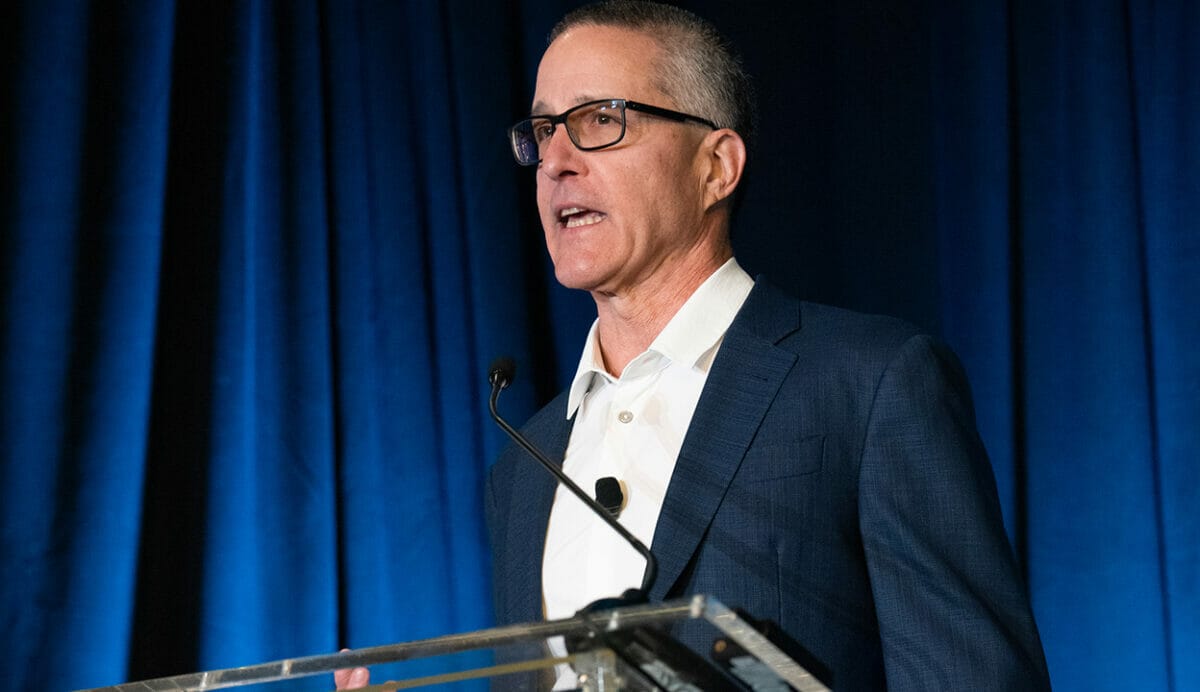
Blaming the 2008 global financial crisis and more recent turmoil in the US banking system on these issues of powerlessness and surprise has “very profound implications” for the financial system and its vulenerability to poor banking prcatices, Hoover Institution senior fellow and co-director of the institution’s working group on financial regulation Ross Levine told the Top1000funds.com Fiduciary Investors Symposium at Stanford University last month.
Levine said it was not unforeseeable shocks and a lack of regulatory power that caused the financial crisis in 2008, and it was not deregulation and unforeseeable shocks that caused more recent turmoil in the US banking system. Levine said removing some banks from the Fed’s stress tests, or the idea it is a toothless regulator, were not responsible for what happened.
“Did deregulation and shocks cause the most recent crises? Many argued that it was deregulation,” Levine said.
“So, is this right? And the answer is no, this is not right. And how do I know that this is not right? It’s that the stress tests ignored possible interest rate hikes.
“These vaunted stress tests, that were supposed to protect the US financial system and banks, didn’t consider the possibility over the last five years that interest rates would go up. Therefore, the lack of the stress test couldn’t have been the source of the problem.”
Levine, who is also a research associate at the National Bureau of Economic Research, said another fallacy that is easy to debunk is that the shock to the system was unforeseen.
“No, of course, it was not unforeseen,” Levine said. “Interest rates had been at unprecedentedly low levels for a very, very long time. The Fed regulates both the interest rates and the banks. And the Fed had been contemplating raising interest rates for quite some time.”
Levine said a bigger problem – in fact, the real problem – is how the Fed regards bank capital, along with issues linked to the regulator’s transparency, governance and accountability.
“The Fed conceives capital as a cushion, meaning that if there’s a shock to the value of the assets, the capital is sort of there to act as a cushion before the bank can go bankrupt,” Levine said.
“Okay, there’s no doubt about that: capital is a cushion, we all know that. You all know that better than I. That’s not the problem. The problem is that the regulators view capital sometimes as that’s the only thing that capital is – it’s only a cushion.”
Levine says, having investor capital at risk is going to influence the type of risks that those investors take “and regulators oftentimes fail to appreciate that”.
Levine said that if the fact that less capital leads to greater risk-taking is ignored or is not understood, then when a shock occurs “you’re going to allow the banking system to operate with less capital, under the hopes – perhaps under the belief – that the capital is going to be replenished, and then you’re going to have your cushion”.
“The problem is, while you wait for that to happen, or while the Fed waits for that to happen, you have the banking industry with huge incentives to take on excessive risk,” he said.
“Now, this is something I have no trouble communicating to the private sector, but this is a concept I have a very hard time communicating to the Fed.
“So when you ask what is the problem with the Fed, I would say that is the problem with the Fed. And we can get into the specifics, but the core issue here is that when bank capital falls, risk incentives go up. It is the basics of moral hazard.”
Levine said there are “many problems” with how the Fed is run and how it operates as a regulator.
“If you were at the Constitutional Convention [imagine] you sort of raised your hands [and said] I have an idea,” Levine said.
“And what we should do is we should take authority over the supervision and regulation of the entity that decides the allocation of credit, you could say, who decides the allocation of economic opportunity in society, and let’s put that into an institution that’s essentially outside of the democratic process and it’s unaccountable to anyone…that’s essentially what we have in the context of the Fed now.”








Leave a Comment
You must be logged in to post a comment.
Login