
Investors warm towards India despite ‘nosebleed valuations’

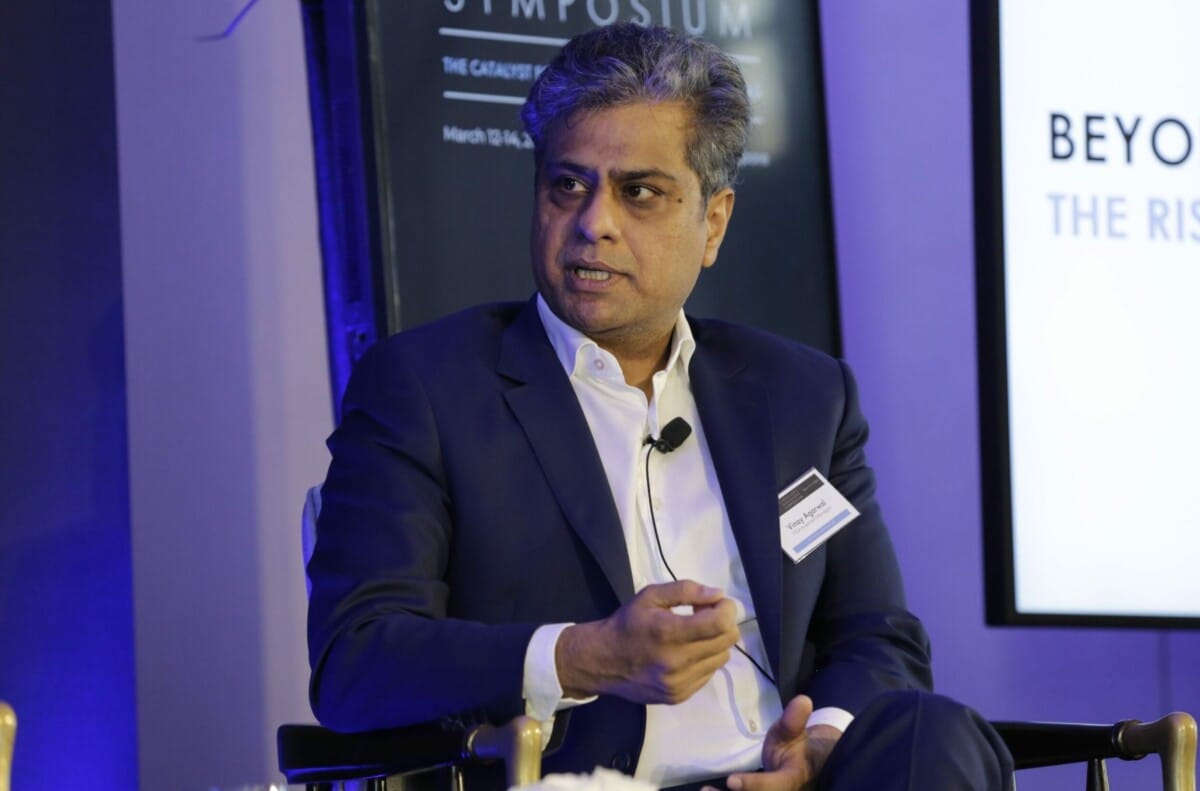
Vinay Agarwal. Photo: Jack Smith

Director of FSSA Investment Managers Vinay Agarwal has warned investors against drawing comparisons between China and India just because the two have similar market sizes and populations. And despite India’s sky-high valuations, Agarwal argued that the country’s solid market structure and culture will make it worth investors’ while.  

FSSA is a part of Mitsubishi UFJ-owned First Sentier Investors and Agarwal’s merit includes Indian Subcontinent strategy and Asia-Pacific equities investments in general.  

He told the Top1000funds.com Fiduciary Investors Symposium in Singapore that from an equity perspective, many people considered India now to be where China was 20 years ago, but one of the most important differences is their level of resilience.  

“China has been on such a massive, positive run for decades now that the companies there have not gone through a prolonged tough period, whereas in India, it’s always two steps forward one step back,” he told the crowd.  

Indian companies had to negotiate with conditions such as complex requirements from close to 30 state governments and lack of infrastructure. But most importantly, there is limited access to capital, whereas Chinese companies get to enjoy readily available state-directed capital.  

“Capital consciousness is far higher,” he said. 

Sponsored Content

“Our engagement with these [Indian] companies is always about composition, remuneration, succession, quality of financials – all those things that help us establish whether something is quality or not…which is in most cases is lacking in China.” 

Worth the price? 

The MSCI India Index traded at 22 times price to earnings this week, which is ‘nosebleed valuations’, according to Anuj Girotra from the $500 billion Canadian pension investor CPP Investments. 

About $5 billion of the fund’s $20 billion Asian active equities strategy is allocated to India, which Girotra oversees. The market-neutral, pure-alpha portfolio focuses on public equities, PIPE deals and pre-IPO opportunities in the consumer, healthcare, financials and technology domains, which Girotra said is a level of flexibility needed to invest in India.  

L-R: Anuj Girotra, Colin Tate, Ben Weiss, and Vinay Agarwal

“India is still a relatively shallow market, you can’t build a very deep business if you’re only doing publics or only doing privates,” he said. 

Girotra encouraged investors who think the Indian markets are too expensive to look at valuations from another perspective.  

Despite having more than 5000 listed companies in the country, he said after applying some reasonable market cap, liquidity and return on equity thresholds, in the past 10 to 15 years most growth equity investors around the world have probably been chasing only 20 companies.  

“And a ton of capital foreign capital has been coming into India, which explains why most of us anecdotally believe India is very expensive,” he said.  

Agarwal said India’s valuations, despite being substantial, are worth it. He added that its companies’ earnings are also less lofty compared to those in China, for example. 

“When you look at the earnings of Chinese companies, easily 20 to 25 per cent of the profits are subsidies, which are given by provincial governments or central governments,” he said.  

“When you take that out, the earnings will be a lot lower, and the premium will be a lot higher when you’re comparing China to India.” 

Growth ahead 

Looking ahead, the next event bound to have an enormous market impact is the imminent Indian general election, according to geopolitical consultant and Veracity Worldwide managing director Ben Weiss. 

The ruling BJP party’s confidence in maintaining its position means that the policy and regulatory environment will likely stay on the same trajectory as the past decade, which is not a bad thing, Weiss said. 

“The stock market in India during that period of time basically tracked the US stock market. At the moment, they are showing 8 per cent GDP growth,” he said.  

“One thing that has marked the BJP’s time in power under Prime Minister Modi has been significant easing of business, both on the financial investment side and certainly on the corporate side. You see a lot of red tape go away.” 

There are also many government efforts done to bolster the economy and infrastructure, he said, including a 7 trillion ($84 billion) rail project in the latest budget. 

India’s tension with China is “not unspoken of” as a rationale for investment into the country, he said, and it has created many initiatives in Western countries such as the U.S.-India Critical and Emerging Technologies Initiative (iCET). 

However, Weiss warned investors might want to be wary of India’s “democratic backsliding” over the last 10 years.  

“The BJP has taken a very heavy hand when it comes to things like controlling media and the flow of funds to NGOs that happened to be critical of his government. 

“There’s some questions around the independence of some of the courts, so still a number of real issues.” 

Leave a Comment

Why the future of humanity lies in Asia 

Why the future of humanity lies in Asia 

Global strategy advisor and economist Parag Khanna said Asians’ movements around the world and their increasingly deep intra-region relationships will have massive geopolitical and workforce impacts on global markets. 

Sort content by

Success in Asia will be by choice, not by chance

Asia is an attractive region for investment by institutional asset owners, but economic prosperity and wealth won't be created by chance. The Fiduciary Investors Symposium has heard that it will be the result of a series of careful, deliberate policy choices.

Recasting emissions abatement as expensive rather than hard 

When it comes to figuring out how a company will get to net zero and how their transition will be financed, more investors are making a distinction between emissions that are hard to abate, and emissions that are expensive to abate.

Looking backwards a poor way to assess Asia’s future

The specific drivers of growth of Asian economies means a traditional view of asset allocation is not necessarily the best way to approach investing in the region, the 2024 Top100funds.com Fiduciary Investors Symposium in Singapore has heard.

Further Chinese equity market declines ‘unlikely’: Pictet chief economist

Despite China’s recent equity woes, Pictet’s Geneva-based chief economist Patrick Zweifel remains bullish on the outlook for the country, telling the Top1000funds.com Fiduciary Investors Symposium in Singapore that stabilization of macro factors and “promising cyclical developments” will breathe life into the market of world’s second-largest economy.

Korea Investment Corporation focuses on alternatives push

KIC is looking to boost its alternatives allocation - particularly private credit - both directly and through managers. Influenced by what it sees as an unfolding AI-led industrial revolution it is looking for opportunities in fast-developing sectors including AI, semiconductors and healthcare, and has opened an office in Mumbai.

Investors trying to change the world: Why climate investing is so difficult

Asset owners are preparing their portfolios for the climate transition, reducing holdings in companies with high emissions and pledging billions to climate investments. But climate proofing portfolios is proving one of the most arduous and complex challenges investors have ever faced. Top1000funds.com takes a close look at the progress.