
Timothy Garton Ash: Reflections on the future of Europe

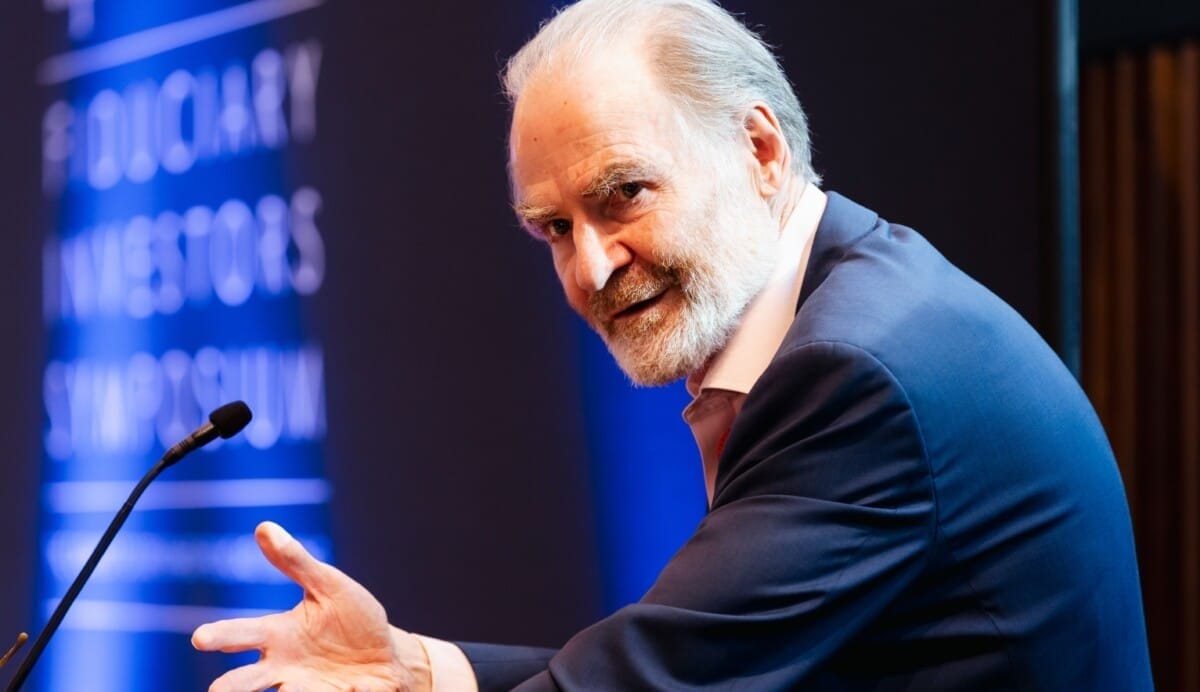
Timothy Garton Ash. Photo: Jack Smith

Europe has been shaken by three shocks in the shape of three presidents – Putin, Xi and Trump, said Timothy Garton Ash, Isaiah Berlin Professorial Fellow and Professor of European Studies at the University of Oxford.

In the decades after WW2, Europe was reconstructed, created a European Community and had a solid security guarantee from the US under the NATO umbrella. It also steadily expanded.

Between 1989 to 2007, in a series of extraordinary achievements after the fall of the Soviet Union, former communist European countries transitioned to market economies and liberal democracies. Standout stories include Poland (now a trillion-dollar economy), the Czech Republic, and the Baltic states, which did not exist on the political map of Europe in 1989 and are now flourishing democracies and part of the EU and NATO.

“In Eastern Europe, the joke at the time was we know that you can turn an aquarium into fish soup, but can you turn fish soup back into an aquarium? And we did. In all these countries, we turned fish soup back into an aquarium. Some pretty odd aquariums, I grant you, as you look across post-Soviet Europe, but [aquariums] nonetheless,” Garton Ash said at the Fiduciary Investors Symposium at Oxford University.

The European Community became the European Union and rolled out huge projects like the euro, Schengen free movement and ongoing enlargement.

But a turning point came in 2008, at the beginning of the GFC, when Vladimir Putin seized two chunks of Georgia by force, beginning a cascade of crises. The GFC segued into recession and the Eurozone crisis; Putin conducted military seizures in Crimea that led to a full-scale invasion of Ukraine that continues today. Meanwhile, Europe continues to reel from a refugee crisis, Brexit, and a surge of support for populists.

Sponsored Content

“Now, shockingly, we are well into the fourth year of a major interstate land war in Europe, which has cost at least one million killed and wounded and untold suffering,” he said.

The Russian shock

Putin is a story of the Empire Strikes Back: it’s what declining empires do, said Garton Ash.

What was exceptional was that the Soviet empire, softly and suddenly vanished away in just three years between 1989 and 1991 with hardly a shot fired in anger. In historical terms, Russia’s invasion of Georgia, Crimea and Ukraine was predictable.

“Our mistake was not to be prepared for it when it happened,” he said. “There is still tremendous energy behind Putin and Russia’s effort to recover as much as possible of its empire and sphere of influence.”

And although Europe is waging war with Russia, most of the rest of the world has been quite happy to go on having good relations with Russia. Not just China, but India, Turkey, Brazil and South Africa. “All of them continue to see Russia as an entirely acceptable partner in a transactional great power world. Russia remains either an ally or a necessary partner, and you can see that in the diplomacy.”

What’s more, these powers have sufficient wealth and power to counterbalance the West. In 2024, the BRICS, measured at purchasing power parity, have economies $10 trillion larger than the G7. For the first time in well over 200 years, there’s sufficient wealth and power outside the West.

“We’re in a post-Western world,” he said.

The Trump effect

The election of President Trump has resulted in the crumbling of the West as a single coherent geopolitical actor. Trump has accelerated a long-term trend already underway, which questions about whether a stronger, more united Europe is in the interests of the US, given its pivot to Asia and focus on nation-building at home.

“We can no longer rely in the way we did for all those years on the US security guarantee,” said Garton Ash, arguing that the cooling relationship today is no different to historical periods when the US has withdrawn from Europe and been indifferent to Europe.

What the future holds

Garton Ash said the future of Europe rests on a number of key issues, amongst which the most important is the outcome of the war in Ukraine.

But the war won’t be decided in a single moment, rather via a process over a number of years. It depends on Ukraine, with the help of Europe, building up sufficient power to deter Putin or any likely successor. It will also depend on the extent to which the economy has been reconstructed and if young Ukrainians return to the country.

Success will also depend on the extent to which democracy has been integrated, and if Ukraine is on a path to membership in the European Union.

“The fact that Ukraine has been accepted as a candidate for membership, remarkable in itself, means nothing at all. Turkey has been a candidate since 1999.”

However, if these criteria are met, he said it is possible to say Ukraine has effectively won despite the huge loss of territory. But he warned against another future where Russia is seriously tempted to have another go because the deterrence is not credible enough.

Europe’s future also depends on the continent building up its defence sector.

Encouragingly, European countries (apart from Spain) are beginning the process but the industry is still fragmented and there will still be a minimum of European security that can only come from the US, like top-level intelligence, and extended nuclear deterrence.

Mario Draghi’s celebrated 400-page report, commissioned by the European Commission to provide a roadmap out of the continent’s ills, also needs implementing.

The EU is a slow-moving animal, and so far only 11 per cent of recommendations have been implemented.

Success will rest on Germany – a country that flourished on the back of exporting to China – cheap energy (from Russia) and security (from the US) driving the changes Draghi lays out.

“In a sense, Germany is right at the heart of this sense of crisis, but at the same time that gives Germany the incentive to be the driver of change.”

Other factors that will impact Europe’s future include the success or failure of the UK outside Europe. The continent must also solve cultural and economic discontent, and integrate essential policies like affordable housing. Failure to do so will open the door to populists in the swathe of elections due across the continent in the next five years.

But Garton Ash said “there is an argument” for having populists win elections to get them off the sidelines. Their political fortunes in Hungary and the Netherlands show that populists aren’t very good at governing either.

Leave a Comment

Why allocators need a ‘continuous exploration’ mindset for AI adoption

Why allocators need a ‘continuous exploration’ mindset for AI adoption

Asset owners are seeing a major shift in data management and analytics as AI enables more efficient investment processes. CPP Investments and OPTrust outline how the technology is being progressively integrated into their funds.

Sort content by

HarbourVest: Europe’s illiquid markets make private markets difficult

John Toomey, chief executive officer of Boston-based HarbourVest Partners shares his observations of investment opportunities in Europe where the availability of capital, skill and risk appetite still pales compared to the US.

The case for Bitcoin as a store-of-value asset in pension portfolios

Many asset owners are hesitant to invest fiduciary capital into cryptocurrencies due to their perceived volatility and uncertain fundamentals, but Australian pension fund AMP Super, which has bought into Bitcoin via its DAA program, argued that they could be an emerging store-of-value asset comparable to gold.  

LP demands for bespoke solutions define new era for private managers

Private asset managers can expect to work harder for LP capital as allocators increasingly look for more bespoke, flexible structures that meet their changing needs around liquidity, fee and types of exposures. Investors at FIS Oxford unpack how they approach manager relationships in the new era of private investments. 

Chasing market swings a ‘loser’s game’ for active managers: Loomis Sayles

Aziz Hamzaogullari, chief investment officer of growth equity strategies at Loomis Sayles, has urged active investors to focus on long-term consumer and enterprise demands, warning that chasing short-term market moods and toggling between “risk-on” and “risk-off” positions is ultimately a “loser’s game”. 

Apollo: Integration crucial for Europe’s investment future

Tristram Leach, the London-based head of investments at Apollo, said a lack of integration among the fragmented European regulatory and market structures is making it harder for investors to deploy in the region. He warned that, without deeper coordination, Europe risks missing out on the global capital rotation.

Expect a 5-to-10-year wait for 401(k) plans to enter private markets

The risk of litigation and liquidity concerns mean America's 401(k) funds won't venture into private markets for five to 10 years, said T. Rowe Price's Michael Davis, speaking at FIS Oxford. But he said legislation has played a powerful role in shaping the US retirement industry.