
APG: Europe’s fragmented market and risk aversion dent opportunities

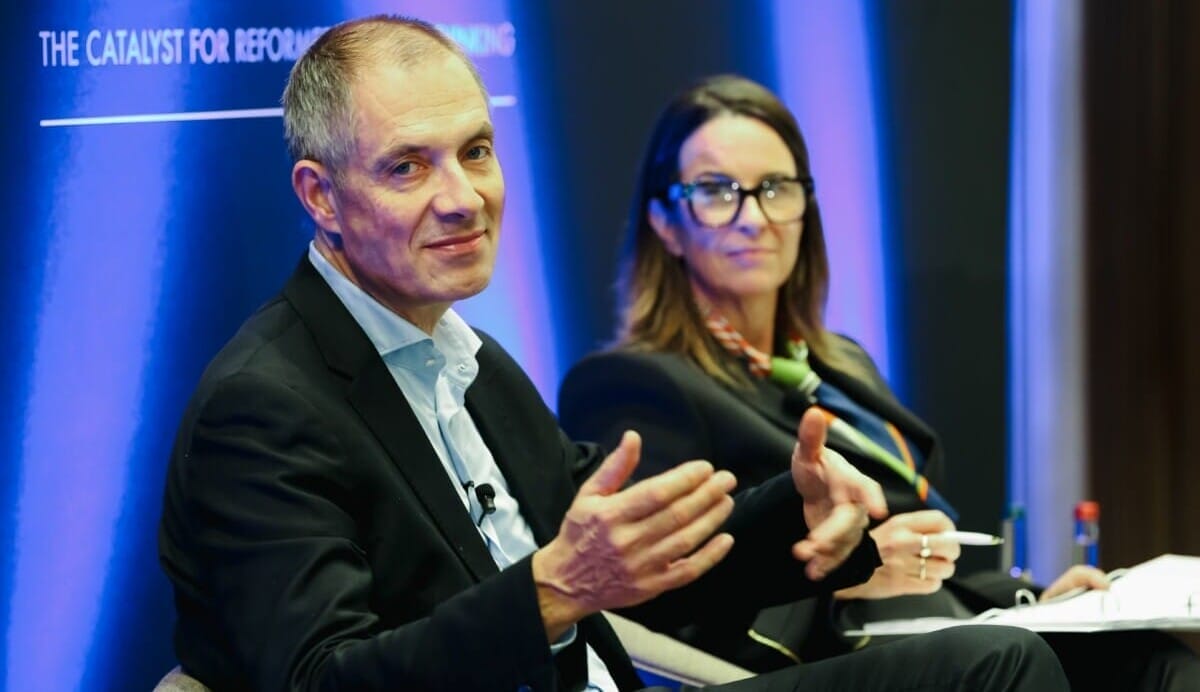
Ronald Wuijster. Photo: Jack Smith

The ability of Europe’s innovative companies to grow and scale is stymied by a lack of access to capital and fragmented markets, and it is causing companies to move to the US in a downward spiral, said Ronald Wuijster, chief executive officer of Europe’s largest investor, APG Asset Management.

“Talent that wants to grow is not staying in Europe,” he told the Fiduciary Investors Symposium at Oxford University.

Wuijster listed roadblocks like Europe’s fragmented insolvency legislation, which differs between countries. Meanwhile, the absence of a capital markets union makes it hard for fast-growing companies to access the finance they need to grow and fire up a competitive European economy.

“There are fiscal reasons, regulatory reasons and many systematic reasons,” he said. “Reasons also maybe have to do with culture sometimes,” he added, referencing European member states’ deeply held national differences that thwart the prospect of a capital markets union, as well as a psychology of risk aversion.

Encouraging investors to take more risk would require a universal approach that includes fiscal policies – tax on equity returns acts as a deterrent, for example. He also called for cohesive action to encourage different stakeholders to work together. At the moment, the investor community is fragmented, characterised by small groups of asset owners, ETF suppliers, insurance companies and the like, who fail to act in concert.

Opportunities in quantum and defence

Wuijster said investment opportunities still exist in fast-growing companies in sectors like quantum computing and biotechnology. Patents are spinning out of European universities and there is a vibrant community of start-up entrepreneurs. He added that investment opportunities also exist in Europe’s large, old-fashioned sectors.

Sponsored Content

He flagged investment opportunities in private markets and said venture capital investors should focus on Europe as a whole. Security (rather than defence) is another emerging theme where APG is exploring opportunities in infrastructure and fixed income investments that support the institutions investing in defence.

APG has sizeable exposures to the US and Asia, where it has offices in New York, Hong Kong and Singapore. Wuijster said having boots on the ground supports investment because it allows APG to get closer to the companies in which it invests, and influence corporate boards.

But he also warned that Asia’s large slice of global GDP and growing populations don’t necessarily equate to great investments. Having investment teams on the ground brings cost pressures that bring margins down, and success requires operational excellence.

Meanwhile, successful co-investment requires alignment on return targets, duration and ESG, where APG focuses much of its risk management. But integrating ESG remains challenging because of crimped access to information and different sources of data. Positively, proximity to corporate boards and access to local information support ESG alignment.

APG also uses AI to identify the alignment of its investments with the Sustainable Development Goals, and uses the technology to analyse contracts with counterparties.

Maintaining APG’s culture and purpose in outposts in Asia and New York requires hiring people with shared interests prepared to stay for the long term.

“[We] attract a somewhat different workforce. And people like the atmosphere,” he said.

Leave a Comment

Why allocators need a ‘continuous exploration’ mindset for AI adoption

Why allocators need a ‘continuous exploration’ mindset for AI adoption

Asset owners are seeing a major shift in data management and analytics as AI enables more efficient investment processes. CPP Investments and OPTrust outline how the technology is being progressively integrated into their funds.

Sort content by

HarbourVest: Europe’s illiquid markets make private markets difficult

John Toomey, chief executive officer of Boston-based HarbourVest Partners shares his observations of investment opportunities in Europe where the availability of capital, skill and risk appetite still pales compared to the US.

The case for Bitcoin as a store-of-value asset in pension portfolios

Many asset owners are hesitant to invest fiduciary capital into cryptocurrencies due to their perceived volatility and uncertain fundamentals, but Australian pension fund AMP Super, which has bought into Bitcoin via its DAA program, argued that they could be an emerging store-of-value asset comparable to gold.  

LP demands for bespoke solutions define new era for private managers

Private asset managers can expect to work harder for LP capital as allocators increasingly look for more bespoke, flexible structures that meet their changing needs around liquidity, fee and types of exposures. Investors at FIS Oxford unpack how they approach manager relationships in the new era of private investments. 

Chasing market swings a ‘loser’s game’ for active managers: Loomis Sayles

Aziz Hamzaogullari, chief investment officer of growth equity strategies at Loomis Sayles, has urged active investors to focus on long-term consumer and enterprise demands, warning that chasing short-term market moods and toggling between “risk-on” and “risk-off” positions is ultimately a “loser’s game”. 

Apollo: Integration crucial for Europe’s investment future

Tristram Leach, the London-based head of investments at Apollo, said a lack of integration among the fragmented European regulatory and market structures is making it harder for investors to deploy in the region. He warned that, without deeper coordination, Europe risks missing out on the global capital rotation.

Expect a 5-to-10-year wait for 401(k) plans to enter private markets

The risk of litigation and liquidity concerns mean America's 401(k) funds won't venture into private markets for five to 10 years, said T. Rowe Price's Michael Davis, speaking at FIS Oxford. But he said legislation has played a powerful role in shaping the US retirement industry.