

The CFA Institute, the global association of investment professionals that sets the standard for industry excellence and champions ethical behaviour, is seeking to promote stronger leadership and more robust governance in the sector.
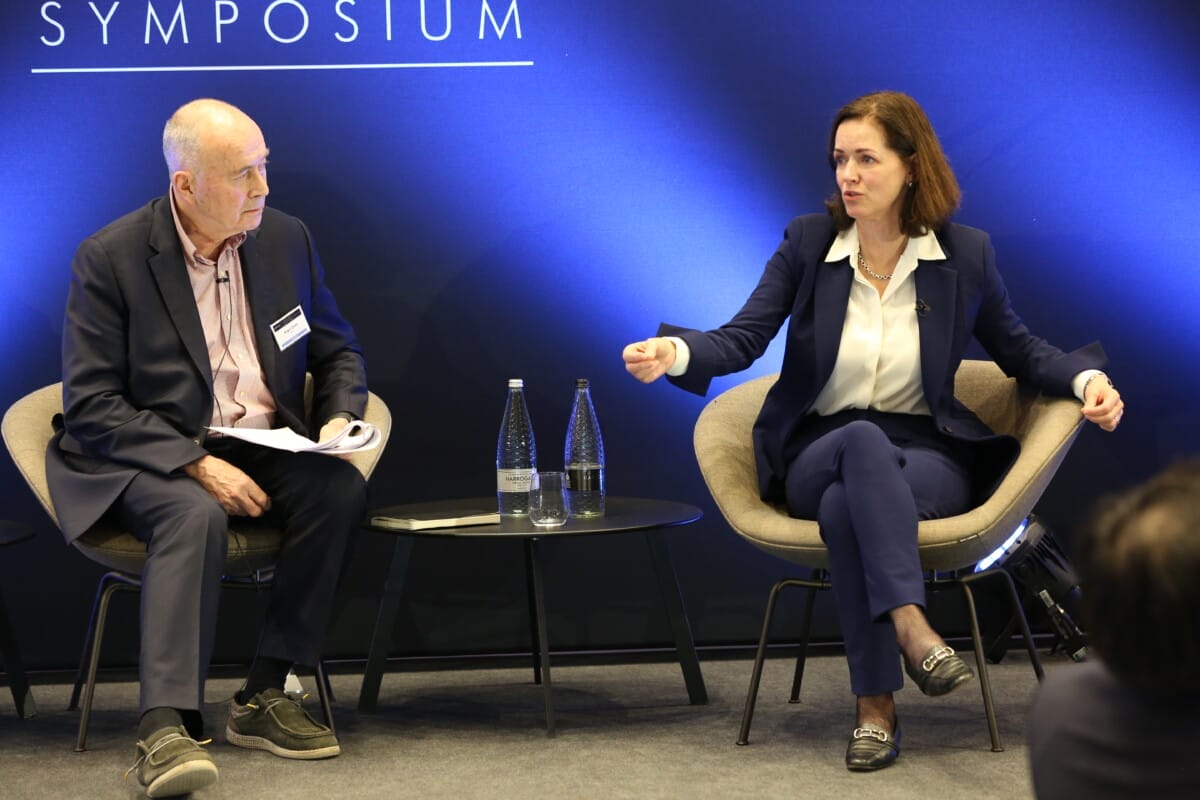
In a wide-ranging discussion at the Fiduciary Investors Symposium at Oxford, CFA Institute chief executive Margaret Franklin, and global head of content at WTW Roger Urwin, examined some of the challenges the industry faces and the need for evolution.
Asset owners sit at the heart of the Institute’s work, but it is also a platform and voice for the wider industry including asset managers, consultants and adjacent services. As a not-for-profit, Franklin and Urwin said the CFA Institute has a unique currency of neutrality in its mission to lead the investment profession with a louder voice.
Leadership and skills
One area the investment industry needs to improve is the system’s leadership to help navigate growing risks like geopolitics. The CFA Institute is involved in skilling and upskilling investment professionals throughout their career, but key challenges include the fact employers often don’t know the precise skills they need to deliver the outcomes they seek.
Urwin and Franklin flagged concerns that the wider asset management community lacks competent leadership through the value chain, and is too focused on short-term performance. They also spoke of the risk in the industry whereby complexity becomes dialled into the system.
The Institute has doubled down on net zero and conducts thought leadership to help overcome structural barriers to net zero. Much of that work involves making net zero practical, structural and relatable, and enabling asset owners to implement targets. The Institute has published research from a range of authors that covers carbon pricing to research on benchmarks. But Urwin and Franklin noted much of the work it does in this area in the US, is met with resistance.
Another challenge is diversity. Franklin noted the challenges around gender diversity in the investment sector and that the number of women working in the industry over the course of her career has not significantly increased.
T Shaped skills
The CFA Institute also espouses the importance of T-shaped skills that combine deep technical knowledge with a broad understanding of other disciplines. It is these kinds of investment skills that best support a total portfolio approach, the ability to design an organization or ensure diversity to capitalize on portfolio outcomes.
Governance in the sector is also a concern – and pillar for successful investment. Franklin and Urwin warned of the lack of competence on boards that could be exposed in the face of sudden illiquidity in private markets, for example. T-shaped skills help “connect the dots” and empower investors to work with specialists and ensure robust communication with stakeholders. Yet boards often don’t understand the complexity of the job; have short attention spans and are not equipped with the right tools.
They both observed how the “system is stretched” and the speed of potential change could be destabilizing.
Robust, independent governance has become all the more important since governments in some countries are looking to pension plans as a way to remedy a lack of public policy.
“We don’t believe politicians should be directing pools of assets,” said Franklin, who referenced how the board of Canadian pension fund AIMCo were recently sacked, just at a time the Canadian system is being lauded for its governance in countries seeking to change their pension system like the UK.
AI will allow investors to draw strategy from data and improve the investment process, important strengths given the fact asset management firms have stretched resources; face increased costs and lower returns because of the macro environment. But they noted that many firms are behind on their ability to incorporate AI.
Franklin added that people with subject matter expertise remain vitally important to the investment process because they know the questions to ask the technology – and can judge the quality of its response. They warned that the opportunity of AI is likely to have been overestimated in the short term but underestimated in the long-term and that important investment skills like empathy and creativity can’t come out of AI.
Urwin also flagged the importance of measurement within organizations, noting that “what gets measured gets managed.” He said the industry needed to work harder on measurement because investment performance is a poor signal of predicting something in the future.








Leave a Comment
You must be logged in to post a comment.
Login