
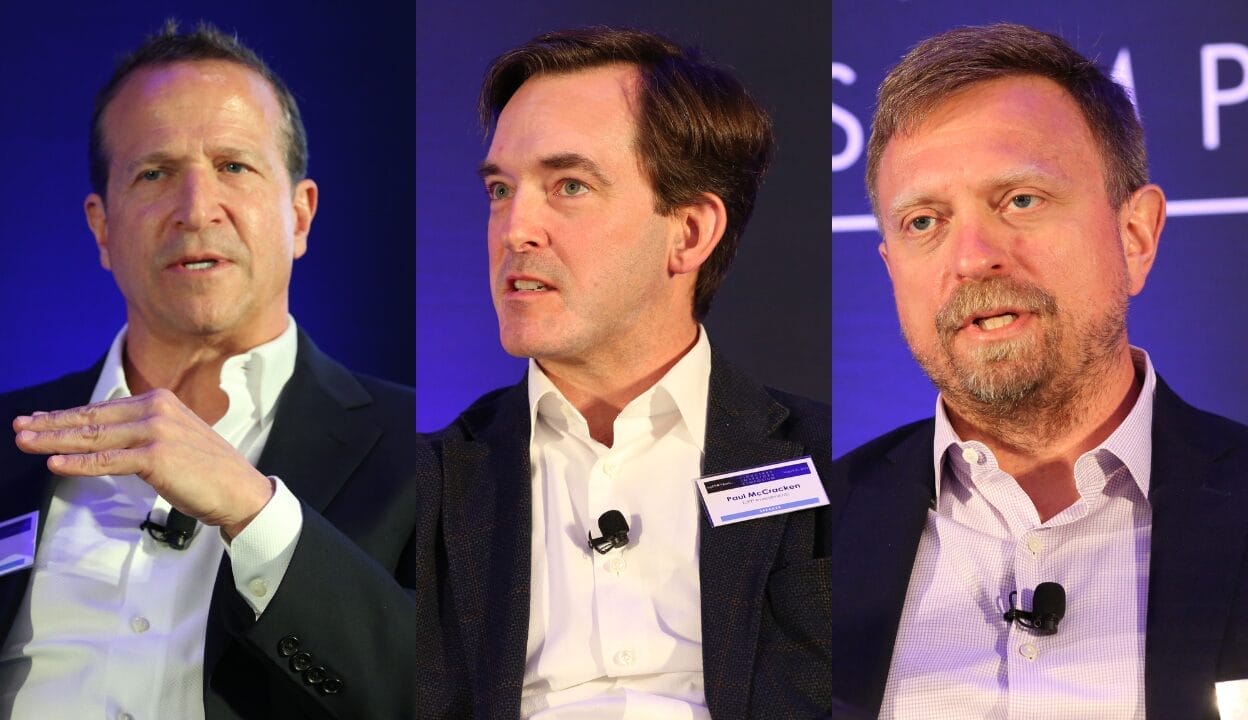

The healthcare sector emerges as an attractive destination for asset owner capital as new technologies reshape established and startup companies and regulatory headwinds abate, according to a panel of investors.
“[Healthcare] is very ripe for investing and has been for a long time,” Paul McCracken, managing director of growth equities at the $470 billion Canada Pension Plan Investment Board (CPPIB), told the Top1000Funds.com Fiduciary Investors Symposium at Harvard University.
“It’s huge, it’s growing fast, it has historically, both in public and private equity, been a category where specialists have reaped excess returns. In this environment, where change is accelerating, that view holds as much as ever.”
CPPIB has some venture capital exposure for “earlier stage, moonshot-type investments”, but it typically takes a more diversified exposure, with its overall program covering everything from bets on small, unproven companies to classic growth equity.
“I think for a lot of generalist investors it’s a very tricky area,” McCracken said. “The number of things you have to keep track of, the number of risks in terms of projecting outcomes, is getting harder. And it seems like a great period to continue to allocate to healthcare, and it’s a great place to deploy capital for a large asset allocator.”
Bolstering that view is the fact that healthcare is finally going to start integrating with technology in a more holistic way, following years of predictions that have – until now – not come to pass, according to Philip Broenniman, managing partner and portfolio manager at Varana Capital.
“We’re really at a nexus where there’s artificial intelligence, but also robotics; two years from now there’s going to be opportunities we never imagined. There will be things I can imagine,” Broenniman said.
“AI helping reduce the need for phase one studies by creating new combinations, new therapies and… being able to test automatically, electronically, being able to test therapies and then maybe accelerate the approval process. I don’t know that robotics, at least in the near term, will be used for something like general surgery, but for micro activities within and without the operating room? Absolutely. We are really going to see a mashup of healthcare and technology now.”
Healthcare typically lags behind tech by a decade due to the fact that it’s a highly regulated business, while technology companies can go directly to consumers without the need for lengthy trials. The industry is now at an “inflection point”, according to Daniel Matviyenko, managing director and portfolio manager for healthcare strategies at Jennison Associates, but it’s “going to take a little bit more time”.
“On opportunities, we love to be contrarian,” Matviyenko said.
“There was some commentary earlier about budgets being cut, but we’re very excited about the life science tool space… thematically we think that sector is going to do very well going forward, because you had multiple years of underperformance. A lot of those headwinds, we think will abate. The NIH funding won’t get cut 40 per cent and China, once we’re done with this nonsense trade war, will come back. And lastly, we think pharma and biotech are returning to spend.”
But investors should perhaps temper their enthusiasm for the next shiny thing. Some of the biggest value creation has come from established companies with established therapies.
“Leading into the pandemic, there was a lot of enthusiasm about AI and cell therapy and gene therapy, mRNA,” McCracken said.
“And I think we’ve seen sort of moving through various stages of the trough of disillusionment, you know, in each of these categories. Where has the most value being created? It’s been in obesity, and two publicly traded companies. It’s kind of like the Nvidia moment for healthcare.”
“This information was in plain view, and very astute public markets investors took very large positions where they saw real indications from human clinical trials. These are the things that are going to move the needle on big cardiovascular outcomes. So it’s a good object lesson for me anyway, that we ought not to be looking through one lens to see where the value creation is going to be.”







Leave a Comment
You must be logged in to post a comment.
Login