
Potential storms ahead in the banking sector

Panellists discuss the possible impact of corporate failures on European banks coming out of the pandemic, and note central banks juggling act around digital currencies; unable to halt their arrival but still having to marshal progress and ensure the technology doesn’t weaken financial stability. The session examined the structural trends in the financial sector that have been entire amplified or altered by the COVID crisis.

The pandemic has triggered a re-leveraging event amongst governments, firms and households with important consequences for two-way risk, said Jeremy Lawson, chief economist, Aberdeen Standard Investments. Speaking at FIS Digital 2021 he said current leverage levels are a gateway to higher inflation or an entrenched lower for longer interest rate regime. He also described the current financial backdrop as unstable with fatter tails around inflation.

“It complicates how we think about the environment,” he said.

Lawson highlighted the importance of monetary and fiscal coordination, stressing the importance of fiscal policy now rotating from support to long-term stimulus. Outside the US where large public investment plans are underway, he said he was sceptical if this rotation would occur. He added it wasn’t clear if policy mistakes of the past wouldn’t be repeated.

Lawson told delegates to expect a structurally subdued inflation environment going forward, with European economies, Japan, Australia, Korea and China struggling to meet long-term inflation targets. He argued that the current factors pushing up inflation like supply bottlenecks in goods will ease when demand moderates and supply catches up, but he noted the challenge for investors dis-entangling the cyclical and structural forces impacting inflation.

Stefan Dunatov, executive vice president strategy and risk at British Columbia Investment Management Corporation suggested service sector inflation might be capped by long term trends in technology disrupting global services. In response, Lawson noted that although remote working in the services sector could push down prices, the pandemic has also pushed up pay levels amongst low skilled workers.

Sponsored Content

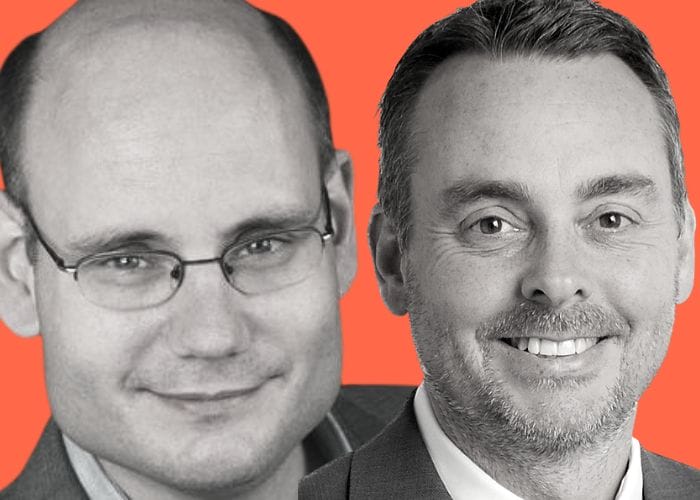
Fellow panellist Professor Thorsten Beck, Professor of Banking and Finance at Cass Business School and a research fellow at the Centre for Economic Policy Research flagged the likelihood of divergence between different regions. He said he expects interest rates to remain lower for longer in Europe, but sees inflation risk in the US and UK. However, he qualified that both these inflation shocks could be transient. Beck said today’s corporate over indebtedness is linked to optimism around the vaccine and recovery.

Beck flagged key risks around banks’ ability to weather corporate failures. People are confident in the banking sector, he said but warned of potential storms ahead. While some firms can handle their debt levels, others may have to restructure, and others may not make it at all.

Corporate insolvency laws vary across Europe with different levels of efficiency regarding restructuring. It means corporate debt could end up on bank balance sheets. He said this combination of corporate and bank fragility could be confined to certain geographies and will depend on the regulatory and policy response. There is a lot of space for mistakes he said, but added that policy makers in Europe have a new level of coordination following the GFC, and said that decisions will ultimately be taken at the political level.

Cryptocurrency

David Veal, chief investment officer of the City of Austin Employees Retirement System asked panellists if they expected structural changes in the financial system, and if central banks will introduce new policy tools to navigate the new environment. It turned the conversation to cryptocurrency, where panellists responded that although central banks have opened the door to changes in the payment systems, they are reluctant to cede control or decentralise finance because of concerns around financial stability. Central banks are looking closely at digital assets and involved in their evolution to ward off disruption from the emergence of private digital currencies.

Any transition from a heavily banked system or signal of a changing dynamic will see investors re-evaluate how they value the banking sector. Any transition amounts to a highly complex exercise for central banks which can’t halt the arrival of new technology, but have to marshal its progress and ensure it doesn’t weaken financial stability.

Beck also noted how the growth of corporate funding by non-banks can make monetary policy less effective. Linking back to earlier points on bank fragility, he said it was important to create cross border banks rather than silos. Regarding digital currencies, he said central banks are reacting with a defensive regulatory response that allows fintechs to have a role in the payments system, but also protects traditional finance. Noting how China has gone further in limiting the size of big tech companies, he said the regulatory response (in the west) will be careful and cautious: expect a change but not a revolution, he concluded.

Leave a Comment

A post-COVID economy

A post-COVID economy

The big difference between the vaccine rollouts and the scale of the stimulus measures across the world could result in a K-shaped global economic recovery, with much of the developed world booming but poorer countries continuing to struggle. However the

Sort content by

Transparency’s many investor benefits

Research that looks at the relationship between economic transparency and defining investment qualities such as yield spreads, credit ratings and stock price volatility shows sovereign transparency helps improve the value of assets, enables countries to lower their borrowing costs and achieve a better credit rating.

Inflation is coming. Time to act

Inflation holds investor opportunities as well as perils. Emerging markets, commodities and linkers do well in a climate of rising prices while central banks are likely to act quickly and aggressively in response rather than early or gradually.

Debt levels point to subpar growth in years ahead

The unprecedented level of government debt signals sub-par economic growth ahead, warned Farouki Majeed, chief investment officer, Ohio School Employees Retirement System speaking at FIS Digital alongside Rich Randall, head of global debt at IFM Investors.

Navigating inflation: The challenge and opportunity

Inflation is the number one investor concern and whether it is here to stay was the subject of much debate at the Fiduciary Investors Symposium. While its longevity is contested it was agreed that its presence has important implications for the correlation between bonds and equities which creates problems for portfolio design. Investors at PGIM, QMAW, CPP Investments and NEST discuss.

Fiduciary Investors Symposium 2021: Day 1

Watch day one of the Fiduciary Investors Digital event like it’s a live stream. All the action and all the speakers can be viewed here.

Fiduciary Investors Symposium 2021: Day 2

Watch day two of the Fiduciary Investors Digital event like it’s a live stream. All the action and all the speakers can be viewed here.

Previous