

Could COVID-19 be the event that finally forces many companies, and entire industries, to rethink and transform their global supply chain model?
Read the article here
Managing supply chain risk and disruption
Could COVID-19 be the event that finally forces many companies, and entire industries, to rethink and transform their global supply chain model?
Read the article here
Managing supply chain risk and disruption
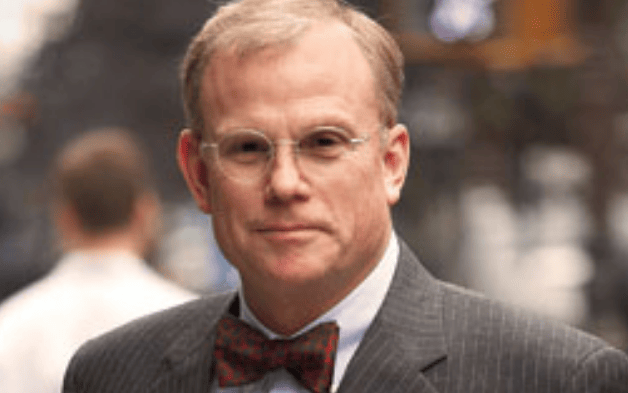
The Florida State Board of Administration has made some strategic moves to take advantage of opportunities in the dislocation, including in private equity, distressed debt and active listed equities.. But CIO, Ash Williams, is concerned about the underlying real economy.
In this note McKinsey & Company offers its latest insights on the COVID-19 pandemic, starting with a survey of the current epidemiology and the five dynamics leaders need to watch.
This paper argues that the COVID-19 pandemic is an inevitable result of globalisation and that the pandemic, in turn, has seriously threatened the world’s globalisation, but adverse effects on globalisation will be temporary.
Although governments everywhere are scrambling to contain the economic fallout from COVID-19, some are approaching the task more strategically than others. The European Union and China, in particular, are focusing on long-term investments in clean energy, whereas America is doubling down on the past.
While some degree of deglobalisation may be desirable today, this process also carries grave risks, from skyrocketing production costs to geopolitical conflict. The only way to mitigate those risks is through enhanced multilateral cooperation.
China's decision to demolish the "one country, two systems" arrangement in Hong Kong appears to be a fait accompli, and in fact seems to have been preordained. Viewed in a broader context, the move represents a major salvo in a new cold war that is already playing out across three critical dimensions.
There is a lack of understanding in investment decision-making about how big the climate crisis is which could lead to investments and risks being mis-directed, according to Professor Cameron Hepburn, Professor of Environmental Economics at Oxford University.



Top1000funds.com is the market leading news and analysis site for the world’s largest institutional investors. It focuses on leading the global investment industry to continuous improvement through case studies of best practice in governance and decision making, portfolio construction and efficient portfolio management, fees and costs, and sustainable investing.
The publication pushes the industry to question whether status quo processes and behaviours to tackle risks and opportunities will be sufficient in the future, and actively campaigns for diversity, sustainability, transparency, innovation and better alignment of fees in the investment industry.
Top1000funds.com is read by investment professionals in more than 40 countries.




Leave a Comment
You must be logged in to post a comment.
Login