COVID-19 and the climate hole

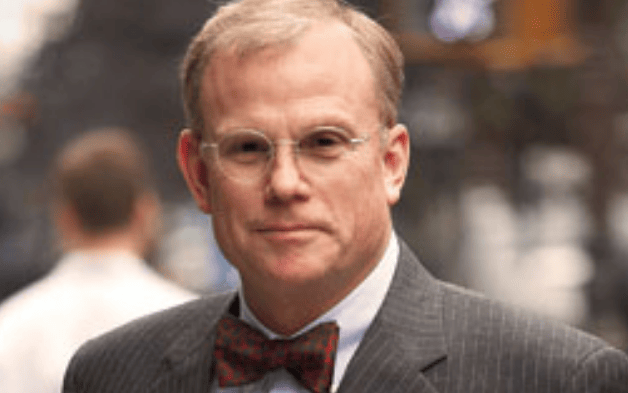
In this Fiduciary Investors Series podcast Amanda White talks to Professor Cameron Hepburn,  Professor of Environmental Economics, and the director of the economics sustainability programme, at the University of Oxford.

They discuss: some of the more recent energy innovations; and the ideal price on carbon; as well as what is needed to move to a net-zero carbon economy.

Importantly Professor Hepburn discusses the role of finance and the need to recognise that both the finance and climate environments are complex adaptive systems, and that backward-looking analysis is not appropriate for adequate risk management.

“We need to get out of the old paradigms,” he says. “Even the concept of the Black Swan, doesn’t really help us to capture the fact these distributions are not bell shaped, or fat tailed or non-normal distributions. These are interactions between parts of the economy that are shifting the distribution altogether. So these things that are supposed to be a 1 in 10,000 event become the mean because you’ve shifted the distribution.”

He ends by offering some advice to institutional investors on how they should be including climate risks and opportunities into their investment decision-making, and the best way of doing that.

For further reading go to The Smith School of Enterprise and the Environment, Oxford University[vc_quotes layout=”accordion” quotes=”%5B%7B%22name%22%3A%22Cameron%20Hepburn%22%2C%22job_role%22%3A%22Director%20of%20the%20Smith%20School%20of%20Enterprise%20and%20the%20Environment%20(United%20Kingdom)%22%2C%22content%22%3A%22Cameron%20Hepburn%20is%20the%20Director%20of%20the%20Economics%20of%20Sustainability%20Programme%2C%20based%20at%20the%20Institute%20for%20New%20Economic%20Thinking%20at%20the%20Oxford%20Martin%20School.%20He%20is%20also%20Director%20and%20Professor%20of%20Environmental%20Economics%20at%20the%20Smith%20School%20of%20Enterprise%20and%20the%20Environment%2C%20a%20Fellow%20at%20New%20College%2C%20Oxford%2C%20and%20a%20Professorial%20Research%20Fellow%20at%20the%20Grantham%20Research%20Institute%20at%20the%20London%20School%20of%20Economics.He%20has%20published%20widely%20on%20energy%2C%20resources%20and%20environmental%20challenges%20across%20a%20range%20of%20disciplines%2C%20including%20engineering%2C%20biology%2C%20philosophy%2C%20economics%2C%20public%20policy%20and%20law%2C%20drawing%20on%20his%20degrees%20in%20law%2C%20engineering%20and%20doctorate%20in%20economics.%20He%20is%20on%20the%20editorial%20board%20of%20Environmental%20Research%20Letters%20and%20is%20the%20managing%20editor%20of%20the%20Oxford%20Review%20of%20Economic%20Policy.%20Cameron%E2%80%99s%20research%20is%20often%20referred%20to%20in%20the%20printed%20press%2C%20and%20he%20has%20been%20interviewed%20on%20television%20and%20radio%20in%20many%20countries.Cameron%20provides%20advice%20on%20energy%20and%20climate%20policy%20to%20government%20ministers%20(e.g.%20China%2C%20India%2C%20UK%20and%20Australia)%20and%20international%20institutions%20(e.g.%20OECD%2C%20UN%20organisations)%20around%20the%20world.%20Cameron%20began%20his%20professional%20life%20with%20McKinsey%2C%20and%20has%20since%20had%20an%20entrepreneurial%20career%2C%20co-founding%20three%20successful%20businesses%20%E2%80%93%20Aurora%20Energy%20Research%2C%20Climate%20Bridge%20and%20Vivid%20Economics%20%E2%80%93%20and%20investing%20in%20several%20other%20social%20enterprises%2C%20such%20as%20Purpose%20and%20Apolitical.%20He%20also%20serves%20as%20a%20trustee%20for%20Schola%20Cantorum%20of%20Oxford.%22%2C%22image%22%3A%2231863%22%2C%22linkedin%22%3A%22https%3A%2F%2Fwww.linkedin.com%2Fin%2Fcameronhepburn%2F%3ForiginalSubdomain%3Duk%22%7D%2C%7B%22name%22%3A%22Amanda%20White%22%2C%22job_role%22%3A%22Director%20of%20institutional%20content%2C%20Conexus%20Financial%20(Australia)%22%2C%22content%22%3A%22Amanda%20White%20is%20responsible%20for%20the%20content%20across%20all%20Conexus%20Financial%E2%80%99s%20institutional%20media%20and%20events.%20In%20addition%20to%20being%20the%20editor%20of%20Top1000funds.com%2C%20she%20is%20responsible%20for%20directing%20the%20global%20bi-annual%20Fiduciary%20Investors%20Symposium%20which%20challenges%20global%20investors%20on%20investment%20best%20practice%20and%20aims%20to%20place%20the%20responsibilities%20of%20investors%20in%20wider%20societal%2C%20and%20political%20contexts.%20%20She%20holds%20a%20Bachelor%20of%20Economics%20and%20a%20Masters%20of%20Art%20in%20Journalism%20and%20has%20been%20an%20investment%20journalist%20for%20more%20than%2025%20years.%20She%20is%20currently%20a%20fellow%20in%20the%20Finance%20Leaders%20Fellowship%20at%20the%20Aspen%20Institute.%20The%20two-year%20program%20seeks%20to%20develop%20the%20next%20generation%20of%20responsible%2C%20community-spirited%20leaders%20in%20the%20global%20finance%20industry%22%2C%22image%22%3A%2231864%22%2C%22linkedin%22%3A%22https%3A%2F%2Fwww.linkedin.com%2Fin%2Famanda-white-101a7515%2F%22%7D%5D” title=”” el_class=””]

Sponsored Content

Leave a Comment

Florida: Opportunities in a crisis

Florida: Opportunities in a crisis

The Florida State Board of Administration has made some strategic moves to take advantage of opportunities in the dislocation, including in private equity, distressed debt and active listed equities.. But CIO, Ash Williams, is concerned about the underlying real economy.

Sort content by

Deglobalisation will hurt growth

Even if the United States turns a blind eye to deglobalization’s effects on the rest of the world, it should remember that the current abundant demand for dollar assets depends heavily on the vast trade and financial system that some American politicians aim to shrink. If deglobalization goes too far, no country will be spared.

COVID-19: Managing supply chain risk

Could COVID-19 be the event that finally forces many companies, and entire industries, to rethink and transform their global supply chain model?

Three pillars to the economic response

Academics at Chicago Booth looks at three important pillars of the economic policy response to the COVID-19 crisis.

Global macroeconomic impacts of COVID-19

The scenarios in this paper demonstrate that even a contained outbreak could significantly impact the global economy in the short run.

A decade needs a purpose

The decade ahead promises to be one in which purpose gets to be much more widely entrenched and influential. And asset owners have a role to play in the path to purposeful capitalism.

Inequality risk equal to climate change

Rebecca Henderson, the John and Natty McArthur University Professor at Harvard University who co-teaches Reimagining Capitalism at HBS, says inequality is equal to climate risk in its potential impact. She told delegates at the Fiduciary Investors Symposium at Harvard University when a system no longer generates freedom and prosperity it must be changed. Change is possible because we have the resources and technology to do it. A first move is decent jobs for people at the “bottom”.

Previous