COVID-19 and the climate hole

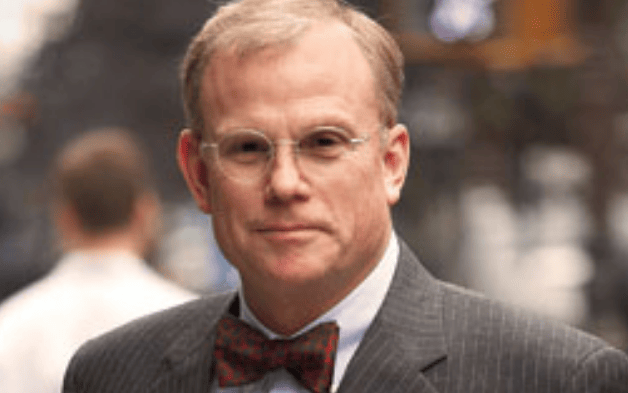
In this Fiduciary Investors Series podcast Amanda White talks to Professor Cameron Hepburn,  Professor of Environmental Economics, and the director of the economics sustainability programme, at the University of Oxford.

They discuss: some of the more recent energy innovations; and the ideal price on carbon; as well as what is needed to move to a net-zero carbon economy.

Importantly Professor Hepburn discusses the role of finance and the need to recognise that both the finance and climate environments are complex adaptive systems, and that backward-looking analysis is not appropriate for adequate risk management.

“We need to get out of the old paradigms,” he says. “Even the concept of the Black Swan, doesn’t really help us to capture the fact these distributions are not bell shaped, or fat tailed or non-normal distributions. These are interactions between parts of the economy that are shifting the distribution altogether. So these things that are supposed to be a 1 in 10,000 event become the mean because you’ve shifted the distribution.”

He ends by offering some advice to institutional investors on how they should be including climate risks and opportunities into their investment decision-making, and the best way of doing that.

For further reading go to The Smith School of Enterprise and the Environment, Oxford University[vc_quotes layout=”accordion” quotes=”%5B%7B%22name%22%3A%22Cameron%20Hepburn%22%2C%22job_role%22%3A%22Director%20of%20the%20Smith%20School%20of%20Enterprise%20and%20the%20Environment%20(United%20Kingdom)%22%2C%22content%22%3A%22Cameron%20Hepburn%20is%20the%20Director%20of%20the%20Economics%20of%20Sustainability%20Programme%2C%20based%20at%20the%20Institute%20for%20New%20Economic%20Thinking%20at%20the%20Oxford%20Martin%20School.%20He%20is%20also%20Director%20and%20Professor%20of%20Environmental%20Economics%20at%20the%20Smith%20School%20of%20Enterprise%20and%20the%20Environment%2C%20a%20Fellow%20at%20New%20College%2C%20Oxford%2C%20and%20a%20Professorial%20Research%20Fellow%20at%20the%20Grantham%20Research%20Institute%20at%20the%20London%20School%20of%20Economics.He%20has%20published%20widely%20on%20energy%2C%20resources%20and%20environmental%20challenges%20across%20a%20range%20of%20disciplines%2C%20including%20engineering%2C%20biology%2C%20philosophy%2C%20economics%2C%20public%20policy%20and%20law%2C%20drawing%20on%20his%20degrees%20in%20law%2C%20engineering%20and%20doctorate%20in%20economics.%20He%20is%20on%20the%20editorial%20board%20of%20Environmental%20Research%20Letters%20and%20is%20the%20managing%20editor%20of%20the%20Oxford%20Review%20of%20Economic%20Policy.%20Cameron%E2%80%99s%20research%20is%20often%20referred%20to%20in%20the%20printed%20press%2C%20and%20he%20has%20been%20interviewed%20on%20television%20and%20radio%20in%20many%20countries.Cameron%20provides%20advice%20on%20energy%20and%20climate%20policy%20to%20government%20ministers%20(e.g.%20China%2C%20India%2C%20UK%20and%20Australia)%20and%20international%20institutions%20(e.g.%20OECD%2C%20UN%20organisations)%20around%20the%20world.%20Cameron%20began%20his%20professional%20life%20with%20McKinsey%2C%20and%20has%20since%20had%20an%20entrepreneurial%20career%2C%20co-founding%20three%20successful%20businesses%20%E2%80%93%20Aurora%20Energy%20Research%2C%20Climate%20Bridge%20and%20Vivid%20Economics%20%E2%80%93%20and%20investing%20in%20several%20other%20social%20enterprises%2C%20such%20as%20Purpose%20and%20Apolitical.%20He%20also%20serves%20as%20a%20trustee%20for%20Schola%20Cantorum%20of%20Oxford.%22%2C%22image%22%3A%2231863%22%2C%22linkedin%22%3A%22https%3A%2F%2Fwww.linkedin.com%2Fin%2Fcameronhepburn%2F%3ForiginalSubdomain%3Duk%22%7D%2C%7B%22name%22%3A%22Amanda%20White%22%2C%22job_role%22%3A%22Director%20of%20institutional%20content%2C%20Conexus%20Financial%20(Australia)%22%2C%22content%22%3A%22Amanda%20White%20is%20responsible%20for%20the%20content%20across%20all%20Conexus%20Financial%E2%80%99s%20institutional%20media%20and%20events.%20In%20addition%20to%20being%20the%20editor%20of%20Top1000funds.com%2C%20she%20is%20responsible%20for%20directing%20the%20global%20bi-annual%20Fiduciary%20Investors%20Symposium%20which%20challenges%20global%20investors%20on%20investment%20best%20practice%20and%20aims%20to%20place%20the%20responsibilities%20of%20investors%20in%20wider%20societal%2C%20and%20political%20contexts.%20%20She%20holds%20a%20Bachelor%20of%20Economics%20and%20a%20Masters%20of%20Art%20in%20Journalism%20and%20has%20been%20an%20investment%20journalist%20for%20more%20than%2025%20years.%20She%20is%20currently%20a%20fellow%20in%20the%20Finance%20Leaders%20Fellowship%20at%20the%20Aspen%20Institute.%20The%20two-year%20program%20seeks%20to%20develop%20the%20next%20generation%20of%20responsible%2C%20community-spirited%20leaders%20in%20the%20global%20finance%20industry%22%2C%22image%22%3A%2231864%22%2C%22linkedin%22%3A%22https%3A%2F%2Fwww.linkedin.com%2Fin%2Famanda-white-101a7515%2F%22%7D%5D” title=”” el_class=””]

Sponsored Content

Leave a Comment

Florida: Opportunities in a crisis

Florida: Opportunities in a crisis

The Florida State Board of Administration has made some strategic moves to take advantage of opportunities in the dislocation, including in private equity, distressed debt and active listed equities.. But CIO, Ash Williams, is concerned about the underlying real economy.

Sort content by

Quantitative science

Fixed income investing has undergone a sea change in the past decade. By tossing out some active management orthodoxies and embracing new technologies and quantitative techniques, we believe some managers are better equipped to capture unique insights and excess returns for their clients.

COVID-induced economic uncertainty

This paper identifies three indicators – stock market volatility, newspaper-based economic uncertainty, and subjective uncertainty in business expectation surveys – that provide real-time forward-looking uncertainty measures and illustrate how they can be used to assess the macroeconomic impact of the COVID-19 crisis. It implies a year-on-year contraction in US real GDP of nearly 11 per cent as of 2020 Q4

Greening the recovery

The COVID-19 crisis won’t have a lasting impact on climate change, but the response will—fiscal policymakers should thus aim to make the recovery green according to the IMF.

How RI should be responding to COVID-19

The PRI is working with signatories to further develop thinking on what the COVID-19 crisis means for investors. It is establishing two signatory participation groups to coordinate and develop investor responses, focusing on short term responses, and a future economic recovery phase.

Investor collaboration on sustainability

How can investors be a catalyst for change and have an active voice in a sustainable recovery? This episode explores the role of investors and how they can collaborate for effective collective action. It includes the work of one of the leaders in sustainable investing and the biggest pension fund in Europe, APG. It invites investors to have an active voice in a sustainable recovery.

COVID-19: Implications for business

In this note McKinsey & Company offers its latest insights on the COVID-19 pandemic, starting with a survey of the current epidemiology and the five dynamics leaders need to watch.

Previous