
Fed has inflation and recession risk under control

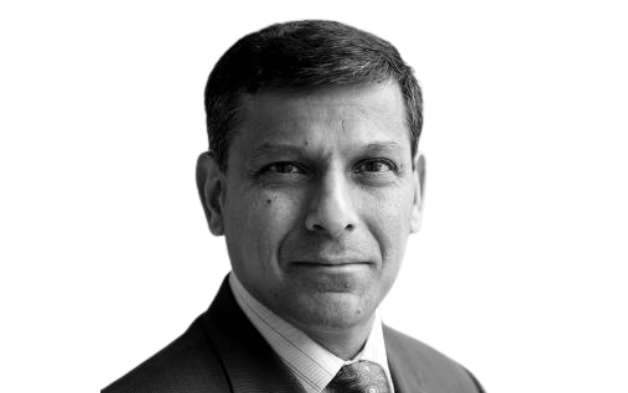
Raghuram G. Rajan, Professor of Finance, University of Chicago Booth School of Business and former Governor of the Reserve Bank of India, gave delegates at the Fiduciary Investors Symposium, held at the business school, encouragement that the Federal Reserve does have inflation under control.

Rajan argued that central banks are most concerned about inflation getting entrenched in everyday products. From here it can bleed into salaries and is hard to bring down. However, he said the five year, five year-forward rate for inflation, a bellwether of future inflation rates, suggests inflation will come down and that it is contained.

“There is a sense the Fed has it under control,” he said.

Wage agreements will push costs further for companies, creating another reason for companies  to raise prices. However he said the Fed will continue raising rates at the short end and shrink its balance sheet at the long end. The heat will come off the labour market and he predicted the job to unemployment ratio will start to come down. Elsewhere, demand will begin to fall and he said supply chains will not be snagged for ever.

In defence of the Fed, Rajan said that policy makers have acted with aggression. They didn’t act earlier for political reasons. The Fed wasn’t hitting its inflation target, and once inflation started to appear, it didn’t want to kill it: the Fed only acted when inflation was sustained and above its target, he said.

tight labour market

Reflecting on the tight labour market, he noted that during the pandemic participation rates fell. However, people have now come back into the work force in every group in the US except the over 64s. He said companies are facing a skills mismatch whereby the most acute labour shortages are tied to particular sectors and regions, but he said the primary tightening force is the slow down in immigration. Positively, maximum unemployment levels are only inclusive at the end of the cyle: minorities are typically hired at the end of the cycle.

Sponsored Content

He said wages are starting to increase and inflation is now moving from goods to labour markets in an inflationary process also stoked by war in Ukraine, with the crisis in Ukraine putting supply chains under further pressure and fuelling commodity prices. He noted how war in Ukraine and the lockdown in China will also have a stagflationary impact, slowing growth but also increasing inflation. Still, he noted differences between regions. For example, the labour market is not as tight in Europe; Japan still has very low inflation.

What lies ahead

Rajan said the effect of recent central bank policy is already beginning to emerge. The rise in the dollar has begun to impact exports; he noted the loss of wealth in financial markets, particularly hitting crypto and games stocks.

He said as more is spent on fuel, less will be spent on other goods and services, slowing down consumption.

“As things slow down most people tighten their budget.” However, he doesn’t believe economies are heading for a recession, and said recession is unlikely in the near term.

He reassured that banks are well capitalised across the world. However he flagged that in the shadow financial world, it is less clear which new finance companies have leverage and risky exposure.

Rajan said that the underpinnings of growth have not changed. For sure, falling levels of immigration and deglobalisation will continue to have a negative impact on growth, but he expects the economy to return to pre-pandemic, albeit slow, levels of growth.

He said the Fed has done enough for its policies to start to bite and policy makers will be in a much better position to gage the impact of strategy at the end of the year.

“Monetary policy works with lags before it fully kicks in,” he said. He said if the Fed was still having to go further by the end of the year recession would look more likely.

“If inflation is coming down steadily they may pause, but if inflation is not coming down it will go for a while longer.”

Once inflation is back under control the growth scenario will be no different to what it was before the pandemic.  If inflation doesn’t come under control it will lead to higher nominal interest rates with an impact on portfolios, particularly affecting organisations with highly levered balance sheets. He warned of toxic consequences if high levels of leverage combine with asset declines.

“The increase in leverage in the last few years is something to worry about.”

He said the aging labour force makes immigration increasingly compelling, and a positive force. He also noted how climate change is increasingly feeding into immigration trends. Rajan concluded that climate change is an opportunity for investors and policy consensus is essential to drive investment.

Leave a Comment

Beyond traditional asset allocation

Beyond traditional asset allocation

Today’s challenging climate has led diversified investors like GIC, Singapore's sovereign wealth fund, to explore different approaches to portfolio construction to build resilience. Grace Qiu and Ding Li, both senior vice presidents in total portfolio policy and allocation at GIC discuss their new research.

Sort content by

$1 trillion funds need new incentives and investment styles: CPP

Funds of enormous scale will require a new cross-disciplinary approach, and innovative incentive and rewards schemes to foster the organisational culture needed, according to chief investment strategist at CPP Investments' Geoff Rubin, as it looks to move beyond a total portfolio approach to a "one fund" approach.

Investors prioritise governance, tilts and liquidity

In a wide-ranging session at the Fiduciary Investors Symposium at Chicago Booth School of Business investment executives from HOOPP, CalSTRS, USS and Cbus reflect on the need for strong governance in the current climate, diversification and liquidity.

Superior return, risk metrics driving rising allocation to private markets

Some of North America’s largest funds – including British Columbia Investment Management Company, CalPERS and Maryland State - are ramping up their allocations to private markets, building in-house talent to take advantage of private equity and co-investment deals.

Private equity beta is lower than many think

Private equity investments are consistently beating the S&P 500 with beta that is “less than you think,” according to one of the world’s leading academics on private equity, Professor Steve Kaplan.

CalPERS gearing up for global push into private markets

Building the expertise for direct investment in global real estate and infrastructure is a priority for the new CIO of the United States’ largest pension fund. Nicole Musicco spoke to Amanda White in an exclusive interview at the Fiduciary Investors Symposium.

Kotkin: The risks of investing in China; Ukraine’s battle ahead

Stephen Kotkin, the John P Birkelund Professor in History and International Affairs, Princeton University, cites the many risks of investing in China.