
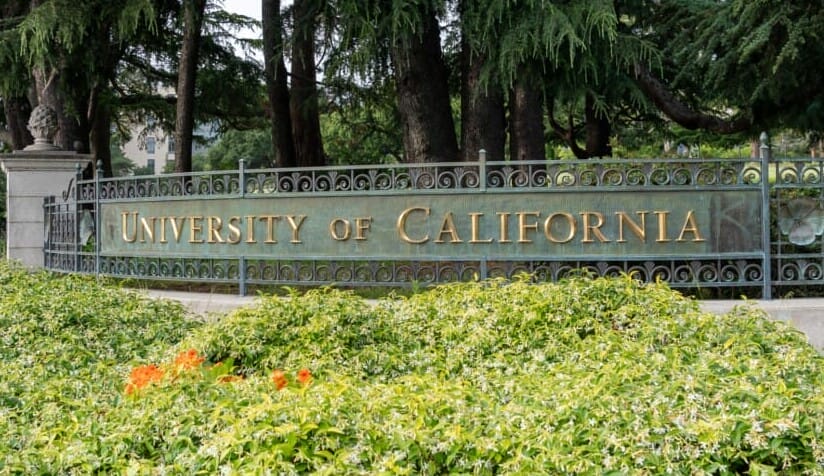

University of California’s chief investment officer Jagdeep Singh Bachher said its office of investment is considering increasing its allocation to equities by 3.5 per cent. The extra allocation will be drawn from winding down the absolute return portfolio.
“The absolute return category in our asset allocation is down to zero. I propose moving 100 per cent [of that allocation] into public equity,” said Bachher, speaking during the endowment’s March investment committee meeting in its first gathering of the year.
Rather than increase the allocation to bonds or private markets, Bachher called for bold and decisive strategies in public markets where opportunities include AI, life sciences, defence and an array of tech growth industries that are poised to transform the businesses operate.
“The tech decade just getting started,” he said.
Bachher said that international equity ex-US will offer some of the most compelling opportunities because of the sudden shift in government policies and dislocations caused by recent geopolitics.
“Countries around the world have woken up,” he said, citing Europe as an example because Germany has just embarked on an economic stimulus that will unleash defence spending and overhaul German infrastructure.
“[We are seeing] the kind of spending in some parts of Europe we have not seen in decades [as] Europeans come together and stimulate the economy,” he said.
Still, despite his enthusiasm for opportunities outside the US, the board heard that the rest of the world is more likely to feel the pain of US trade policy than the US economy. He also said the record-breaking returns in equity over recent years are unlikely to be repeated in the “next five years.”
The public equity team are also exploring regional diversification in emerging markets like India, hunting for opportunities in sectors including power and utilities. However, he warned against stock picking strategies. “It’s very tough picking individual stocks.”
The portfolio has around 60 per cent in stocks (11 per cent in bonds and the rest in private assets), and Bachher said public equities typically return between 6-8 per cent. At their height in the last nine months, they have returned as much as 13 per cent.
Reconsidering fossil fuels?
Baccher didn’t rule out re-entering fossil fuels either. Re-investing in oil and gas would mark a break with strategy since the university excluded fossil fuels in 2020 when it completed the sale of more than $1 billion in assets from its pension, endowment and working capital pools.
“So far, being ex-fossil fuels is ok. But there is no policy of ours that [says] we shall never invest in oil and gas. [I am] putting that on the table as it’s a consideration I entertain as I think about oil and gas.”
However, some markets remain a no-go. The University of California is still negative on China, having reduced its allocation to the country three years ago. Bachher said he has no plans to increase the allocation to China outside the investor’s MSCI ACWI exposure because of uncertainties around tripping executive orders.
“I don’t know if I am going to be investing in something or have ties to something [that] in essence violates an executive order of the US government,” he said. Citing the compliance risk of inadvertently violating a rule that “he is not aware of,” he said China has become uninvestable for American investors, despite opportunities like electric car manufacturer BYD and AI company DeepSeek. The risk means the university has ruled out the idea of picking China-based managers and investing outside the index: he also flagged challenges that venture capital firms invested in the region are having in exiting holdings in China.
Bachher said investors now face two separate investment worlds: China and America. University of California is playing the American world but he said “a wild card policy” could change that if the US and China agreed to a trade deal.
The two powerful countries have agreed to temporarily lower tariffs imposed on each other’s products for 90 days after negotiations that took place in Geneva, as talks towards a longer-term trade arrangement continue.
“If you asked me what could be a wild card in all of these policies – [if] President 47 and the Chinese leadership decided to do a trade deal [it would provide] a huge boost to China and the US in a wild card.”
Managing liquidity is the number one concern
Bachher said managing liquidity and ensuring he has enough capital on hand in the current uncertain environment for US universities is his number one concern. Under the Trump administration, US university endowments face higher taxes and threats to cut research funding. It’s triggered a renewed focus on the simplest forms of capital endowments manage.
California Regents has a working capital pool of around $11 billion divided between a short-term investment pool (STIP) of around $2 billion and a total return investment pool (TRIP) of around $9.4 billion.
“If you feel like you want to shore up operating liquidity, take the unrealised gain in your TRIP pool and put in your STRIP pool,” he said.
Bachher also urged Wall Street firms that benefit from investing money on behalf of universities, endowments and public pension funds, to do more to support academic institutions under fire from the current administration.








Leave a Comment
You must be logged in to post a comment.
Login