
South Korea’s NPS pivots to sustainability, dials up risks in the portfolio

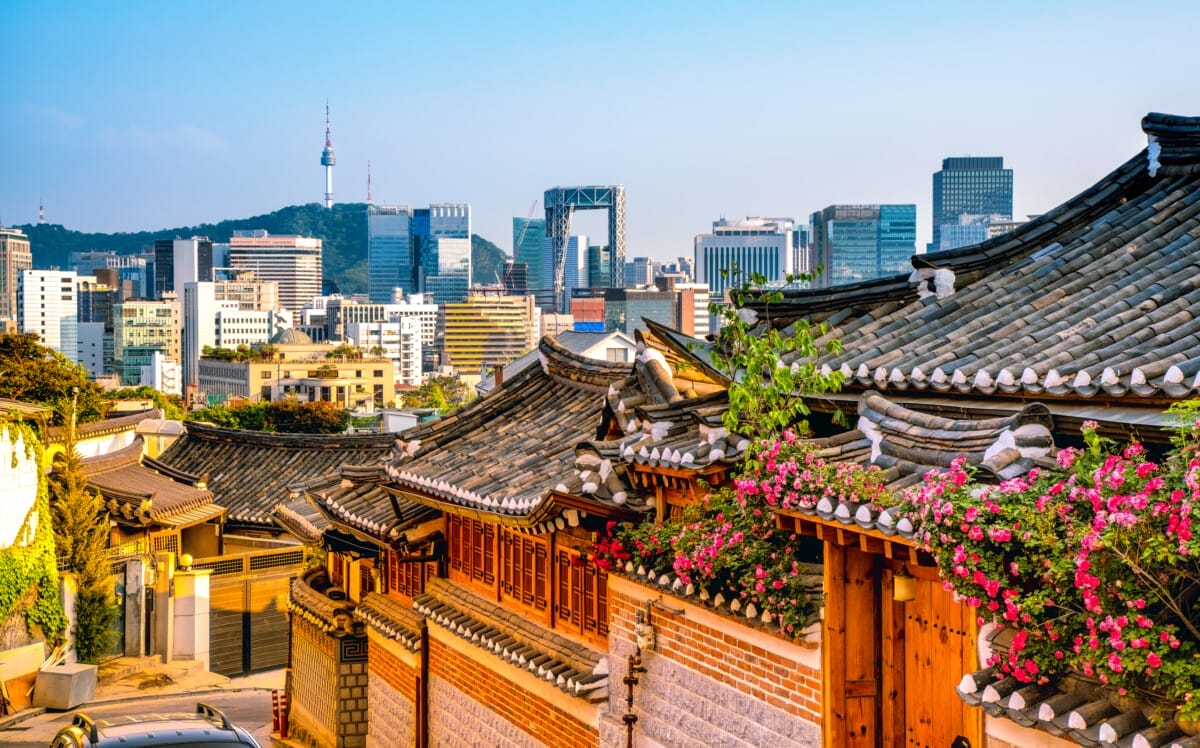
Bukchon Hanok Village in Seoul, South Korea

South Korea state pension fund National Pension Service (NPS) has delivered a new return record in 2024 driven by US tech stocks’ relentless rally, while its investments in global fixed income and alternatives also posted double-digit returns.  

This year, the world’s third-largest pension fund is gearing up to reduce coal investments to promote sustainability in the portfolio, and target riskier assets to ensure sustainability in funding.  

NPS announced a 15 per cent return on a money-weighted basis in 2024, which was its best-ever performance since it was established in 1988, according to a press statement. The gain brings NPS’ total assets under management to 1213 trillion won (KRW) ($842 billion).   

The fund’s last record return was set as recently as 2023, and it has only had two years of negative return since inception. It invested almost exclusively in fixed income before 2000.

NPS chair and CEO Kim Tae-hyun highlighted the fund’s ability to achieve two consecutive record returns despite uncertainties in local and global politics, and concerns around economic slowdown.

“We will continue to closely manage risks and bolster our investment capability and expertise by implementing the Reference Portfolio and the Next Generation Global Investment Integration System, as well as by attracting local talents, in a bid to deliver solid returns in the years to come,” he said in a statement. 

Sponsored Content

The global equity portfolio was worth KRW431 trillion at the end of 2024 and represented 35.5 per cent of the portfolio, according to a disclosure. It delivered a 34.3 per cent money-weighted return but was somewhat offset by weak performance in domestic equity which lost 6.9 per cent.  

Political uncertainty was one of the reasons cited for negative returns in domestic equity. South Korea is in flux as the nation waits for the court verdict in President Yoon Suk Yeol’s impeachment trial, which could be delivered as early as this week. It came after Yoon unexpectedly declared martial law in December last year, which resulted in nationwide protests and stoked volatility in the local equity market.  

NPS also cited “concerns over earnings of large tech companies” as a contributing factor in weak local results.  

Last October, South Korean electronics giant and the world’s largest memory chipmaker Samsung issued a public apology for a disappointing third-quarter results. The company was struggling to compete with local rival SK Hynix in the so-called high-bandwidth memory (HBM) area which is a crucial type of chip for AI training; and with Taiwan Semiconductor Manufacturing in contract and custom chipmaking

In other asset classes, global fixed income saw a double-digit return thanks to “robust interest income” and rising US dollar-won exchange rate. Domestic fixed income returned 5 per cent after Bank of Korea delivered two consecutive rate cuts in late 2024. The former represents 7.3 per cent of total assets while the latter represents 28.4 per cent.  

Alternatives constitute 17.1 per cent of the total assets and returned 17.1 per cent to the end of 2024. According to the NPS website, private equity is the biggest component, representing almost half (43.8 per cent) of the alternatives portfolio, followed by real estate (28.2 per cent) and infrastructure (26.2 per cent).  

Dialing back on coal 

This year, NPS will pare back its holdings in coal and divest from companies that derive more than 50 per cent of their revenue from coal-fired powered generation. 

NPS will begin divesting from this year in overseas companies. But a five-year engagement window pushes back any need to divest from domestic companies until 2030, during which time NPS will work with companies to develop energy transition plans and reduce coal sales or capacity ratios to below 50 per cent. 

NPS allocates almost 5 per cent of its global equity portfolio to the energy sector and has an estimated 7 per cent stake in South Korea state-owned utility Korea Electricity Power Company (KEPCO). 

The stricter climate policies have been a long time coming. NPS initially announced plans to phase out coal in May 2021. Further back in its 2020 annual report it detailed plans to “exit from coal finance to reduce carbon emissions”. 

“NPS will stop investing in the construction of new coal power plants at home and abroad and plans to establish phased implementation measures as a preparation stage to apply negative screening,” it said then.  

The fund’s slow progress contrasts with other large investors. For example, Norway’s parliament formally endorsed a move to sell off coal investments from its $1.7 trillion sovereign wealth fund in 2015. 

NPS’s size means it plays a leadership role in South Korea’s local asset management community and the fund’s continued investment in coal has influenced ESG attitudes across the whole market. 

Challenges with engagement 

Engagement is notoriously difficult in South Korea. PensionDanmark recently announced plans to step up pressure on Japan and South Korea to eliminate coal power by 2030. Elsewhere, APG Asset Management divested its holdings of KEPCO after years of struggling to effect change at the utility. 

One reason that engagement is difficult is because of the so-called 5 per cent rule which stops asset owners which collectively own more than 5 per cent of a company’s shares from acting in concert, stalling collective action. Meanwhile South Korean pensions funds are reticent to engage and don’t want to be seen as too active. 

The Korea Sustainability Investing Forum (KoSIF) reacted to NPS’s announcement by urging the Fund Management Committee (NPS’s dedicated fund management arm) to widen the exclusion to companies that get more than 30 per cent of their revenue from coal operations. It also called for NPS to begin calculating financed emissions, set reduction targets, and implement measures to achieve a net-zero asset portfolio by 2040. 

The KoSIF also criticised the “excessively” long engagement period NPS can conduct with South Korean coal companies on their energy transition plans that risk enabling greenwashing.  

The need for riskier assets 

Another initiative that will take place this year is the introduction of a reference portfolio approach. The decision was announced last May as NPS changed its target allocation of risky asset (which does not prescribe the asset class) from 56 to 65 per cent, as the fund aims to yield more investment income.  

The South Korean government previously sounded the alarm on NPS’ future sustainability. The fund is the world’s third-largest pension fund by AUM, behind Japan’s GPIF and Norway’s Government Pension Fund, but despite its mammoth size, official estimates showed the fund will be depleted by 2056 if there is no policy reform. 

South Korea is grappling with the demographic double whammy: a rapidly aging society, and the world’s lowest birth rate. Before President Yoon was impeached in December, he pledged to increase the pension contribution rate from 9 per cent to 13 per cent to be phased in for all age groups by 2040.

The reform plan also includes lifting NPS’ long-term average annual investment return from 4.5 per cent to 5.5 per cent, or higher.  

“In order to increase returns, we will flexibly improve the asset allocation system and smoothly promote investment diversification to stably operate the precious retirement funds of the people,” NPS chief investment officer Seo Won-joo said during the last May’s announcement.  

Leave a Comment

Long term lens shields Colorado from private credit jitters

Long term lens shields Colorado from private credit jitters

As concerns in private credit mount, Colorado PERA CIO and COO Amy McGarrity says the pension fund isn’t seeing any strains in its growing allocation to the asset class, arguing that long-term investors are shielded from the risks because they can lock up their capital to weather market cycles.

Sort content by

The impact of technology on investments

Harshal Chaudhari recently sidestepped from his role as company-wide CIO at IBM, looking after $150 billion in pension assets, to a new role as the tech giant’s chief analytics officer. He spoke to Top1000Funds about the strategy he ran at the pension fund, his wider thoughts on the global economy and the impact of technology on the investment world.

QSuper: standing out from the crowd

QSuper CIO, Brad Holzberger, has long stood out from his peers by loading up on long-term government bonds and even the recent sudden collapse of yields, as investors started pricing in slower growth, hasn’t deterred him from sticking with this asset class. The retiring CIO of one of Australia's largest funds about expectations.

ADIA boosts internal active fixed income

The $700 billion Abu Dhabi Investment Authority, ADIA, is boosting its internal fixed income capabilities and scaling up capacity to run active strategies in-house as it simplifies the portfolio to become more fleet-of-foot.

Finding risk: First State Super

A decade of ultra-low rates and mediocre growth does not mean that every year will yield low returns for investors, according to Damian Graham, the CIO of First State Super one of Australia's largest institutional investors. He talks about how to get enough risk in the portfolio.

Caisse Geneva’s approach to risk

The pension fund for the Swiss Canton of Geneva runs a fundamental investment strategy shaped around harvesting the premia. The fund's CIO, Gregoire Haenni, mindful of heightened risk in the equity allocation because of the late cycle.

Rediscovering FI at Nebraska

The $27 billion Nebraska Investment Council is conducting a deep dive into its fixed income portfolio, inviting up to 25 current and potential external managers to pitch their best ideas. The process begins by wiping any preconceived notions around the allocation’s role in the overall portfolio and justifying its place as if from scratch. It ends two years later with the issuing of mandates.

Previous



