FSBA pounces on high valuations

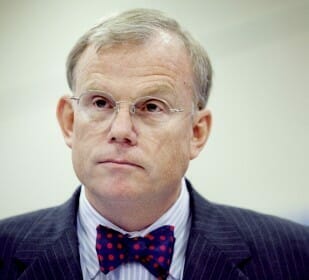
The $204 billion Florida State Board of Administration is selling private equity and real-estate assets it believes are overpriced, chief investment officer Ash Williams says.

FSBA is steadily weeding out the mature allocations in its $10.9 billion private equity portfolio that still have to complete final realisations, and selling them in the secondary market.

In a process that in aggregate has accounted for about $3 billion to $4 billion over the last two years, Williams has bundled together weaker funds, sold them off and redeployed capital to higher-yielding areas, in a “disciplined pruning of the portfolio”.

He’s applied the same principles to FSBA’s $14 billion real-estate portfolio, which accounts for just under 9 per cent of assets under management. Here, he’s sold off highly sought after but dated apartment blocks and office space, freeing up capital to buy real estate that should have a higher value and return for the next 20 years.

“If an asset is a better fit for another investor’s portfolio, that will be reflected in its value to them and allow us to redeploy those dollars on assets better suited for our portfolio,”Williams says.

In private equity, higher-yielding assets are coming via new opportunities in Asia, where FSBA works with Asia Alternatives – an Asia-dedicated private equity fund of funds. It has led Williams to one fund investment that includes a portfolio company targeting India’s burgeoning second-hand car market.

Sponsored Content

The company’s founder has developed a sophisticated mobile app that combines car valuations, access to finance and insurance, and matching of buyers and sellers, in a strategy that Williams describes with his characteristic colour and detail.

“It’s the kind of thing that could be a unicorn,” he says. “It shows what an entrepreneur in an emerging economy can achieve with technology and a first-rate education.”

Williams’ team manages about 40 per cent of assets in-house. About half of the real-estate portfolio is run in-house.


For more on this story, see Florida SBA trusts long-term plan”.

Leave a Comment

Long term lens shields Colorado from private credit jitters

Long term lens shields Colorado from private credit jitters

As concerns in private credit mount, Colorado PERA CIO and COO Amy McGarrity says the pension fund isn’t seeing any strains in its growing allocation to the asset class, arguing that long-term investors are shielded from the risks because they can lock up their capital to weather market cycles.

Sort content by

HOOPP derives benefits to boost funding status

The extensive use of derivatives has been a big contributor to the C$35.7 billion ($37.4 billion) HOOPP reaching fully funded status. Jim Keohane, chief investment officer, explains how the fund manages its assets and liabilities through liability-hedging and return-seeking portfolios and the role derivatives play in dialling risk up, or down. mrec4inarticleinline Sponsored Content scnative1

Embrace three-bucket idiosyncrasy for alpha

The creation of wealth, or alpha, is limited if your strategy is the traditional allocation between asset classes, instead investors need to embrace idiosyncratic risk to achieve wealth generation, which is at odds with modern portfolio theory’s ambition. Chief investment officer of the Institute for Advanced Study, Ashvin Chhabra (pictured), explores this in his latest

CalSTRS overlays its fuzzy buckets

After deciding at the last investment committee meeting to employ a new way of evaluating portfolio risk which overlays risk across asset classes, rather than replacing asset classes with risk categories, CalSTRS now just has to work out how to do it. Amanda White spoke with chief investment officer Chris Ailman about the fund’s journey

Boon for managers as Korean NPS to outsource billions

The National Pension Service of Korea will outsource 26 trillion Korean won – the equivalent of $23 billion – to external funds managers this year as it moves towards its 2015 strategic asset allocation which will see a dramatic increase in equities and alternatives.mrec4inarticleinline Sponsored Content scnative1 scnative2 scnative3

Behind CalPERS’ alternative asset allocation decision

A desire to hedge the portfolio against extreme market risks and rising inflation, has resulted in the $220 billion CalPERS departing from its traditional asset allocation after a year-long review, and introducing the allocation of assets according to five broad groups.mrec4inarticleinline Sponsored Content scnative1 scnative2 scnative3

Previous




