FSBA pounces on high valuations

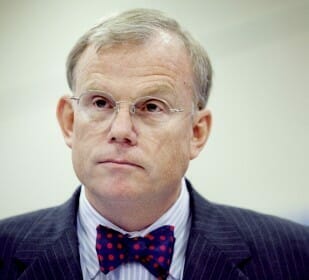
The $204 billion Florida State Board of Administration is selling private equity and real-estate assets it believes are overpriced, chief investment officer Ash Williams says.

FSBA is steadily weeding out the mature allocations in its $10.9 billion private equity portfolio that still have to complete final realisations, and selling them in the secondary market.

In a process that in aggregate has accounted for about $3 billion to $4 billion over the last two years, Williams has bundled together weaker funds, sold them off and redeployed capital to higher-yielding areas, in a “disciplined pruning of the portfolio”.

He’s applied the same principles to FSBA’s $14 billion real-estate portfolio, which accounts for just under 9 per cent of assets under management. Here, he’s sold off highly sought after but dated apartment blocks and office space, freeing up capital to buy real estate that should have a higher value and return for the next 20 years.

“If an asset is a better fit for another investor’s portfolio, that will be reflected in its value to them and allow us to redeploy those dollars on assets better suited for our portfolio,”Williams says.

In private equity, higher-yielding assets are coming via new opportunities in Asia, where FSBA works with Asia Alternatives – an Asia-dedicated private equity fund of funds. It has led Williams to one fund investment that includes a portfolio company targeting India’s burgeoning second-hand car market.

Sponsored Content

The company’s founder has developed a sophisticated mobile app that combines car valuations, access to finance and insurance, and matching of buyers and sellers, in a strategy that Williams describes with his characteristic colour and detail.

“It’s the kind of thing that could be a unicorn,” he says. “It shows what an entrepreneur in an emerging economy can achieve with technology and a first-rate education.”

Williams’ team manages about 40 per cent of assets in-house. About half of the real-estate portfolio is run in-house.


For more on this story, see Florida SBA trusts long-term plan”.

Leave a Comment

Long term lens shields Colorado from private credit jitters

Long term lens shields Colorado from private credit jitters

As concerns in private credit mount, Colorado PERA CIO and COO Amy McGarrity says the pension fund isn’t seeing any strains in its growing allocation to the asset class, arguing that long-term investors are shielded from the risks because they can lock up their capital to weather market cycles.

Sort content by

Bridgewater’s Prince: Time to think differently in an MP3 world

Bridgewater’s co-CIO Bob Prince explains the perils of MP3 and suggests investors need to think differently, shaping strategies around cash-flow yields - connecting equity cash flows to stable sources of spending in the economy.

Biases: COVID-19 vaccines and investing in China

Liang Yin from the Thinking Ahead Institute examines omission bias as an explanation for vaccine resistance, and underweighting investments to China. He suggests a framework for overcoming this bias.

Future Fund sceptical on correlations

The Future Fund, Australia’s A$226 billion sovereign wealth fund, has embarked on an ambitious project instigated during the crisis which includes re-examining its investment assumptions, risk tolerance and the way it allocates capital. Amanda White talks to the fund’s new CIO, Sue Brake about where the fund will be allocating in the future including alternatives and active management.

NEST’s PE challenge to the industry

The UK defined contribution fund, NEST has added a number of new asset classes to its portfolio over the past year – including infrastructure with a focus on renewables – but the fund is still missing an allocation to private equity. CIO Mark Fawcett spoke to Amanda White about the fund’s challenge to the industry on private equity fees, its focus on climate-aware portfolios and innovative approaches to portfolio management.

CalPERS CEO on the ALM challenge

The CEO of CalPERS Marcie Frost has a big year ahead. Not only is the fund still searching for a CIO, but it will also conduct its four-yearly asset liability study this year. Frost speaks to Amanda White about the challenges of the top job at the largest fund in the US and how she works to make sure the “real story” of CalPERS gets told.

Debt concerns drive Ohio allocations

Farouki Majeed is worried about the future. His concerns are centred around the implications of the enormous US federal debt; the global competitiveness of the US and Chinese economies; inflation; and the potential erosion of the value of the US dollar.

Previous




