
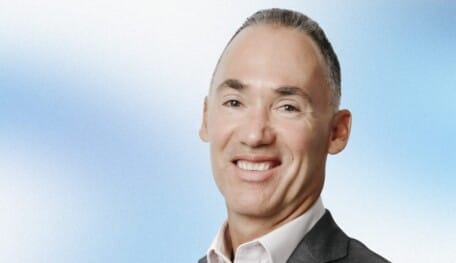

Australia’s third-largest pension fund, Aware Super, is considering a return to infrastructure funds after years of favouring direct investments. The infrastructure allocation currently stands at $15 billion and the fund sees benefits to access a “broader set of offerings” and opportunity sets via fund commitments to GPs, its head of infrastructure Mark Hector says.
The A$200 billion ($141 billion) Aware Super is considering a return to infrastructure funds after years of favouring direct investments in a bid to access more diversified assets via good-quality GPs, and juice up performance.
Head of infrastructure Mark Hector, who oversees the A$22 billion ($15 billion) infrastructure portfolio of which pooled funds represent 20 per cent, sees benefits to some investments via funds to access a “broader set of offerings” and opportunity sets via GPs.
While Aware Super’s infrastructure return has been “pretty good”, Hector says it has a way to go in becoming one of the consistently top-performing funds among the peer group.
“So questions have naturally been asked about, well, how can we go from being kind of good to great?” he tells Top1000funds.com in an interview from Aware’s Sydney office.
The answer may lie in an expansion of GP relationships as Hector believes there are a lot of managers who haven’t shown Aware Super its offering at all. “You don’t know exactly what those deals were like that you’re missing out on because you don’t necessarily get all that data,” he says.
“With some of the managers, their first port of call is always the LPs that go into their pooled funds who sign up contractually and get certain co-invest rights, and if they don’t take them up, or the deals are too big, then the GPs can go outside of their LP base to other investors.”
Aware has been mulling over a pivot to funds in the past year and will soon present the proposal in front of its investment committee.
“We haven’t really contributed any incremental capital to pooled funds for several years and a lot of that’s been focused around fees, but we’re doing some work at the moment where I think there’s a reasonable case that the fee strings might be loosened a little bit,” he says. Australian pension funds are highly conscious of costs due to pressure from Your Future Your Super, a regulatory performance test.
Aware has 16 professionals in its internal infrastructure investment team spread across the Sydney and London offices.
The strategic shift comes after Aware Super’s outgoing deputy chief investment officer and head of international, Damien Webb, foreshadowed at the Top1000funds.com Fiduciary Investors Symposium last November that the fund’s needs as an LP are changing as the fund grows.
Aware also wants to formalise some “ad hoc” relationships it has with current GPs. Macquarie Asset Management is a good example – even though Aware is not in any of the MAM pooled funds, Aware’s reputation of being a sophisticated investor means it’s a “natural port to call” when MAM is looking for partners in complex deals, Hector says.
The two completed a A$5.2 billion ($3.6 billion) acquisition of TPG Telecom’s fibre assets last July alongside its portfolio company Vocus.
“There’s nothing formal in place [in terms of contact with MAM]. We all each know that we exist, and we talk all the time about potential opportunities,” he says.
“But we do think there’s a world where we could formalise certain relationships, focus areas a little bit more, including a broader relationship where we can potentially put some money in pooled funds, and in return, we see a broader set of offerings.
“The hope, or the expectation, is that can help to produce an opportunity set that produces some returns that are even better than what we’ve been getting.”
Data lores
To generate alpha within private markets, the fund has formed an ‘AI working group’ that sits across its real assets and private equity team to bolster the collection and usage of unlisted asset data. Hector says artificial intelligence can do much more in helping better determine and price risks.
The project is among the first changes ushered in by Aware Super’s newly minted CIO, Simon Warner, who wants to cement the fund as a data and AI leader among super funds.
“One of our nirvana thoughts is in private markets… there’s a lot of information out there that is highly confidential and non-transparent, [but] you’ll find that increasingly over time more data will hit the public domain,” Hector says.
“For example, if you’re looking at a data centre investment and right now you don’t have access, wouldn’t it be fantastic if right next to you, you could look at 100 other data centre investments and make direct comparisons on a whole bunch of different investment parameters?”
The fund is in the midst of hiring external experts to nut out the scope of the project but Hector says the various private markets teams have some crossovers on their AI wish lists. For one, the teams all tend to get inundated with market and asset information from GPs, but AI could help extract – as an example – the reasons for over or underperformance in certain assets or sectors by summarising these external data files.
Data availability from fund managers hasn’t been a problem for Aware due to the limited allocation it has in pooled funds, but Hector says “some managers are better than others at being more open and transparent” with the level of information they provide.
Above all else Aware is most concerned with the accuracy of valuation, Hector says. Australian super funds face stringent requirements from the prudential regulator, APRA, to perform independent and regular valuations of unlisted assets and ensure accurate representation of performance.
“Across Europe and North America, generally speaking, there’s a lot of valuations that will be called independent, but they’re not. They’re done by independent internal valuation teams within GPs,” Hector says.
“They might get an external accounting firm to opine on that valuation, but that’s different to a to… a third-party firm doing their own genuine bottom-up assessment evaluation.
“Our problem is that it seems to be mostly just the Australian pension fund base that are really pushing the GPs for this [independent valuation]. They’re not getting those messages as much from pension fund systems in the Northern Hemisphere.”








Leave a Comment
You must be logged in to post a comment.