
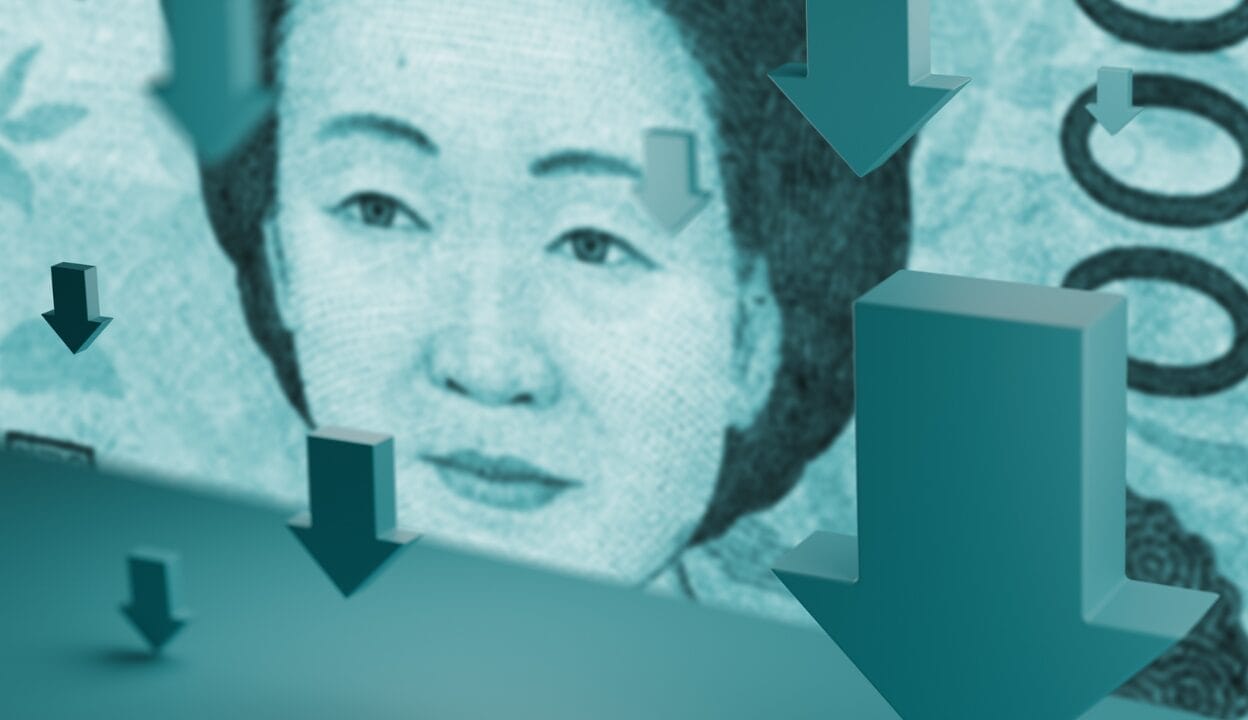

The increasing pursuit of offshore investments by South Korean investors has become a significant source of weakness in the won and prompted a shift in how the $1 trillion National Pension Service hedges currency risks.
NPS holds around $600 billion worth of overseas assets, which eclipses the country’s $428 billion foreign exchange reserves. The Ministry of Health and Welfare, which sets directions on NPS’ investment policies and asset allocation, announced last Tuesday that the fund will adopt a 15 per cent hedging ratio as a baseline for its overseas assets to tackle market volatility, plus a five per cent “tactical” allowance.
It’s a departure from the current set-up where 15 per cent is the upper limit of the hedging ratio. This policy, meant to be temporary, was introduced to protect NPS’ portfolio from currency losses in 2022 after the won saw a sharp drop against the US dollar. Between 2015 and 2022, NPS had zero hedging on its overseas bonds and equities.
NPS is also looking into adopting a currency-neutral performance assessment framework so that exchange rate movements do not weigh on official returns, with a review to be conducted in the second half of 2026. It is also exploring the issuance of foreign currency bonds in early 2027, which would require a legislative change to the National Pension Act.
A former South Korean allocator, who requested anonymity to speak freely, said NPS’ move reflects a long-term trend the country’s asset owners face: FX dynamics are increasingly driven by capital outflow to offshore markets.
According to a Bank of Korea research note, released in the same week as the NPS announcement, overseas investments have taken over as the primary force behind FX movement instead of current account movements. Before 2014, account surpluses have typically been accompanied by won appreciation, but, since 2015, widening surpluses have been increasingly associated with won depreciation.
The central bank’s analysis argues that weakness around the won in recent years is principally caused by Korean investors’ demand for dollar-denominated assets and an increasing household savings rate.
A concentration of external assets in the US has amplified this effect, the note said. Korea invests over half (63.4 per cent) of its offshore assets in the world’s largest economy, far above the averages for advanced economies (36.8 per cent) and emerging economies (34.3 per cent). Seoul has also pledged to invest a further $350 billion into strategic industries in the US including semiconductors, pharmaceuticals and critical minerals, in a deal to appease Washington amid tariff threats last year.
As a result, the BoK warned that the won is more sensitive to financial shocks than major advanced economy currencies, and flagged that there needs to be policy responses aimed at deepening the FX market, including by encouraging more inbound investment into Korea.
NPS, which has in the past been called upon to act as a won stabiliser during periods of extraordinary currency volatility, will feel that shift acutely.
For example, as the won collapsed in late 2024 after then-President Yoon Suk Yeol’s declaration of martial law plunged the nation into turmoil, the BoK expanded its currency swap limit with NPS whereby the pension fund can borrow up to $65 billion from the foreign reserves for overseas investments.
In practice, using a fund of this size as a currency tool can create more problems. The allocator source observed that FX traders are known to place speculative bets on the won in accordance with NPS’ hedging activities. That tension was acknowledged by the Korean welfare ministry last December, when it pushed for NPS to maintain “strategic ambiguity” and announced that the fund would take a more flexible approach to avoid market players front-running its hedging decisions.
But a more stable won also supports NPS’ long-term investment strategy, they said, especially given the fund is targeting larger offshore allocations in the future.
NPS currently has a 37 per cent allocation to global equities and a 6.5 per cent allocation to global fixed income, which are set to increase to 37.2 per cent and 8 per cent respectively by the end of 2026. Its allocation to domestic stocks, which stands at 21.4 per cent now, will be drastically cut to 14.9 per cent by the end of the year.
“[We’re quite exposed to fluctuations in] global oil prices and raw material prices, we import all that stuff from the overseas market, so the Korean economy is quite fragile [to geopolitical risks] because of our economic structure,” they said.
“Sometime the current exchange rate may not reflect the Korean economy’s fundamentals, so from time to time for the longer-term stable deployment of NPS capital into offshore market, they may want to stabilise the FX market for their objective.”








Leave a Comment
You must be logged in to post a comment.