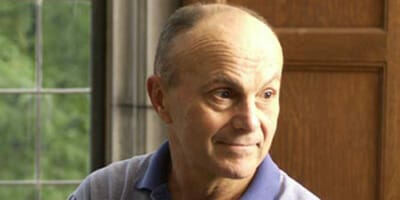
The Fama of modern finance

When Eugene Fama enrolled at Chicago Booth School of Business in 1960, “finance was a joke”, he says in a candid and fascinating insight into his more than 50 years as a student, academic and teacher at the university.

The essay, published by Chicago Booth’s Capital Ideas, details Fama’s own history but also a short history of finance including how the efficient-market hypothesis was born.

Fama, who is often called the “father of modern finance”, calls the Black-Scholes paper on option pricing the most important paper in economics of the twentieth century.

“No other paper has to be learned by every single economist getting a PhD and has also created an industry – the derivatives industry.”

Fama, who also got into Harvard, chose to go to Chicago because he was advised that “it was more academically oriented than Harvard”.

He is the Robert R McCormick Distinguished Service Professor of Finance, and received a MBA and PhD from the University of Chicago Booth School of Business

Sponsored Content

“I love my work,” he says in the essay. “I have no intention of stopping as long as I’m breathing – and I may even do it after that.”

To read the full essay, click here.

Leave a Comment

Sort content by

Ventures on the risk spectrum

Hershel Harper received an early education in finance when he used to read Business Week in High School. The 43-year old now at the helm of the $27-billion South Carolina Retirement Systems, investing on behalf of South Carolina’s 350,000 public sector workers, says he knew back then he wanted to manage money: “I really am

Getting the commodities mix just right

While commodities are a controversial and problematic asset class to some investors, for others they are an ideal diversifier looking more attractive than ever. A mini-revival in commodity investing among US pension funds suggests the asset class may be enjoying a resurgence. The Los Angeles Fire and Police Pension System, Municipal Retirement System of Michigan

The end of beauty contest active management?

Designing and implementing concentrated, long-horizon investment mandates would support longer term thinking, align pension organisation’s goals with its stakeholders, and reduce transaction costs. This was one of the recommendations of a two-day workshop in Toronto last month, attended by a delegation of 80 pension fund executives from around the globe. Aimed at uncovering the meaning

Italian fund rides out crisis in style

The wrath of the European sovereign debt crisis may have left its mark on Italy in more ways than one, with both its financial and political scenes regularly sliding into crisis mode for the past year or two. However, the nation’s largest private pension investor, the €7.75-billion ($10.1-billion) Cometa fund, has firmly kept on track

Paul Marsh: live with low returns

The London Business School’s emeritus professor of finance Paul Marsh admits that you have to be slightly mad to embark on the kind of research detailed in the latest edition of Global Investment Returns Yearbook. This year Marsh and colleagues Elroy Dimson and Mike Staunton – Marsh describes the three of them, pictured below, as

Blinder: a power of paradox at Princeton

Pension funds or any investor holding a slug of long-term fixed income needs to factor in some capital losses soon, says Princeton academic and former vice president of the Federal Reserve, Alan Blinder. “The timing is difficult to predict, but three or 15 months, it doesn’t matter. It is predictable,” he says. “The unpredictable part

Previous




