Sustainability among key industry’s tagged for China’s growth

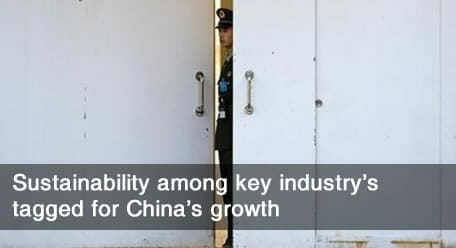
It’s not very salubrious but it’s secure. The four-star Jingxi Hotel in Beijing (pictured), which is owned by the People’s Liberation Army, hosted the annual plenum of the Communist Party’s Central Committee to draft the country’s next five-year plan.

The 12th five-year plan, nutted out by about 300 committee members, will be put to the National People’s Congress in March for ratification. The key themes in the latest plan are sustainability and reducing inequalities between provinces.

Analysts are predicting a lower GDP-growth target to be discussed between now and March, with details of the plan coinciding with a surprise 25bps point rise in the official interest rate last week – the first in China for three years.

A research note from HSBC Global Banking and Markets says more growth is likely to have to come from private consumption which has dropped from 50 per cent of total GDP to an estimated 36 per cent in the past 20 years.

“Expect further efforts to boost household incomes, primarily through higher minimum wages, as well as lower personal taxes,” the bank says.

Notwithstanding the stated concern for poorer provinces, the latest plan intends to speed the demographic shift to the cities, which will further boost consumption.

Sponsored Content

After the meeting, the Government confirmed a list of emerging strategic industries to be at the forefront of a “higher quality” of economic growth. They are: energy-saving and environmental protection firms, next generation IT, biotech, high-end manufacturing, new energy, new materials and composites, and clean-energy cars.

According to Shanghai Securities News, the group of industries currently make up only 3 per cent of GDP but are expected to contribute at least 15 per cent by 2020.


Leave a Comment

Sort content by

Is the financial services sector serving the public interest?

Fiduciary law, which creates the boundaries and rules for asset owners managing other people’s money, is evolving. The short-termism, misaligned incentives and complex and over-supply of services that characterises financial services, is under fire. Regulators around the world are increasingly looking at how to change the behaviour and supply chain dynamics in the industry, and

The impact of the mega manager

The impact of size is a delicate point for asset managers. For specialist asset classes, and boutique managers, being small and nimble can be a source of alpha. On the other hand, being large can reduce fees and increase innovation and product offering. But now there is evidence to show that the emergence of the

The contested role of asset consultants

Asset consultants are a key part of the investment chain, providing small funds with services that include decision making processes and strategic asset allocation, and for larger funds traditionally playing a key role in manager and strategy selection. But a study by Gordon Clark and Ashby Monk, which is part of a broader look by

Demystifying private equity

US public pension funds, on average, have around 9.4 per cent allocated to private equity but for many public funds monitoring the firms that manage these investments – including the transparency of underlying investments, fees, performance and benchmarking – as well justifying these investments to boards and stakeholders, takes up more than 10 per cent

Why investors employ smart beta strategies

The common view is smart beta is used to side step expensive active equity managers or hedge fund managers whose processes are on the surface opaque, but on close investigation turn out to be largely beta like in approach. As investors have gained experience and familiarity they have also learnt about how it offers greater

Managing culture with risk management techniques

The interaction between governance, culture and performance is increasingly a topic around asset owner board tables. But little has been written about the relationship between culture and the financial crisis, and how to change culture in financial services organisations. Andrew Lo, professor of finance at MIT, has come up with a proposal to change culture

Previous



