
Parrado’s guide to building sovereign wealth funds

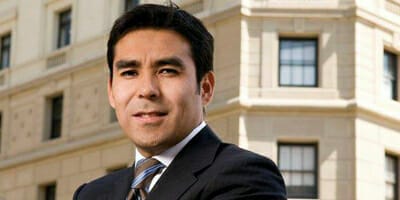
They may be on opposite sides of the Earth, but Chile in Latin America and Central Asia’s sparsely populated Mongolia share more than a few similarities. Both boast some of the biggest copper deposits in the world and now Mongolia has turned to Chile for advice on how best to steward income from its forecast bounty that stretches out beneath the Gobi desert. It is sourcing help from one of the architect’s of Chile’s rocketing $22.9-billion sovereign fund. Eric Parrado, former international financial coordinator at Chile’s ministry of finance and now advising other emerging economies on the steps to managing resource wealth, has become synonymous with Chile’s global reputation on wealth fund expertise. “At the beginning in Chile nobody thought there was any point in saving money because we were an emerging market economy. Chile needed to spend money, so why save it?” says Parrado, just back from the Mongolian capital Ulan Bator. “But by saving in the good times, we were able to spend in the crisis and now all our critics applaud us.”

A guide for novice sovereign savers

His advice to Mongolia starts with tight fiscal management. Mongolia passed a new fiscal stability law in 2011, the foundation, says Parrado, on which any successful sovereign wealth fund must stand and the key to establishing discipline in commodity-driven economies prone to boom and bust. In a next step, Mongolia is drawing up a bill to create a framework for several sovereign funds, which will likely take on similar lines to Chile’s Pension Reserve Fund, established in 2006, and the Economic and Social Stabilisation Fund (ESSF), set up in 2007. The concept behind any stabilisation, or rainy-day fund, is to keep investment strategy liquid and conservative so financial help is close to hand in times of economic crisis. A pension reserve fund would cover future state pension liabilities and Mongolia is also considering a future generations fund, through which returns, but not capital, could be used to invest domestically. “Mongolia has only just begun discussions and there is no money to invest as yet, but it is likely assets will be split between these types of funds,” he says.

In his guide for novice sovereign savers, Parrado counsels that assets be allocated to safe and liquid allocations overseas to avoid Dutch disease, so-called after The Netherlands economy slumped following discoveries of natural gas in the North Sea in the 1960s. Investment strategy for countries without any experience of “formal strategies” should mirror the same asset allocation as their central banks use to manage international reserves. “This is what we did in Chile,” he says. It meant that in the embryonic years of Chile’s sovereign fund, assets were split between a 70-per-cent allocation to US, European and Japanese sovereign debt and a 30-per-cent allocation to money market instruments. “It was plain vanilla but it was very good,” says Parrado. “Between 2007 and 2010 Chile had some of the best returns in the sovereign wealth fund world because we chose safe assets.” He doesn’t advise rejigging allocations in the early stages of a fund’s life, drawing on the experiences of seasoned sovereign saver Norway during the financial crisis as an example of the merits of leaving investment strategy well alone. “Take the case of Norway,” he says, referring to Norway’s $650-billion Government Pension Fund Global. “In 2008 they decided to boost their equity allocation to 60 per cent. Equities were falling yet they had to buy more equities to reach the 60-per-cent mark. They lost $100 billion in 2008. It was really crazy and there is no way Chile could have done this.”

Benchmarks rather than indices

Only after what he calls “an essential learning process” did Chile begin to think about diversifying to other asset classes to manage risk. Assets were split to encompass equities and corporate bonds in passive, global strategies. “An active strategy isn’t worth it because it’s too difficult to gain against the market. There shouldn’t be any cherry picking, but following benchmarks rather than investing in indices.” Since Chile’s central bank had no specific experience of managing these riskier allocations, it used external managers for its equity and corporate bond portfolio. “One hundred and 10 external managers were invited to the ministry of finance,” he recalls. “Because it was 2008 and the middle of the crisis, we postponed allocation until 2012, awarding the biggest to Blackrock, Bank of New York Mellon, and Rogge. We have benchmarks and tracking errors for each one in passive strategies.”

Parrado acknowledges that saving is a hard sell in developing countries in need of investment in infrastructure, schools and health, but warns that Mongolia, one of the poorest countries in Asia, should only draw on sovereign reserves if they are channelled through the budget. It’s a strategy Norway leads on, with the government spending just 4 per cent of its sovereign fund’s annual return. It rules out strategic investment such as equity stakes in local companies, something Singapore’s sovereign fund GIC favours, but it ensures against downside risk. “Investing in local companies could work, but in my view, emerging market economies should only use the fund as a financing mechanism and shouldn’t invest directly in this way. It would involve careful allocation of money and an awareness of what type of investment was actually needed to ensure there weren’t white elephants everywhere.”

Risk rather than return

Nor does he suggest new funds target returns. Instead they should focus on risk, a strategy he believes is key to “preserving capital and legitimising the savings process” in poor countries. “All funds should begin from the point of expected risks rather than expected returns.” His advice to Mongolia is also to avoid some sectors of the economy to reduce risk further. In Chile managers are asked to not invest in Chilean copper companies because the risk correlation is too high in terms of economic activity.

Sponsored Content

In an era when sovereign wealth funds have become “flavour of the month”, Parrado doesn’t recommend any flamboyant asset diversification or that countries fashion strategic funds targeting local development. He espouses rigorous institutions and frameworks and cautions strategies in a model that now speaks for itself. “Of course there are different strategies and it is entirely dependent on what a government wants to do,” he says. “But from Chile’s experience in starting a fund from scratch in an economy that is close to other emerging market economies, this is the strategy we recommend.”

Leave a Comment

Sort content by

Innovation to align investors with the social good

The CFA Institute’s president John Rogers, believes there is evidence of innovation in investment products that meet the needs of asset owners in a more sustainable, longer-term way, and points to the work of professors and advisors to the CFA , Andrew Lo of MIT and Robert Shiller of Yale.   One of the main

Adding value through risk allocations

2013 was a great year to add value by using risk to assign asset allocation, according to chief investment officer of Windham Capital, Lucas Turton, whose fund added 300 basis points above benchmark last year by dynamically allocating according to risk.   Windham Capital Management’s style is to focus on measuring and understanding risk to

Alternatives increase as investors manage to outcomes

Investor allocations to alternatives will increase over the next three years as the focus on outcome-oriented investments heightens, according to respondents in the annual conexust1f.flywheelstaging.com /Casey Quirk Global Fiduciary CIO sentiment survey. The second annual survey, which included respondents from 56 asset owners with combined assets of $3 trillion, showed an accelerating trend to moving

Organisational change: asset owners 2.0

A key ingredient for success in any organisation is strong leadership. It is common in the corporate world for the chief executive to change every five to 10 years as the organisation evolves. Are the same principles true for large institutional investors?     Roger Urwin, global head of investment content at Towers Watson, who

The rise of the foreign trustee

Which developed world pension fund will become the first to have a Chinese national sit on its board? The debate on board diversity has focused on gender, race and age, but in future it could extend to having representatives of the countries your fund would most like to invest in. As funds travel along the

Economic growth outlook positive but integrity needs work

The outlook for economic growth this year is markedly positive, compared to last year, but capital market integrity is not improving, according to the opinions of more than 6,000 CFA Institute members. The CFA Institute global markets sentiment survey, measures the views of its members on market integrity and economic issues. This year’s survey, which

Previous




