
Long-horizon premium: up to 1.5%

A premium for long-horizon investing has been quantified for the first time. A study from the Thinking Ahead Institute’s long-horizon investing working group puts a figure on the value add of eight building blocks of long-horizon investing and highlights the importance of governance in harvesting that premium.

The group’s study report, The search for a long-term premium, states that there is a net premium available by accessing return opportunities and limiting the drag on returns. The five strategies that provide opportunities for long-horizon investors are active ownership and investing in long-term oriented companies, liquidity provision, capturing systematic mispricing, illiquidity premium and thematic investing. The three that lead to lower costs are avoiding buying high and selling low, avoiding forced sales, and lowering transaction costs.

The report argues that depending on an investor’s size and governance arrangements, a premium of between 0.5 per cent and 1.5 per cent a year is available via these building blocks.

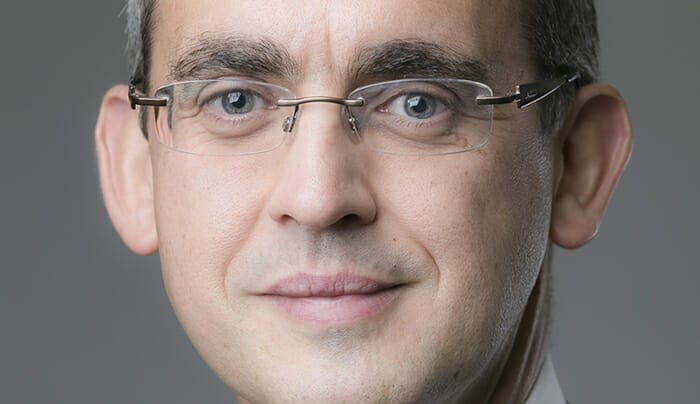
Tim Hodgson, head of the Thinking Ahead Group 2.0 at Willis Towers Watson and co-author of the report, says the premium exists but is hard to achieve.

“The key reason investors are not harvesting the long-term premium is because their governance is not up to it,” Hodgson says. “It requires a change in mindset and skill set.”

Worth the costs

Sponsored Content

For most investors, there will be some incremental governance costs required to implement these eight strategies. The group identified these costs as 15 basis points for a smaller asset owner and about 8 basis points for larger owners. However, the return gain for these actions is larger – estimated at 65 basis points for smaller asset owners and 161 basis points for larger owners.

“Asset owners will need to spend money, but it’s more than worth it,” Hodgson says. “This paper needs to survive public scrutiny so we have been cautious in our assumptions. If it becomes generally accepted there’s a long-term premium, then any investor with a fiduciary duty will have to consider it.”

The paper outlines the actions and costs of two funds – a small fund and a large one – in harvesting the eight building blocks of long-term value creation.
The smaller fund’s focus was on avoiding costs and mistakes; for example, by reducing manager turnover, avoiding chasing performance and forced sales, and moving some of the passive exposure to smart beta.

The example of the larger fund shows the advantage of having the governance and financial resources to consider all available options for capturing the premiums, including active ownership, investments in thematic exposures and setting aside cash to exploit forced selling.

The paper raises a number of questions regarding how investors would access the building blocks of value creation, and the working group will release a second paper outlining what investors require to implement them. This second paper will also include an examination of the beliefs needed to adopt this strategy.

Hodgson says some of the negatives that have a drag on returns, such as high turnover of managers and excessive costs, are explained in part by behavioural aspects.

The group deliberately does not define what “long horizon” or “long term” is, but it does attempt to say what it is not.

“It’s not having a minimum holding period, it’s not buy and hold; you’re allowed to sell,” Hodgson explains. “My personal definition is a long ‘look-up’ window, so for any decision an investor is making today, they should ask, ‘How will this pan out in 10 years?’ ”

The paper can be accessed here

The-search-for-a-long-term-premium

Leave a Comment

Sort content by

Real estate the object of desire for UK funds

United Kingdom pension funds will increase their real estate allocations as bond and equity investments continue to disappoint, according to new research by property consultancy Jones Lang Lasalle. The funds typically hold around 5 per cent of their assets in real estate, but the recent findings predict the pendulum will swing in favour of much

CFA Institute survey reveals ethical vacuum leads to lack of trust

An absence of appropriate ethical culture at financial services firms has been the biggest contributor to the lack of trust in the finance industry, according to a global survey of CFA Institute members, which attracted more than 6000 responses. Matt Orsagh, director of capital markets policy at CFA Institute, says to restore integrity in global

EDHEC: a bridge to practical portfolio construction

The new chairman of EDHEC-Risk Institute’s international advisory board, chief investment strategist at Swedish pension fund AP2, Tomas Franzen, says institutional investors should embrace academia and be open to applying research in the implementation of practical portfolio construction. He says that while investing is part art and part science, it is important to employ science

Fund “heads in sand” on climate risk

An Australian superannuation fund with A$6.6 billion ($6.9 billion) under management has achieved number-one ranking in a global survey of how the world’s top 1000 retirement funds, insurance companies and sovereign wealth funds are responding to climate risk. Sydney-based Local Government Super (LGS) has received the top ranking in the inaugural Climate Index of the

BFP to boost UK economy

In a policy to galvanise pension fund assets to help boost its ailing economy, the UK government wants funds to invest in small and medium-sized businesses. As part of its Business Finance Partnership (BFP), it has named four asset managers to run specialist funds backed by pooled government and private capital. The funds will invest

European distressed debt: investors divided by volatility

Last month conexust1f.flywheelstaging.com hosted a thinktank with a group of influential Australian investors to discuss the opportunities in European distressed debt. Participants included the Australian Government’s $80 billion sovereign wealth Future Fund, the $68 billion QIC, and leading asset consultants, with guest speaker sir David Cooksey, former board member of the Bank of England, chairman

Previous




