
ESG rethink can add 40 basis points per month: Hermes

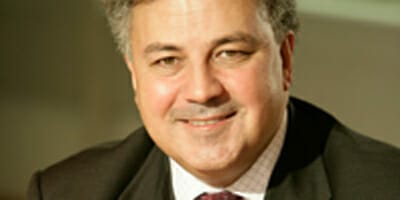
Rigorous Environmental, Social and Governance (ESG) management can deliver an extra 40 basis points per month according to Saker Nusseibeh, CEO and head of investment at Hermes Fund Managers.

“Where it [ESG] really matters for performance is in consistently avoiding bad governance. You can add 40 basis points per month… Per month!” Nusseibeh told a crowd of Australia’s top 50 superannuation funds and asset consultants at the Conexus Financial Australian Fiduciary Investors Symposium last week.

Nusseibeh talked about the importance of weighing up a company’s sustainability when considering whether to hold it in portfolios. Governance issues, he said, should be a mandatory part of the process, while environmental and social issues also weigh heavily despite being harder to measure.

“Think in terms of its ability to consistently offer stable returns for over 20 years, because that’s the investment time frames of your members. That’s how long they can be invested for, not one, two, or three years,” he said.

“Look at Lloyds of London. It successfully insured against world events for over 200 years… Then it went belly up, not because they couldn’t calculate risk. They were pretty good at that, but they didn’t successfully calculate the environmental risk of asbestos.”

Nusseibeh also urged trustees and managers to think more broadly about the future implications for fund members in a world devoid of ESG; one of lower standards of living punctuated by greater wealth inequality; high inflation; and transport and fuel restrictions.

Sponsored Content

“ESG is a tool for enhancing returns… But one should also do what is right for the sake of doing what is right.”

David Rae, head of asset allocation for New Zealand Superfund (NZ Super), also told the crowd about how the fund had recently brought ESG management “out of the back office to the front office.”

It’s a move he says, that had some of their investment professionals “kicking and screaming” about drafting their own policies but effectively “switched on their brains” about ESG and the costs and implications of getting it wrong.

It’s an approach that’s resulted in direct changes in major listed and unlisted companies NZ Super invests in, including changing supply chain issues in 16 technology companies, a complete change of board at another, and broke up “empire building” governance in a large listed infrastructure company.

Rae says their ‘active engagement’ on ESG won’t stop there, but is looking to build power in numbers through working together with other New Zealand funds on governance issues in particular.

“We recently got people in a room and said, ‘let’s raise corporate governance issues, and lets act as a group on these… we realise that tough talk in a locker room can quickly disintegrate on the field, so it’s important to have one company that’s leading that charge,” said Rae.


Leave a Comment

Sort content by

Why you should take notice of what we write

New research released this month gives impetus to the evidence that newspaper articles can predict aggregate future stock returns. Conducted by Professor of Finance at the University of St Gallen in Switzerland, Manuel Ammann, it examines articles in the German finance paper, Handeslblatt, from July 1989 until March 2011, and overall found that “newspaper content

CalPERS to move $1bn fixed income in-house

CalPERS plans to move $1 billion of its externally-managed international fixed income portfolio in-house in the next 12 months, but it will require board approval to do so.mrec4inarticleinline Sponsored Content scnative1 scnative2 scnative3

Texas Teachers extends manager partnerships

Texas Teachers Retirement System has extended a unique public markets strategic partnership structure to two of its private market managers in a move it claims will give the fund a long-term strategic advantage over other investors.mrec4inarticleinline Sponsored Content scnative1 scnative2 scnative3

Keynes and the character required for a long-term view

In the interests of educating myself I recently read Chapter 12 “The State of Long-Term Expectations” in John Maynard Keynes’ seminal economics tome General Theory. I particularly like his statement: “it needs more intelligence to defeat the forces of time and our ignorance of the future than to beat the gun”, but then I’ve always

Recipe for avoiding half-baked dynamic asset allocation

In what is lauded as somewhat of a Laurel and Hardy performance, APG’s Stefan Lundbergh and academic provocateur Jack Gray, demonstrate the disparity between ideology and action in a hypothetical dynamic asset allocation case study. But jokes aside, it highlights the misnomer in the words “best practice”, and the lack of courage in this industry.

HOOPP boss goes out on a high

Chief executive of HOOPP, John Crocker, has only one more board meeting before he retires, and except for travel plans to the Caribbean and Europe his dance card is empty. After 10 years in the position he leaves a fund in good shape – fully funded, technologically primed and with investments that use innovative, low-cost

Previous




