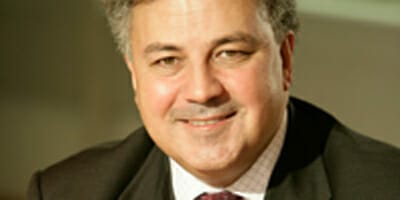

ESG rethink can add 40 basis points per month: Hermes

Rigorous Environmental, Social and Governance (ESG) management can deliver an extra 40 basis points per month according to Saker Nusseibeh, CEO and head of investment at Hermes Fund Managers.

“Where it [ESG] really matters for performance is in consistently avoiding bad governance. You can add 40 basis points per month… Per month!” Nusseibeh told a crowd of Australia’s top 50 superannuation funds and asset consultants at the Conexus Financial Australian Fiduciary Investors Symposium last week.

Nusseibeh talked about the importance of weighing up a company’s sustainability when considering whether to hold it in portfolios. Governance issues, he said, should be a mandatory part of the process, while environmental and social issues also weigh heavily despite being harder to measure.

“Think in terms of its ability to consistently offer stable returns for over 20 years, because that’s the investment time frames of your members. That’s how long they can be invested for, not one, two, or three years,” he said.

“Look at Lloyds of London. It successfully insured against world events for over 200 years… Then it went belly up, not because they couldn’t calculate risk. They were pretty good at that, but they didn’t successfully calculate the environmental risk of asbestos.”

Nusseibeh also urged trustees and managers to think more broadly about the future implications for fund members in a world devoid of ESG; one of lower standards of living punctuated by greater wealth inequality; high inflation; and transport and fuel restrictions.

Sponsored Content

“ESG is a tool for enhancing returns… But one should also do what is right for the sake of doing what is right.”

David Rae, head of asset allocation for New Zealand Superfund (NZ Super), also told the crowd about how the fund had recently brought ESG management “out of the back office to the front office.”

It’s a move he says, that had some of their investment professionals “kicking and screaming” about drafting their own policies but effectively “switched on their brains” about ESG and the costs and implications of getting it wrong.

It’s an approach that’s resulted in direct changes in major listed and unlisted companies NZ Super invests in, including changing supply chain issues in 16 technology companies, a complete change of board at another, and broke up “empire building” governance in a large listed infrastructure company.

Rae says their ‘active engagement’ on ESG won’t stop there, but is looking to build power in numbers through working together with other New Zealand funds on governance issues in particular.

“We recently got people in a room and said, ‘let’s raise corporate governance issues, and lets act as a group on these… we realise that tough talk in a locker room can quickly disintegrate on the field, so it’s important to have one company that’s leading that charge,” said Rae.


Leave a Comment

Sort content by

The Caisse, Future Fund into infrastructure

Two of the world’s biggest institutional investors have recently made significant forays into Australian infrastructure, seeing opportunities in the country across a wide array of assets. Canada’s second largest pool of pension assets, la Caisse de dépôt et placement du Québec (the Caisse), has made a $139.2-million investment in five projects. Macky Tall, the fund’s

Cal pension reforms set to pass

Governor of California, Edmund G Brown Jr, has announced proposed legislation that outlines sweeping reforms to the state’s pension system, but appears to have stepped back from a proposal to create a hybrid pension plan. The hybrid defined-contribution/defined-benefit plan was proposed last year when Brown launched a 12-point reform package. It was widely opposed by

DB plans continue to slide

The funded status of US defined-benefit corporate-pension plans continued to worsen last year, despite plan sponsors increasing contributions by $70 billion, a new Mercer study reveals. Mercer found funding levels have slipped to 2009 levels, with the outlook for 2012 likely to extend the bleak news for plan sponsors. The funded status of pension plans

Super standard risk measure

Australian superannuation funds are now required to disclose a measurement of risk to fund members, with trustees encouraged to use a standardised measurement backed by regulators and industry peak bodies. The Standard Risk Measure will provide a rating of a fund’s investment option based on the likely number of negative returns this option is predicted

Robert Merton: the individual plan man

A retirement solution that focuses on outcomes and is customised for each participant cannot be met by existing defined-contribution designs, according to Nobel Prize-winning economist, Robert Merton, who advocates a “next-generation DC solution”. Merton, who is the Massachusetts Institute of Technology Sloan School of Management’s distinguished professor of finance and resident scientist at Dimensional Fund

Will you be increasing your allocation to Asian equities in the next 12 months?

mrec4inarticleinline Sponsored Content scnative1 scnative2 scnative3

Previous




