
ESG rethink can add 40 basis points per month: Hermes

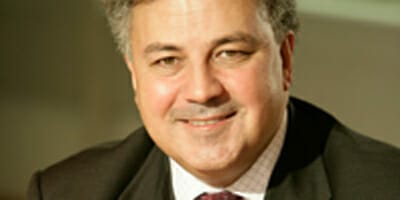
Rigorous Environmental, Social and Governance (ESG) management can deliver an extra 40 basis points per month according to Saker Nusseibeh, CEO and head of investment at Hermes Fund Managers.

“Where it [ESG] really matters for performance is in consistently avoiding bad governance. You can add 40 basis points per month… Per month!” Nusseibeh told a crowd of Australia’s top 50 superannuation funds and asset consultants at the Conexus Financial Australian Fiduciary Investors Symposium last week.

Nusseibeh talked about the importance of weighing up a company’s sustainability when considering whether to hold it in portfolios. Governance issues, he said, should be a mandatory part of the process, while environmental and social issues also weigh heavily despite being harder to measure.

“Think in terms of its ability to consistently offer stable returns for over 20 years, because that’s the investment time frames of your members. That’s how long they can be invested for, not one, two, or three years,” he said.

“Look at Lloyds of London. It successfully insured against world events for over 200 years… Then it went belly up, not because they couldn’t calculate risk. They were pretty good at that, but they didn’t successfully calculate the environmental risk of asbestos.”

Nusseibeh also urged trustees and managers to think more broadly about the future implications for fund members in a world devoid of ESG; one of lower standards of living punctuated by greater wealth inequality; high inflation; and transport and fuel restrictions.

Sponsored Content

“ESG is a tool for enhancing returns… But one should also do what is right for the sake of doing what is right.”

David Rae, head of asset allocation for New Zealand Superfund (NZ Super), also told the crowd about how the fund had recently brought ESG management “out of the back office to the front office.”

It’s a move he says, that had some of their investment professionals “kicking and screaming” about drafting their own policies but effectively “switched on their brains” about ESG and the costs and implications of getting it wrong.

It’s an approach that’s resulted in direct changes in major listed and unlisted companies NZ Super invests in, including changing supply chain issues in 16 technology companies, a complete change of board at another, and broke up “empire building” governance in a large listed infrastructure company.

Rae says their ‘active engagement’ on ESG won’t stop there, but is looking to build power in numbers through working together with other New Zealand funds on governance issues in particular.

“We recently got people in a room and said, ‘let’s raise corporate governance issues, and lets act as a group on these… we realise that tough talk in a locker room can quickly disintegrate on the field, so it’s important to have one company that’s leading that charge,” said Rae.


Leave a Comment

Sort content by

Real estate the object of desire for UK funds

United Kingdom pension funds will increase their real estate allocations as bond and equity investments continue to disappoint, according to new research by property consultancy Jones Lang Lasalle. The funds typically hold around 5 per cent of their assets in real estate, but the recent findings predict the pendulum will swing in favour of much

CFA Institute survey reveals ethical vacuum leads to lack of trust

An absence of appropriate ethical culture at financial services firms has been the biggest contributor to the lack of trust in the finance industry, according to a global survey of CFA Institute members, which attracted more than 6000 responses. Matt Orsagh, director of capital markets policy at CFA Institute, says to restore integrity in global

EDHEC: a bridge to practical portfolio construction

The new chairman of EDHEC-Risk Institute’s international advisory board, chief investment strategist at Swedish pension fund AP2, Tomas Franzen, says institutional investors should embrace academia and be open to applying research in the implementation of practical portfolio construction. He says that while investing is part art and part science, it is important to employ science

Fund “heads in sand” on climate risk

An Australian superannuation fund with A$6.6 billion ($6.9 billion) under management has achieved number-one ranking in a global survey of how the world’s top 1000 retirement funds, insurance companies and sovereign wealth funds are responding to climate risk. Sydney-based Local Government Super (LGS) has received the top ranking in the inaugural Climate Index of the

BFP to boost UK economy

In a policy to galvanise pension fund assets to help boost its ailing economy, the UK government wants funds to invest in small and medium-sized businesses. As part of its Business Finance Partnership (BFP), it has named four asset managers to run specialist funds backed by pooled government and private capital. The funds will invest

European distressed debt: investors divided by volatility

Last month conexust1f.flywheelstaging.com hosted a thinktank with a group of influential Australian investors to discuss the opportunities in European distressed debt. Participants included the Australian Government’s $80 billion sovereign wealth Future Fund, the $68 billion QIC, and leading asset consultants, with guest speaker sir David Cooksey, former board member of the Bank of England, chairman

Previous




