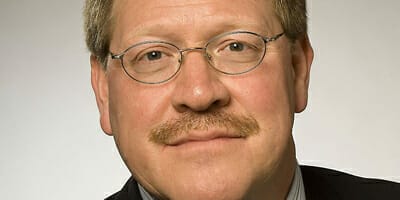

Eijffinger’s decade of financial repression

Financial repression will define the economic landscape for at least another decade, according to professor of financial economics at Tilburg University, Sylvester Eijffinger, which has serious implications for institutional investors.

Eijffinger, who also is also a visiting professor at Harvard, sits on the monetary experts panel of the European Union and is an adviser to the International Monetary Fund, says negative interest rates are the major issue of our time.

Negative real interest rates are here to stay, a realisation that has huge implications for investors.

“Governments have to de-leverage risk in times of low growth and they are not prepared to increase taxes; they have to do it with financial repression,” he says. “As an investor, be prepared. You have to realise that low interest rates are here to stay at the short-end and possibly at the long-end of the yield curve. This has huge implications for investments.”

By way of example, he says the European Central Bank’s policy rate stands at 0.5 per cent, while the eurozone’s annual inflation rate is 2.5 per cent. The Bank of England keeps its policy rate at only 0.5 per cent, despite an inflation rate that hovers above 2 per cent. And, in the United States, where inflation exceeds 2 per cent, the Federal Reserve’s benchmark federal funds rate remains at an historic low of 0 to 0.25 per cent.

This will be the financial and economic environment of the immediate future.

Sponsored Content

He says negative interest rates, which he describes as a kind of wealth tax, are necessary for governments to de-risk, but they come at the expense of savers.

“People who save should be aware that governments need to do this for at least a decade,” he says.

Eijffinger will give a keynote address at the Fiduciary Investors Symposium, an event that brings together institutional investors to examine the power and responsibility of fiduciary investment.

The event, which is convened by Conexus Financial, the publisher of conexust1f.flywheelstaging.com, will be held in Amsterdam from October 20 to 22, 2013. www.fiduciaryinvestor.com

Read an article by Eijffinger on the subject here.


Leave a Comment

Sort content by

Good ESG data requires a framework

Initiatives such as the Sustainability Accounting Standards Board are vital for providing the consistent, regular, high-quality disclosure on the SDGs that investors need, a panel told delegates.

Irish pensions headed for major reforms

Auto-enrolment will put more people into Ireland's public retirement system, while regulatory requirements will include tougher standards for trustees and more disclosure on ESG.

Funds team up on G7 priorities

A group of institutional investors are collaborating to address the G7 priorities of climate change, gender inequality and the infrastructure gap, agreeing to commit resources and expertise.

Trustees answer the tenure question

The Australian Prudential Regulation Authority has given guidance for how long trustees should sit on boards. How well does the theory suit the practice? Stakeholders weigh in.

Whineray takes the reins at NZ Super

New Zealand Super acting chief executive Matt Whineray was named to the position permanently on Tuesday. He replaces long-time fund CEO Adrian Orr and vacates his chief investment officer role.

MSCI leaves out suspended A-shares

A handful of companies halted trading this week, prompting MSCI to drop plans to add them to its emerging markets index as it made the long-awaited inclusion of 229 China-listed stocks.

Previous




