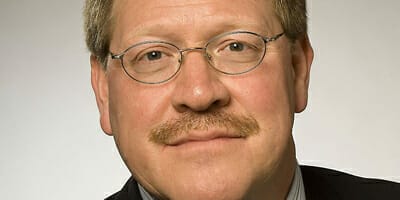

Eijffinger’s decade of financial repression

Financial repression will define the economic landscape for at least another decade, according to professor of financial economics at Tilburg University, Sylvester Eijffinger, which has serious implications for institutional investors.

Eijffinger, who also is also a visiting professor at Harvard, sits on the monetary experts panel of the European Union and is an adviser to the International Monetary Fund, says negative interest rates are the major issue of our time.

Negative real interest rates are here to stay, a realisation that has huge implications for investors.

“Governments have to de-leverage risk in times of low growth and they are not prepared to increase taxes; they have to do it with financial repression,” he says. “As an investor, be prepared. You have to realise that low interest rates are here to stay at the short-end and possibly at the long-end of the yield curve. This has huge implications for investments.”

By way of example, he says the European Central Bank’s policy rate stands at 0.5 per cent, while the eurozone’s annual inflation rate is 2.5 per cent. The Bank of England keeps its policy rate at only 0.5 per cent, despite an inflation rate that hovers above 2 per cent. And, in the United States, where inflation exceeds 2 per cent, the Federal Reserve’s benchmark federal funds rate remains at an historic low of 0 to 0.25 per cent.

This will be the financial and economic environment of the immediate future.

Sponsored Content

He says negative interest rates, which he describes as a kind of wealth tax, are necessary for governments to de-risk, but they come at the expense of savers.

“People who save should be aware that governments need to do this for at least a decade,” he says.

Eijffinger will give a keynote address at the Fiduciary Investors Symposium, an event that brings together institutional investors to examine the power and responsibility of fiduciary investment.

The event, which is convened by Conexus Financial, the publisher of conexust1f.flywheelstaging.com, will be held in Amsterdam from October 20 to 22, 2013. www.fiduciaryinvestor.com

Read an article by Eijffinger on the subject here.


Leave a Comment

Sort content by

Bulk of pension assets still at top end

The 300 largest funds, and the seven biggest country markets, continue to control the lion’s share of global pension assets, a Willis Towers Watson study has found.

Fundamentally rewiring finance

The better aligned a society’s financial institutions are with its goals and ideals, the stronger and more successful the society will be.

Year in review

Analysing the most read stories of 2016 reveals some interesting trends. Overwhelmingly the most popular investment stories have been about fees and issues of sustainability.

Cyber, financial and climate risks

From quantum computing increasing the risk of damaging cyber attacks to towering global debt levels, pension funds are being urged to adopt clear risk strategies to manage emerging risks.

New investment culture embraces ESG

Investors are intentionally pursuing strategies that tie portfolio-level decision-making to systems level risks but they need more support in identifying opportunities for collective action.

Strength amid global turmoil

Political factors will continue to create uncertainty in investment markets, so now – more than ever – large investors need to play to their strengths.

Previous




