
Why these impact investing veterans don’t care about ESG ratings

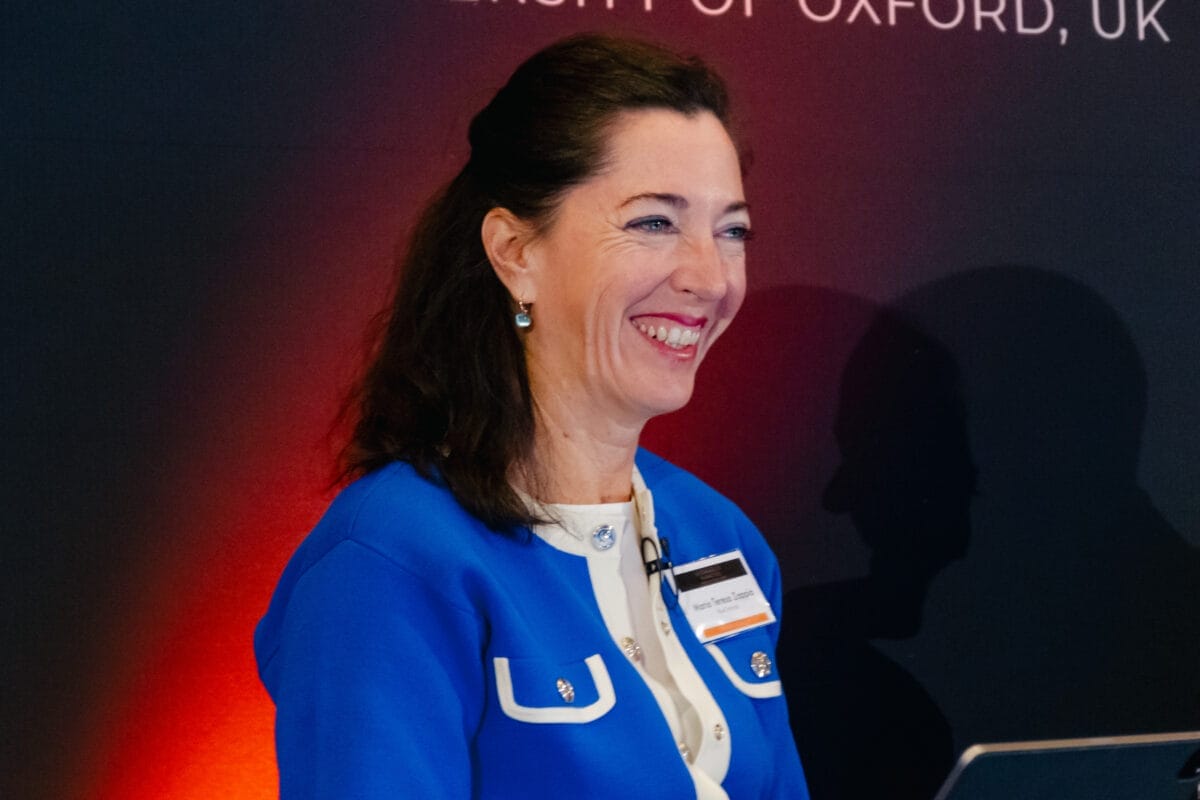
BlueOrchard and Schroders Capital’s impact investing veteran, Maria Teresa Zappia, isn’t a fan of using ESG performance to evaluate her portfolios, suggesting that investors are limiting their options if they are not willing to consider companies with lesser ratings. Echoing the sentiment, PGGM’s Piet Klop said the pension manager also lost its faith in ESG marks long ago.

ESG is not necessarily a stepping stone for impact investment according deputy chief executive at BlueOrchard and head of sustainability and impact of Schroders Capital, Maria Teresa Zappia, who said investors are limiting their options if they are not willing to consider companies with lesser ratings for their impact portfolios.

Zappia, who is an impact investing veteran of 20 years, told Sustainability in Practice at Oxford University this month that ESG is often treated by the industry as “the stepping stone” for impact, but that connection doesn’t always exist in reality.

Schroders has a US-based listed equity strategy team that focuses on local small caps and it has an impact assessment to evaluate proposed stocks from the team based on two things: how crucial impact is to their business models and how innovative these companies are.

“Very often they [companies in impact portfolio] have average governance, just started to look into their own scope one and scope two emissions, and they probably don’t excel in terms of diversity and gender representation,” Zappia told the delegates.

“They are not necessarily very advanced in their sustainability journey; it could be sometimes exactly the opposite. But the products and services they have in the market are innovative – they increase access and generally push for cost efficiency and affordability. I think this is really where that the impact comes from.”

Sponsored Content

It is a sentiment echoed by Piet Klop, head of responsible investment at PGGM, the €228 billion pension manager for the Netherland’s second-largest pension fund.

PGGM defined its own “solution universe” to inform its impact investing method in 2015, consisting of listed companies that generate market-rate financial returns and have a positive impact on its four themes of climate, healthcare, food security and water scarcity – a revenue rather than ESG ratings-based approach.

“We tried to bring a little more method to the madness, away from the mish mash of ESG ratings where everybody’s throwing in all sorts of data points,” Klop said. “At the end of the line, you can’t really make sense of which tobacco company came on top of many sustainability rankings.”

“That’s where we lost our belief in ESG ratings, because there must be a distinction between doing the thing right, and doing the right thing. A tobacco company can run its company perfectly well, but ultimately, it’s not a solution to anything.”

In May, the Global Impact Investing Network (GIIN) released the new guidance for pursuing impact in listed equities. It revolves around four pillars – strategy, portfolio design, engagement and data usage. It saw the disappearance of concepts like additionality from impact investing’s definition, which was described by the organization as “the positive impact that would not have occurred anyway without the investment”.

Klop said measuring impact using additionality was “probably too high of a bar” for most investors anyway. “It’s super hard to prove that something good would not have happened without you. Nor does anybody particularly care as long as the impact is being generated.”

Zappia said the process of coming to the new impact investing definition has been a healthy exercise which challenged the industry to think about the real purpose and outcome of impact investing. “For example, there were key questions such as are you [as an investor] looking really for impact, or are you obsessed with being aligned to a benchmark?”

In terms of setting impact measurement targets from here, Zappia’s word of advice for listed equity managers is to make full use of the information available to them. But remember they should always invest with one ultimate factor in mind.

“There is a lot of information that can be tracked [in listed equities]. We created our own impact assessment tool – a really very detailed scorecard to capture as much as possible about the baseline and an end target.

“Also engage with the management of these [portfolio] companies to see how key achieving impact is to their business model, which I think is the most important part.”

Asset Owner:PGGM / PFZW

Leave a Comment

La Caisse’s oil exit pays off as renewables portfolio pulls ahead of fossil fuels

La Caisse’s oil exit pays off as renewables portfolio pulls ahead of fossil fuels

Divesting from the oil sector has been a boon for La Caisse’s performance, as the Canadian pension giant says its energy investments have earned billions in value-add compared to the benchmark since the inception of its climate strategy. Head of sustainability Bertrand Millot unpacks the fund’s approach in an interview with Top1000funds.com.

Sort content by

Investors’ climate summit

After a tentative agreement was achieved by global leaders in Durban in December more than 500 global investors will meet at the United Nations next week to discuss the investment needed to address climate change. The chief executive officers of CalPERS and CalSTRS, as well as the comptrollers of New York’s state and local public

Who pays for climate fund still up in the air

The formal approval of the Green Climate Fund (GCF) was a critical outcome of the UN climate change conference in Durban, according to Deutsche Bank Climate Change Advisors, but the lack of funding for the GCF remains a concern.mrec4inarticleinline Sponsored Content scnative1 scnative2 scnative3

Climate change dwarfs euro crisis when seen from afar

Someone once told me the reason the Dalai Lama is always smiling, even when he’s talking about war, is that his view of the world, and all its troubles, is like a knowing father watching a child work through the wonderment and challenges of life. It is with this view that institutional investors must face

Investors hold power for sustainable future

Serious investors need to look at the sustainability of capital and their responsibility under UNPRI. They are not serious about their ESG commitment.

Global union leader challenges funds to see big picture

As the G20 meeting looms, Sharan Burrow, general secretary of the International Trade Union Confederation (ITUC), told delegates at the Fiduciary Investors Symposium to stop acting as if fiduciary management existed in a bubble. mrec4inarticleinline Sponsored Content scnative1 scnative2 scnative3

$20 trillion call for action on climate change

A joint statement from a group of 285 investors representing more than $20 trillion has called for a binding international legal framework that will provide the long-term certainty needed to encourage the large-scale private investment necessary to tackle climate change.mrec4inarticleinline Sponsored Content scnative1 scnative2 scnative3

Previous




