
The qualities of successful stewardship

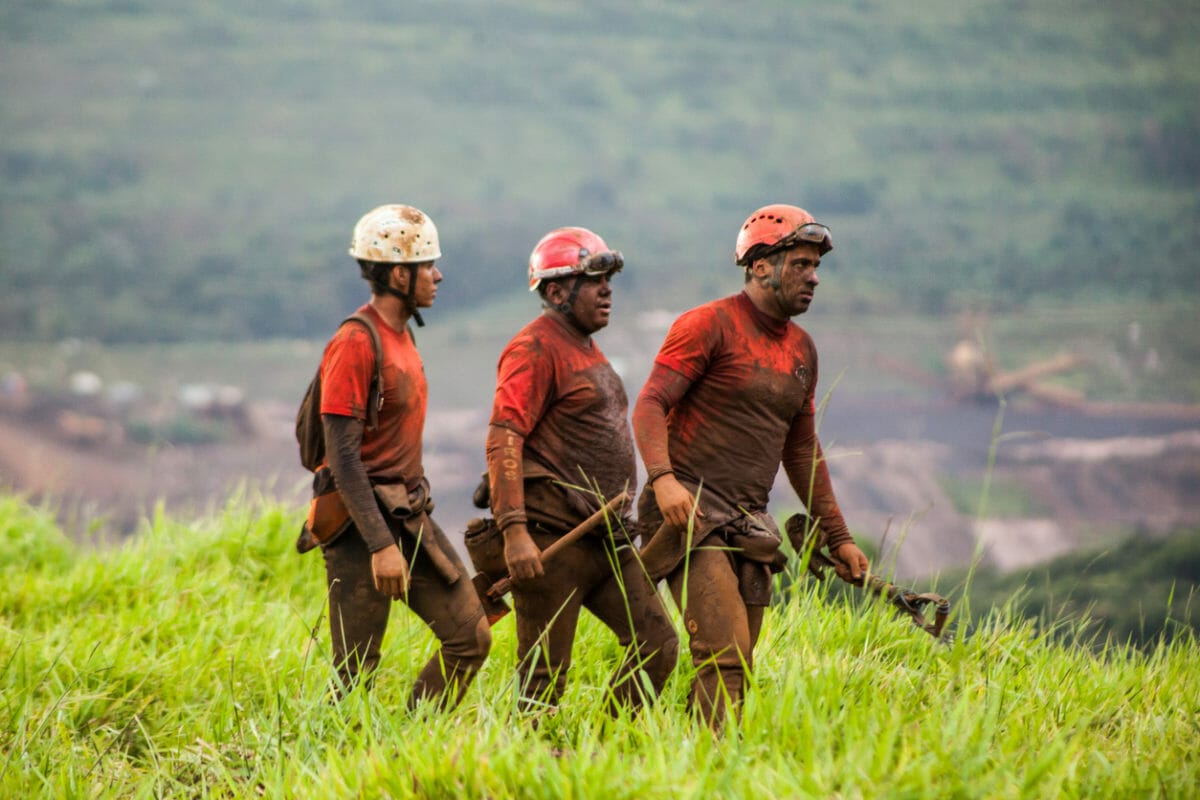
Three dirty firemen returning of a searching operation in Córrego do Feijão - place of Brumadinho city that was destroyed by mud after one of Vale's dam breakdown.

The Investor Mining & Tailings Safety Initiative, chaired by the Church of England Pensions Board and the Swedish Council of Ethics of the AP Funds has won the PRI Stewardship Project of the Year Award.

The Investor Mining & Tailings Safety Initiative was established shortly after the Brumadinho disaster in Brazil which killed 270 people, and uses direct shareholder action at mining companies to ensure that make sure the systemic risk posed by waste in the mining sector was properly understood and addressed.

Supported by 114 investors active in extractive industries with over $14 trillion in assets under management, the initiative reveals the qualities of successful stewardship including the value of building coalitions, the need for more than one intervention if goals are ambitious, and that investors are in a unique position to convene other stakeholders to address systemic issues.

Here is the full submission to the 2020 PRI Awards which details the projects objectives, successes and learnings.


Give a brief overview of the initiative, its objectives, and why you decided to undertake it. 

Sponsored Content

The Church of England Pensions Board and the Council on Ethics of the Swedish National Pension Funds used direct shareholder action at mining companies to ensure that lessons were learned from the 2019 Brumadinho disaster in Brazil, which killed 270 people. The co-founders were driven by a desire to make sure that the systemic risk posed by waste in the mining sector was properly understood and addressed.

In January 2019, a mining tailings (waste) dam belonging to Vale collapsed and killed 270 people. The disaster followed a previous tailings dam collapse in November 2015, in the same region, at another Vale operation at the Samarco joint venture with BHP. On that occasion, 19 people were killed and extensive damage was caused to the environment.

Back in 2015 and 2016 Vale and BHP gave assurances to investors that the issues that led to the disaster had been addressed. It turned out they had not. It became clear that a much more systemic intervention was required by investors if the risk to life and the environment posed by tailings dams was to be addressed.

The Investor Mining & Tailings Safety Initiative was established shortly after the Brumadinho disaster. It is supported by 114 investors with over $14 trillion in assets under management. The initiative sought world leading expert input at a series of investor roundtables, and identified the following five issues:

  • There was a trend of increasing catastrophic dam failures combined with a failure to implement past recommendations.
  • There was a lack of a global industry standard on tailings management.
  • There was an unknown number of tailings dams in the world and no global record of where they were.
  • No Disclosure standard existed for company reporting on tailings dams.
  • Fundamentally, waste has been treated as an externality with the cheapest storage options in many instances.

Describe how your project is aligned to Active Ownership 2.0, including:

  1. The significance of the systemic, real world outcomes it seeks. 

Tailings dams are some of the largest constructions in the world intended to last in perpetuity. There is no global record of their locations or standards of operation and the significance of this initiative are stark: lives saved, environmental depredation avoided and prevention of company value destruction.

After previous disasters actions were left to companies. This time investors were intent on driving the systemic change needed and as such a number of interventions were made:

  • Establish a Global Tailings Standard. The International Council on Mining and Metals (ICMM), which represents the top 30 largest global mining companies in the world, worked with the PRI and the United Nations Environment Programme (UNEP) to establish an independent Global Tailings Review.
  • Identify World’s Tailings Dams.There was no public record of where dams were located, standards of operation or ownership. The initiative made an urgent disclosure request to 727 listed extractives companies seeking detailed disclosure on each individual facility.
  • Develop Global Public Database. The co-chairs established a global database at the UN-backed research company GRID-Arendal, to drive performance and best practice. The site incorporates satellite imagery and compares 1,900 facilities.
  • Establish a 24/7 global alert systemto facilitate tailings insurance provision and accelerate technology to enable the identification and removal of the most dangerous dams.


  1. The ambition, ingenuity or effort in the responsible investment tools/activities that were deployed. 

The initiative has demonstrated it is possible through concerted efforts, over a short timeframe, to place investors in a leadership role to shape a global response to a disaster that should not have happened, but could easily happen again.

The Pensions Board and the Council of Ethics believe that this kind of collaboration, intervening in a decisive and public way to reshape an industry, is consistent with Engagement 2.0. The following actions were critical to the success of the initiative:

  • The ability to respond immediately: The co-founders were able to form an urgent collaboration within days of the disaster. And to agree a common position and make a public intervention to shape the response following the initial disaster recovery phase.
  • Rapid expert knowledge gathering:the co-founders convened five urgent expert roundtables of investors in an open transparent manner with industry and leading academics at the table. This enabled them to work through the issues together, but with investors in the lead to identify potential solutions and interventions. These events saw between 60 and 120 in-person participants, and further online attendance.
  • Consistent involvement of affected communities:Contributions through conference calls, written statement and in-person testimonies challenged company reporting of circumstances around the affected areas as well as investor understanding of the issue. It kept the initiative very clearly focussed on the issue.
  • Coalition building:The initiative is supported by 114 institutions with over $14 trillion in AUM. The co-founder also involved key governments, including the UK, Brazil and Chile.
  • Willingness to Set the Agenda to Generate Momentum:Throughout the co-founders have sought to set the agenda at pace and in public (often reported in the media including WSJ, Bloomberg, FT, Reuters, New York Times). When they identified an issue, they made an intervention. This generated considerable momentum.
  1. The challenges associated with this initiative (e.g. free rider issues hindering first movers) how these were overcome, and what was learned. 

Ensuring prominence of community voice(s): This was the greatest challenge given the disaster was in Brazil and the inevitable language challenges. Due to the nature of the initiative many senior company representatives were present in person whilst community representatives were initially only present through conference calls or written statements. This was an imbalance that needed to be addressed and the co-founders did so by ensuring a community presence at key moments in the initiative, as well as supported travel and interpretation. The Pensions Board and the Council of Ethics also partnered with local organisations in Brazil, such as the Business and Human Rights Resource Centre Brazil Office, and the NGO Caritas Brazil, and worked through LAPFF who had greater expertise in this regard.

Differences in community perspectives and with companies: Significant differences between community and company accounts led to the Initiative announcing a delegation visit to Brazil. It was also clear there were different perspectives and the founders tried to ensure that rather than community participants representing their communities, that they related their experiences. The experiences were hugely powerful, challenging and each was also deeply personal.

Challenges related to credibility and partiality. It is important to avoid ‘capture’, the appearance of ‘capture’ and undue partiality. The Pensions Board and the Council of Ethics achieved this by inviting a broad range of expert and stakeholder attendees to roundtables, and at all times insisting on independence in the Global Tailings Standard and committing to open and freely available data generation.

Defining an Urgent Disclosure Ask: The ‘ask’ needed to be reasonable for small and large companies, avoid commercially sensitive data, and provide meaningful insights of material relevance for investors and other stakeholders. The Pensions Board and the Council of Ethics addressed this challenge by developing a set of questions in consultation with investors, ICMM, and four mining companies of different sizes.

Maintaining a distinctive investor lens: There is a wealth of engineering, organisational, and other complexity that intersects in this initiative, and one challenge has been not to become lost or absorbed in this complexity.

Outline the results, including evaluation of its success against the objectives; were there any adjustments to the forward agenda; were there any insights learned from this project that can be applied more broadly?

  1. Preventing Another Brumadinho by Establishing a Global Standard. The process began in June 2019 and involved convening an international expert panel of seven, and a multi-stakeholder advisory group of 15 people. It involved field visits, public consultation, and in-country consultations in Kazakhstan, China, Chile, Ghana, South Africa, and Australia. The Standard is due to be published in June 2020. The goal was to ensure an implemented Standard that would have prevented Brumadinho. The independent expert panel have confirmed that this would likely have been the case.
  2. Safety Improved by Tailings Disclosure.In under a year, The Pensions Board and the Council of Ethics have received standardised and full disclosure from 64.9% of the mining industry (by market capitalisation), and responses from 86% of the mining industry by market capitalisation. Through government and company sources the founders know repairs have been made to dams that were long overdue and safety budgets increased.
  3. Transparency driving best practice: The Pensions Board and the Council of Ethics supported the development of the Global Portal in an open-source format, mapped onto satellite imagery, and to allow comparative analysis. Data on 1,938 tailings facilities is reported, located at 764 mine sites, across 98 mining companies. This was the first time such data was freely available and allowed risk profiling of companies.

Insights:

  • Broad requests for detailed information from investors can be successful in a short timeframe, particularly when momentum is built through collaboration.
  • Value in building coalitions with like-minded organisations in and outside the financial ecosystem. These collaborations can be useful both as ‘top down’ (through co-convening a standard setting process), and ‘bottom up’ interventions (through collaboration that enhances the availability and usability of data for academic analysis).
  • If a project has ambitious goals, one intervention will not be sufficient, particularly where the challenges straddle different domains: regulation, governance, corporate practice, employee behaviour, data availability, etc.
  • Investors are in a unique position to convene other stakeholders to address systemic issues.


Leave a Comment

Silver is the new gold: France’s UMR targets opportunities in ageing economy

Silver is the new gold: France’s UMR targets opportunities in ageing economy

French pension organisation UMR has launched a multi-asset thematic program that will target opportunities in Europe’s ageing economy. It’s part of a broader strategy to increase diversification in private markets where it sees secondary markets as an increasingly important tool.

Sort content by

The challenge of asset owners top-down bottom-up alignment with managers

For pension funds with a large roster of external managers, balancing the integration of top-down strategy with managers’ bottom-up implementation is one of the most challenging tasks says Mark Walker, CIO of Coal Pension. The key is to ensure external managers truly understand the strategic goals for the allocation.

Utah Retirement Systems: Why ESG is a waste of time

Divestment doesn't work, scope 3 reporting will tie companies in regulatory knots and ESG integration threatens pension funds long term returns and their ability to finance the transition. Utah Retirement Systems' John Skjervem says the only way to solve the climate emergency is to keep investing in fossil fuels.

Switzerland’s Publica hit by equity, fixed income correlation

Hit by last year's unusual correlation between equities and bonds, and in a bid to avoid higher long-term inflation, Switzerland's €45.6 billion Publica kick-starts a new strategic asset allocation that will reduce the bond allocation and result in a search for new managers.

NYCRS readies to allocate more to private markets

Since joining $233.5 billion New York City Retirement Systems (NYCRS) six months ago, CIO and Deputy Comptroller for Asset Management Steven Meier has spent the bulk of his time getting under the hood of the private markets allocation, engaging with business partners and meeting some of the best minds in the industry to discuss the

WEF lays out global risks ahead: Cost of living and climate dominate

The world faces a set of risks that feel both wholly new and eerily familiar. The Global Risks Report 2023 explores some of the most severe risks we may face over the next decade.

Why private debt is pivotal to Queensland Investment Corporation

Queensland Investment Corporation's (QIC) CIO of State Investments, Allison Hill, explains why private debt is a crucial part of the portfolio.

Previous



