
Opportunity for FI to be more impactful

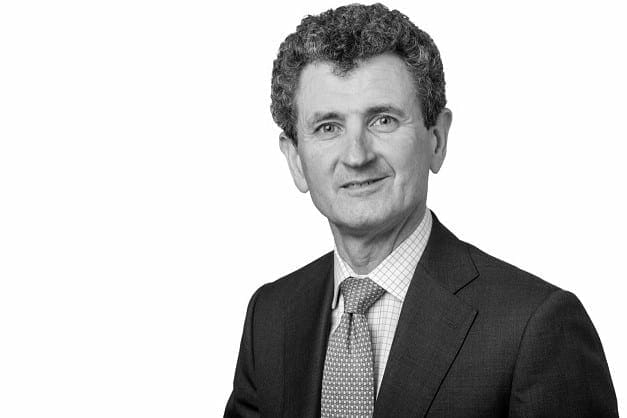
In this Fiduciary Investors Series podcast, Amanda White talks to Andrew Parry, head of sustainable investment at Newton Investment Management about the complexity of sustainable investment, and the role of the finance industry in guiding investors to choose companies that have relevant business models for a changing world.

Now is the time to embrace the Sustainable Development Goals (SDGs), according to head of sustainable investment at Newton Investment Management, Andrew Parry, with the COVID crisis exposing a lot of the frailties in our society and economic system.

“This is very much a social crisis, a human crisis,” he said in a Fiduciary Investors Series podcast. “It has helped galvanised attention on this issue, and brought together a broad range of partners across private and public sector and [the SDGs] present a way of recovering from the crisis if executed well.”

September this year marked the fifth anniversary of the SDGs, a period of time that Parry says represented a very slow take up in the SDGs.

“If anything it was a labelling exercise. But a lot of people have been calling this out and saying it has not been integrated into business plans it or is not being seen as part of the transformation we need in the economy. The COVID crisis brought all of that home. Now there is a chance for restorative, transformative allocation of capital. It’s very exciting.”

In addition the very low levels of interest rates around the world provide a unique opportunity for the finance industry to be innovative to meet the needs outlined by the SDGs.

Sponsored Content

“I think the finance sector has gone beyond a re-mapping of the goals, and is beginning to understand that the SDGs represent an enormous opportunity,” he says.

In particular he says there is an opportunity in the fixed income market to accelerate its participation in achieving the goals.

“In the fixed income market one of the measures of impact is additionality. They can bring additional capital to bare to help tackle and fund these needs. One of the really interesting areas is how do we take the learnings from green bonds and apply it to the SDGs and bring new capital to bare,” he said. “The investment world is crying out for attractive investment opportunities if done with the proper public private partnership it’s a tremendous opportunity for the fixed income market to be impactful investors.”

Parry believes one of the biggest obstacles in aligning portfolios to the SDGs is understanding what it represents.

“If you don’t get beyond the 17 goals you’re not doing your job, you need to have a deep understanding. There is a rich body of understanding coming out of the UN agencies of what the goals and targets represent and how to be accessed. This helps you build your own view and taxonomy.”

Parry, who has worked in funds management for more than 30 years, believes the industry needs to be careful in its nomenclature, citing “non-financial” as a bit of a misnomer.

“It’s just a time scale,” he says. “There’s a tension over the short term between economic and financial returns, social consequences and environmental impact but over the the long term they do come together. We need a well-functioning prosperous society living in a vibrant world to support economic returns which drive financial returns.”

This is where it is important that asset owners look through the lens of systems thinking and long-term thinking so the three concepts of environment, people and financial returns all come together.

“There is a lot of dynamism in this and the world is constantly changing. I ask people if ESG didn’t exist as a concept, would you carry on investing in the way you would today under those labels? I would. They are fantastic ways to look at the way the world is going, it’s expanding your world and frees you from the dead hand of the index, and frees you to look at the world and where it is going.”

Parry says the role of investors is to navigate clients through a changing world and identify relevant business models for that.

“Social norms are unstable over time, which is good because we’re seeing such a dramatic shifts in certain things, like gay marriage. Companies that anchor to the past, or have the arrogance to think they will always be relevant will be marooned.”

By way of example he points to the FTSE index which only has 26 names still in it from the 1980s.

“Businesses need to think about the world as in adaptation. There is a very different construct in the FSTSE in names but also the businesses that reflect society. No business model is designed to last forever because things succumb to changing norms. Being relevant in a changing world is a powerful concept. Darwin didn’t say survival of the fittest, he said survival of the most adaptive.”


Leave a Comment

La Caisse’s oil exit pays off as renewables portfolio pulls ahead of fossil fuels

La Caisse’s oil exit pays off as renewables portfolio pulls ahead of fossil fuels

Divesting from the oil sector has been a boon for La Caisse’s performance, as the Canadian pension giant says its energy investments have earned billions in value-add compared to the benchmark since the inception of its climate strategy. Head of sustainability Bertrand Millot unpacks the fund’s approach in an interview with Top1000funds.com.

Sort content by

More work needed on climate integration

There has been widespread adoption and more board engagement since the launch of the Task Force on Climate-related Financial Disclosures recommendations in 2017 but more work is needed to get a uniform and comparable approach to climate change disclosure across the investment community.

Investors cluster around AI SDG platform

A growing number of influential asset owners have expressed interest in a new sustainable development investment (SDI) Asset Owner Investor Platform launched by Dutch funds APG and PGGM. The AI-driven technology sifts through reams of structured and unstructured data to gauge the extent to which companies’ products and activities meet the UN’s Sustainable Development Goals.

Remaking markets one portfolio at a time

This week SASB and Bloomberg launched some new indexes -  Bloomberg SASB ESG equity index for US large cap equity, and the Bloomberg SASB ESG fixed income index for investment-grade corporate bonds - to help investors track companies and create sustainable, long-term value in a way that supports their fiduciary responsibilities. Director of capital markets policy and outreach at SASB,  Janine Guillot explains.

SWFs play important role in Arctic

Sovereign wealth funds can play an important role in investing sustainably in the Arctic region, and warding off the impact of a looming natural disaster, according to the IMF's Udaibir Das.

Responsible FI promotes good markets

Responsible investment has assumed an increasingly central role in fixed income portfolios and in the experience of Jørgen Krog Sæbø CIO, fixed income, and Lars Tronsgaard deputy managing director at Folketrygdfondet, which manages the Government Pension Fund Norway, one part of Norway’s Government Pension Fund, adopting a responsible investment focus builds more integrated understanding and deeper insight into companies.

Shareholders need to step up: Bischoff

Shareholders, including institutional investors, were at the core of the move to an obsession with short term returns by corporates, and are key to its reversal, according to Sir Winfried Bischoff chair of the UK regulator, the Financial Reporting Council.

Previous




