
New guide for implementing climate risks

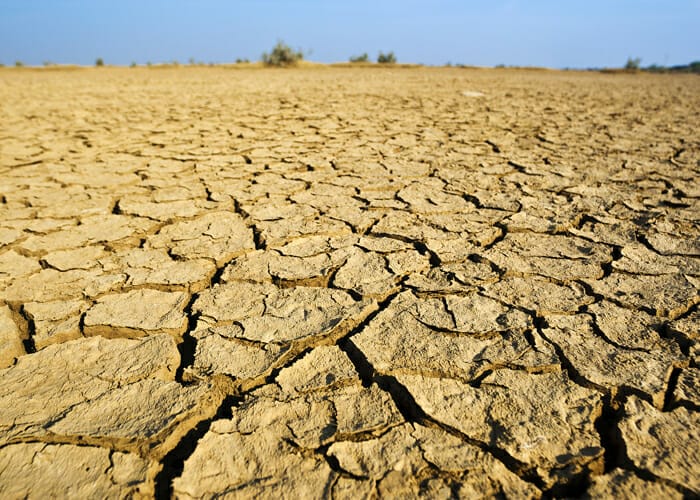
Cracked Ground From The Indian Subcontinent

The Climate Disclosure Standards Board (CDSB) and the Sustainability Accounting Standards Board (SASB) have worked together to produce a practical guide for companies looking to implement the Task Force on Climate Related Financial Disclosures (TCFD).

While more than 600 organisations have supported the TCFD, the implementation of its recommendations have been slow, so CDSB and SASB have drawn on their well-established reporting frameworks to produce the guide that shows companies, in a very practical way, how to implement the recommendations.

Director of research at SASB, David Parham, said there has been great interest from companies wishing to manage their exposure to climate risk, demonstrated by their commitment to the TCFD proposals.

“But one of the challenges has been in companies needing practical resources to implement the recommendations. Through our partnership, and our standards,we can give practical tools to companies to effectively implement.”

The guide is rooted in practical examples with “mock disclosures” created for three fictional companies in the oil and gas, automobile and agriculture industries.

“We chose those industries to show how each of them have very different climate-related risk exposure, and demonstrate how to use the tools to really robustly meet the TCFD recommendations – which can be done in any of those three industries using our guidance,” Parham said.

Sponsored Content

Institutional investors can take comfort in the fact that the frameworks used for disclosure are focused on disclosure information that is material to investors, Parham said.

“Investors can help advocate and encourage companies to use the framework so investors can get the information they need. It is also useful fromthe perspective of seeing how the quantitative metrics can inform an investors’ understanding of howthe companies are performing, and then interpret the effectiveness of a company’s governance of this risk and risk management of its strategy,” he said. “It can help investors see how important it is to have continuity and how KPIs help drive performance.”

It is also important for investors to have an understanding of how different reporting frameworks can work together to enhance the quality of information they are receiving, he added.

When the TCFD released its final recommendation in 2017, its chair Michael Bloomberg, who is also chair-emeritus of the SASB Foundation Board, said the widespread adoption of the taskforce’s recommendations would ensure that the effects of climate change become routinely considered in business and investment decisions.

“Adoption of these recommendations will also help companies better demonstrate responsibility and foresight in their consideration of climate issues. That will lead to smarter, more efficient allocation of capital, and help smooth the transition to a more sustainable, low-carbon economy,” he said in a letter to Mark Carney, chairman of the Financial Stability Board,at the launch of the report.

The premise of the new guide is to demonstrate that the principles-based TCFD recommendations can be less daunting to implement than they might originally appear.


Leave a Comment

La Caisse’s oil exit pays off as renewables portfolio pulls ahead of fossil fuels

La Caisse’s oil exit pays off as renewables portfolio pulls ahead of fossil fuels

Divesting from the oil sector has been a boon for La Caisse’s performance, as the Canadian pension giant says its energy investments have earned billions in value-add compared to the benchmark since the inception of its climate strategy. Head of sustainability Bertrand Millot unpacks the fund’s approach in an interview with Top1000funds.com.

Sort content by

The future of engagement

Ben Caldecott from The Oxford Sustainable Finance Programme at the University of Oxford explains how emerging technologies, changing client preferences, new regulatory landscapes, and evolving economic geographies create new opportunities for more effective engagement and forms of active ownership.

Engagement needs more resources

Resources in the investment value chain have to shift away from financial modelling and trading towards stewardship and engagement according to Luba Nikulina, global head of manager research at Willis Towers Watson, speaking at the 8th Sustainable Finance Forum run by Oxford University.

LPs failing engagement in private equity

Engagement and stewardship in private equity has been left out in the cold. This is strange for an asset class with high returns and where the foundation is already in place for the asset manager to act on behalf of the asset owner for strong engagement. Bob Eccles encourages more action.

Investors should backoff policy: Kay

Pension funds have “no business” engaging with policy makers but instead should influence change through stewardship, which is also the main function of asset managers, according to John Kay, Supernumerary Fellow in Economics at St Johns College, Oxford University.

Investors debate engagement priorities

Should investors collectively prioritise engagement issues, and if so what is at the top of the list? This was one of the topics delegates discussed at the 8th Sustainable Finance Forum run by the Oxford University Smith School of Enterprise and the Environment together with The Rothschild Foundation and the KR Foundation.

Urgent policy action needed on climate

Last month Ceres convened the largest group of businesses calling for climate legislation in at least a decade. Their message was loud and clear: Congress must put forward policy responses equal to the severity of the climate crisis including a national price on carbon.

Previous




