
Investors should backoff policy: Kay

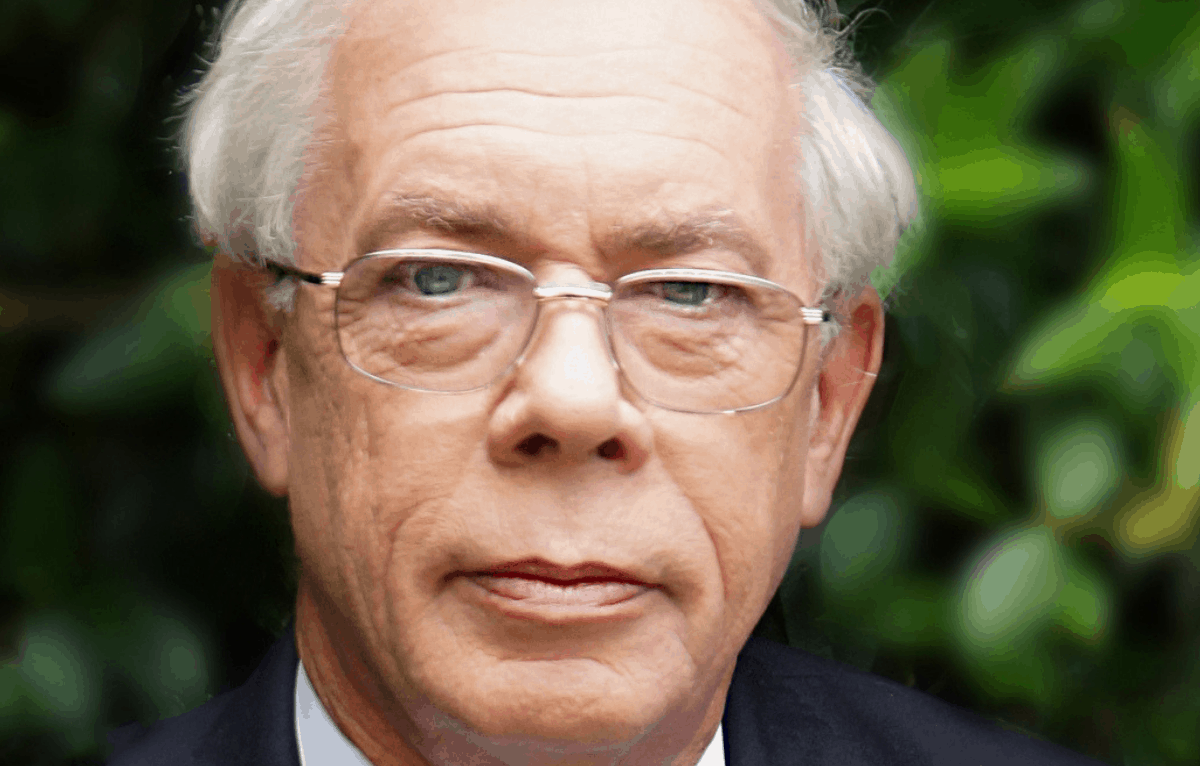
Pension funds have “no business” engaging with policy makers but instead should influence change through stewardship, which is also the main function of asset managers, according to John Kay, Supernumerary Fellow in Economics at St Johns College, Oxford University.

“As a pension fund I’m not sure you have any business engaging with policy makers. You can have your own personal views but you can’t have a view as a trustee of a pension fund,” he said at the 8th Sustainable Finance Forum. “Companies should also stop engaging with policymakers there is no legitimacy to this kind of lobbying. I want less funded political lobbying of all kinds.”

Kay said a dialogue needed to open up around what the legitimate activity of a business is, including the role of lobbying.

“What we need to do is amend the way these people think about their business, and change the rhetoric in how people talk about business,” he said.

Kay said that the rhetoric of “shareholder value” was being used as an excuse for businesses being run in the interests of a small number of people, mostly the senior employees.

“The great paradox in the rise of shareholder value, the rhetoric around business, is the description about what most businesses do is not correct – it’s repulsive and false,” he said. “We need to address that to solve the underlying problem of how we make business legitimate and respectable again.”

Sponsored Content

Kay said that the business of business, is business, and business is not about “doing good”.

“The corporation is not the vehicle for determining what we think a public benefit is. If the public good is to be determined by business people, you probably won’t like the concept of what that public good is. There’s not too little public engagement by companies, there is too much.”

Kay said the way to change the rhetoric is with different rhetoric.

“We’re talking about cultural changes. When people say you can’t do that, I say we have had a negative corporate cultural change since the 1980s, which indicates culture is malleable and if it has changed in one direction it can change in the other.”

Kay said it was imperative that asset owners collaborated in order to have impact.

“If you are a pension fund with limited resources you are a small shareholder in a particular company, even if you are Norges Bank or Blackrock you are a small shareholder. Getting together with others is key to this,” he said.

The Investor Forum was launched in the UK in response to the Kay Review of UK equity markets and long-term decision making in 2012, with the intention of promoting shared commitment to long-term strategies and sustainable wealth creation among asset owners, asset managers and companies.

“When I did the review, one outcome was to facilitate large shareholders working collectively to engage with companies. The Investor Forum is making it easier and giving an umbrella for institutional investors to work together. I hope we are moving in the right direction.”

Kay told delegates that stewardship was the main function of a large asset manager, and all players in the investment value chain needed to encourage them to get more resources to do that.

“Asset managers have tendencies to have a corporate governance department which is separate from portfolio management, they are not integrated despite how much they say it is true.”

Leave a Comment

Beyond asset classes: Active credit becomes the test case for Florida’s portfolio evolution

Beyond asset classes: Active credit becomes the test case for Florida’s portfolio evolution

Florida State Board of Administration has built an active credit portfolio spanning public and private markets, CIO Lamar Taylor says the initiative could be the first step in a broader shift away from traditional asset-class investing towards a framework centred on return drivers and risk exposures.

Sort content by

CPP: Why doing the right thing in TPA can look like losing

CPP Investments has argued that a TPA portfolio has a high chance of appearing to have underperformed when evaluated against traditional SAA benchmarks, even when the underlying investment decisions are sound. In a recent paper, the fund argues TPA portfolios should be judged on a broader scorecard.

CalPERS’ public and private equity reset shapes performance

CalPERS is continuing to reap the benefits of a sweeping overhaul of its public and private equity programs, with the two asset classes, which are the biggest components in the portfolio, powering a 14.8 per cent return for the $637 billion fund in the last reporting period.

Why UniSuper CIO thinks the data centre party is over

The demand for AI driving data centre construction might be “insatiable”, but the chief investment officer of the $115 billion UniSuper thinks that investors could be taking on technology debt and misreading the regulatory tea leaves as they rush to buy digital infrastructure.

CPP, NBIM CEOs swap notes on leading through teams, not bureaucracy

In a high-level exchange between two of the world's largest and most sophisticated asset owners, CPP Investments’ chief executive John Graham shared a leadership lesson with Norges Bank Investment Management chief executive Nicolai Tangen: having an aligned senior team is one of the most critical things a leader can build. The two funds, which are consistently leaders in transparency, also exchanged playbooks on managing bureaucracy at large organisations.

The Austin advantage: Texas Teachers talks optimism, innovation and growth

Jase Auby, TRS's celebrated CIO, explains why TPA doesn't fit with its culture; why community push back on data centres could turn out to be an investor advantage, and argues the case for continuing to invest in fossil fuels. Top1000funds.com sat down with the CIO in his Austin office for an all-encompassing conversation.

Temasek lifts China exposure by $7.7b, commits to doubling AI bet

Singaporean sovereign wealth fund Temasek saw its exposure to China surge by $7.7 billion in the last reporting period as valuations rebounded in the world’s second-largest economy. It is also planning to more than double its exposure to the AI value chain within the next five years.



