
New guide for implementing climate risks

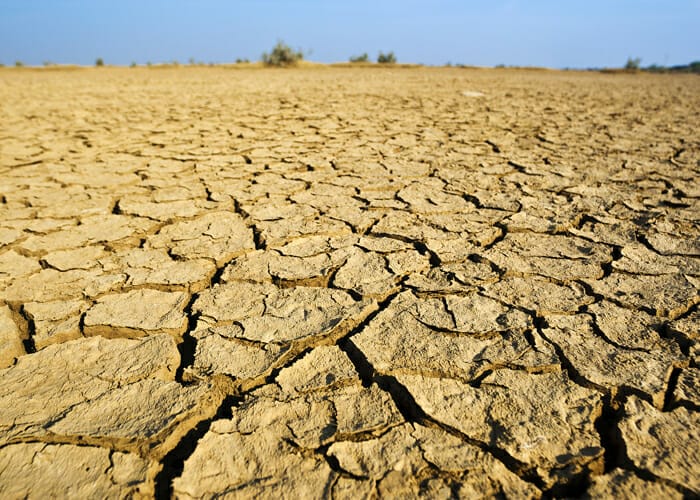
Cracked Ground From The Indian Subcontinent

The Climate Disclosure Standards Board (CDSB) and the Sustainability Accounting Standards Board (SASB) have worked together to produce a practical guide for companies looking to implement the Task Force on Climate Related Financial Disclosures (TCFD).

While more than 600 organisations have supported the TCFD, the implementation of its recommendations have been slow, so CDSB and SASB have drawn on their well-established reporting frameworks to produce the guide that shows companies, in a very practical way, how to implement the recommendations.

Director of research at SASB, David Parham, said there has been great interest from companies wishing to manage their exposure to climate risk, demonstrated by their commitment to the TCFD proposals.

“But one of the challenges has been in companies needing practical resources to implement the recommendations. Through our partnership, and our standards,we can give practical tools to companies to effectively implement.”

The guide is rooted in practical examples with “mock disclosures” created for three fictional companies in the oil and gas, automobile and agriculture industries.

“We chose those industries to show how each of them have very different climate-related risk exposure, and demonstrate how to use the tools to really robustly meet the TCFD recommendations – which can be done in any of those three industries using our guidance,” Parham said.

Sponsored Content

Institutional investors can take comfort in the fact that the frameworks used for disclosure are focused on disclosure information that is material to investors, Parham said.

“Investors can help advocate and encourage companies to use the framework so investors can get the information they need. It is also useful fromthe perspective of seeing how the quantitative metrics can inform an investors’ understanding of howthe companies are performing, and then interpret the effectiveness of a company’s governance of this risk and risk management of its strategy,” he said. “It can help investors see how important it is to have continuity and how KPIs help drive performance.”

It is also important for investors to have an understanding of how different reporting frameworks can work together to enhance the quality of information they are receiving, he added.

When the TCFD released its final recommendation in 2017, its chair Michael Bloomberg, who is also chair-emeritus of the SASB Foundation Board, said the widespread adoption of the taskforce’s recommendations would ensure that the effects of climate change become routinely considered in business and investment decisions.

“Adoption of these recommendations will also help companies better demonstrate responsibility and foresight in their consideration of climate issues. That will lead to smarter, more efficient allocation of capital, and help smooth the transition to a more sustainable, low-carbon economy,” he said in a letter to Mark Carney, chairman of the Financial Stability Board,at the launch of the report.

The premise of the new guide is to demonstrate that the principles-based TCFD recommendations can be less daunting to implement than they might originally appear.


Leave a Comment

La Caisse’s oil exit pays off as renewables portfolio pulls ahead of fossil fuels

La Caisse’s oil exit pays off as renewables portfolio pulls ahead of fossil fuels

Divesting from the oil sector has been a boon for La Caisse’s performance, as the Canadian pension giant says its energy investments have earned billions in value-add compared to the benchmark since the inception of its climate strategy. Head of sustainability Bertrand Millot unpacks the fund’s approach in an interview with Top1000funds.com.

Sort content by

Divestment and impact: Detailhandel pioneers participant engagement

Dutch fund Detailhandel takes participant engagement to a new level as it begins to integrate feedback and preferences from a three day beneficiary forum into investment strategy.

The complexity, limitation, evolution and liberation of climate benchmarks

Benchmarks are highlighted in the recent CFA Institute paper as among the historical norms that make investing in climate challenging. MSCI Institute’s Linda-Eling Lee talks about the complexities and evolution of climate benchmarks including the use of balanced scorecard-toolkits that are improving the technology.

How to nature proof portfolios

Natural capital holds more risk and opportunity than climate change, but where do investors start? Top1000funds.com takes a deep dive exploring the investors that are making inroads to nature-proofing their portfolios.

Why patient capital will be rewarded for investing in timberland

The fundamentals that underpin timberland, and their strategic role on the path to net zero, will reward consistent investment in productive natural capital. Aleksi Ehtee, timberland team lead, Church Commissioners for England explains why forestry is a real opportunity for patient capital to tap into favourable long-term supply-demand dynamics.

CFA’s guide to the whole framework on net-zero

Climate risk has certain features that stretch the imaginations and toolkits of investors, meaning a new framework that includes systems thinking is necessary to branch out from the narrow measurement and management of risk predicated on modern portfolio theory, says Roger Urwin.

Utah’s URS: Why fossil fuels and alt energy hold key to climate crisis

US public funds should stop wasting time on thinly veiled political activism, ditch ESG conferences and repurpose most of their sustainability staff, says URS’ CIO John Skjervem. Instead they should invest in proven energy investments and move from either/or to both/and which allows fossil fuels to jostle alongside alt energy.

Previous




