
New guide for implementing climate risks

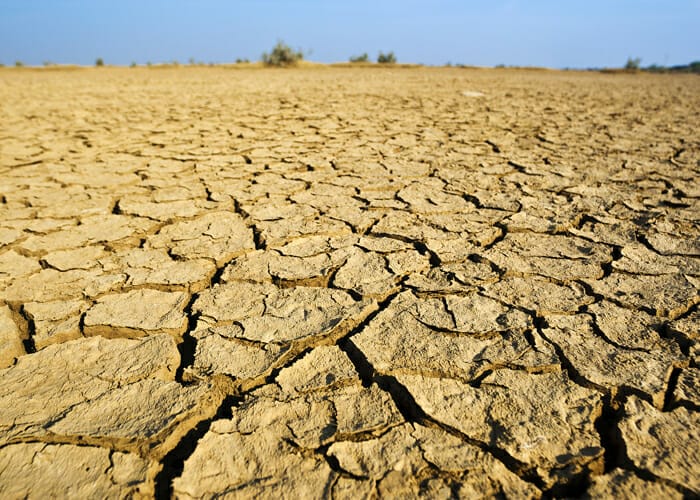
Cracked Ground From The Indian Subcontinent

The Climate Disclosure Standards Board (CDSB) and the Sustainability Accounting Standards Board (SASB) have worked together to produce a practical guide for companies looking to implement the Task Force on Climate Related Financial Disclosures (TCFD).

While more than 600 organisations have supported the TCFD, the implementation of its recommendations have been slow, so CDSB and SASB have drawn on their well-established reporting frameworks to produce the guide that shows companies, in a very practical way, how to implement the recommendations.

Director of research at SASB, David Parham, said there has been great interest from companies wishing to manage their exposure to climate risk, demonstrated by their commitment to the TCFD proposals.

“But one of the challenges has been in companies needing practical resources to implement the recommendations. Through our partnership, and our standards,we can give practical tools to companies to effectively implement.”

The guide is rooted in practical examples with “mock disclosures” created for three fictional companies in the oil and gas, automobile and agriculture industries.

“We chose those industries to show how each of them have very different climate-related risk exposure, and demonstrate how to use the tools to really robustly meet the TCFD recommendations – which can be done in any of those three industries using our guidance,” Parham said.

Sponsored Content

Institutional investors can take comfort in the fact that the frameworks used for disclosure are focused on disclosure information that is material to investors, Parham said.

“Investors can help advocate and encourage companies to use the framework so investors can get the information they need. It is also useful fromthe perspective of seeing how the quantitative metrics can inform an investors’ understanding of howthe companies are performing, and then interpret the effectiveness of a company’s governance of this risk and risk management of its strategy,” he said. “It can help investors see how important it is to have continuity and how KPIs help drive performance.”

It is also important for investors to have an understanding of how different reporting frameworks can work together to enhance the quality of information they are receiving, he added.

When the TCFD released its final recommendation in 2017, its chair Michael Bloomberg, who is also chair-emeritus of the SASB Foundation Board, said the widespread adoption of the taskforce’s recommendations would ensure that the effects of climate change become routinely considered in business and investment decisions.

“Adoption of these recommendations will also help companies better demonstrate responsibility and foresight in their consideration of climate issues. That will lead to smarter, more efficient allocation of capital, and help smooth the transition to a more sustainable, low-carbon economy,” he said in a letter to Mark Carney, chairman of the Financial Stability Board,at the launch of the report.

The premise of the new guide is to demonstrate that the principles-based TCFD recommendations can be less daunting to implement than they might originally appear.


Leave a Comment

La Caisse’s oil exit pays off as renewables portfolio pulls ahead of fossil fuels

La Caisse’s oil exit pays off as renewables portfolio pulls ahead of fossil fuels

Divesting from the oil sector has been a boon for La Caisse’s performance, as the Canadian pension giant says its energy investments have earned billions in value-add compared to the benchmark since the inception of its climate strategy. Head of sustainability Bertrand Millot unpacks the fund’s approach in an interview with Top1000funds.com.

Sort content by

Steinem: No more labels, just humanity

Gloria Steinem tells institutional investors it is time to ditch the labels that describe our gender, class or ethnicity and urged the investment community to look at investments through the lens of gender, class and racial equality.

Material climate change already here

The impact of climate change is already material, said Woodwell Climate Research Center’s Philip Duffy who warns that thawing permafrost could mean the loss of control of ever being able to manage climate change. Elsewhere, he urged investors to use their voice to bring about change.

How to fix a broken labour market

In an impassioned call Sharan Burrow, general secretary of the ITUC which represents 200 million workers in 163 countries called on institutional investors to do more to protect workers rights.

Nordhaus and ‘No Regrets’

Nobel Prize winner Professor William Nordhaus, Sterling Professor of Economics and Professor of Forestry and Environmental Studies at Yale University, explains his theory of ‘No Regrets’ whereby companies can integrate ESG at a level that brings real benefits for society but has limited impact on the corporate.

APG and NYC talk Amazon push back

Two of the world’s most influential institutional investors are hitting a brick wall in their attempts to engage with Amazon’s board on workplace safety. Every time the Netherland's APG and the office of New York City Comptroller, fiduciary to New York city’s five pension funds, try to engage with the board at the tech giant in which they own a combined $6.5 billion they get push back from management.

The path to net zero

Investors from Brunel, Wespath and Robeco talk about the challenges of shaping their net zero portfolios including data, benchmarks and holding managers to account.

Previous




