
Managers eye Brunel’s private markets push

Brunel Pension Partnership, the £31 billion asset manager for 10 local authority funds in the United Kingdom, is in the process of allocating to a new cohort of managers across private equity and debt, infrastructure, and secured income. Around £6 billion has already been allocated to private markets in two previous cycles in 2018 and 2020 with a further £2 billion about to be given to mostly new managers.

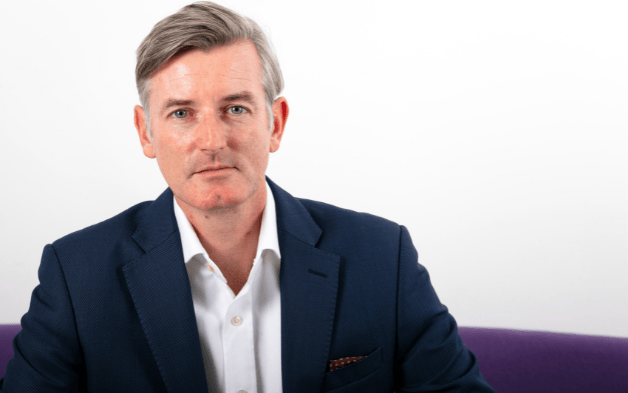
The latest wave of mandates offers a bonanza for private market managers. In private debt Brunel is looking for between five and six primary funds and expects to allocate to around ten new funds in private equity. Still working through how the infrastructure mandates will look, CIO David Vickers, who joined Brunel in January 2021 from Russell Investment where he was head of multi assets for EMEA, estimates 50 per cent of the allocation will go to between 6-10 primary funds and the remainder to  co-investment and secondary opportunities.

He is looking for between three to four managers in secured income, although he notes it is likely the allocation will go to Brunel’s existing managers in this space – if they have capacity. “They are doing a good job and secured income funds are more evergreen,” he says.

In the first cycle in 2018, £1.2 billion was transitioned into private equity, infrastructure and secured income, comprising a mix of long-term inflation linked cashflows mostly in infrastructure and property. “Brunel asked partner funds where they wanted to invest and then built the allocation,” says Vickers. In the second wave in 2020, Brunel separated the infrastructure allocation into general infrastructure and renewables and expanded the fund choice to include private debt, attracting £2.9 billion from partner funds. All the capital from cycle one is now committed; cycle two capital is currently being committed.

Picks and shovels

Vickers describes the hunt for new private market relationships as an ongoing and permanent scouring of the market to see which funds are open, and where they are in their capital raising structure. The support of partners, like Aksia in private debt and StepStone in infrastructure, help open doors to independent projects where Brunel can co co-invest and save on fees, as well as expertise on funds and secondary products. In private equity and secured income Brunel has more informal relationships though still calls on Aksia and StepStone for introductions. “We don’t award mandates, we sign on with partners,” says Vickers.

All mandates in cycle three will have to meet Brunel’s strong ESG criteria where Vickers has a particular eye on managers mindful of the evolution in opportunities. For example, Brunel had a standalone renewables fund four years ago, indicative of the opportunities in solar and wind at the time. Today the amount of money going into wind and solar has forced prices up and returns down, while leverage and ensuing risk is also creeping in as investment opportunities move away from the typical characteristics of infrastructure. “Some projects are going onto merchant pricing which increases volatility,” he observes.

Sponsored Content

Brunel’s focus has shifted to finding the pick and shovel investments of the transition (like battery storage, efficiency gains and mitigation) rather than early- stage gold panning equivalents. He also believes that today’s high oil price will spur more investment in renewable technology to store energy and provide grid stability.

Fee considerations

Although fees are a priority – Brunel has saved £33 million in fees since inception and is targeting a £560 million fee saving by 2030 – Vickers doesn’t filter managers according to their fee. “We choose managers we like and only then do we have the fee conversation.” Moreover, he notes that managers already have a good idea of Brunel’s “rack rate” and that the pool’s buying power is significant: third-party analysis reveals that total manager fees work out at 13 basis points less expensive than the market average. “It’s different being able to negotiate with a pot of money.”

He notes that fee breaks come in as the assets grow and pooling gathers pace, hitting new tier levels without involving further negotiation. He also believes Brunel’s sustainability kite mark carries a halo effect that helps negotiate fees further. “Asset managers say when we invest it helps them open the door to others.” It leads him to reflect on the sense of pride Brunel has in an emerging trend: helping external managers shape and change their approach to ESG, particularly around disclosure. For example, he links ESG integration and change at one manager running a multi-asset credit fund specifically to Brunel’s influence. “There is a nice knock-on effect if we can shape their business.”

Progress

Private market allocations are the last batch of assets still waiting to transition from the individual member funds to Brunel which now runs around 80 per cent of total member assets. Private markets were always going to take longer to transition because legacy programs must first return capital to the partner funds before it can be invested again, explains Vickers. “Global equity and bond funds were always the low hanging fruit.”

Still, he is cognisant of the fact Brunel’s pooling process is well advanced, something he attributes to the collegiate nature of the ten funds in the pool. “We have managed to get so far down the transition path because we haven’t had to bash together organisations that didn’t want to connect.” Partner funds set their own risk and return targets and decide how and where they want to invest. Brunel is responsible for creating the funds required and monitoring them. “We don’t have a hand on the risk on or off tiller,” he says.

Perhaps ESG provides the binding thread between Brunel’s ten. The asset owners combined enthusiasm and commitment to net zero ensures new product offerings and pooling opportunities are quickly taken up like the £3 billion already allocated to a new net zero passive allocation. Brunel worked with benchmark provider FTSE to offer partner funds a passive and net zero aligned investment option via a series of Paris-aligned benchmarks designed to tilt to green revenues. The benchmarks also avoid the common ailment of many green benchmarks – high exposure to lenders financing fossil fuels. “When we looked at what’s out there, we found many indexes are underweight energy stocks but let financials float to the top. Yet these banks are financing oil and gas, and we need to engage with them as much as the energy companies,” concludes Vickers.


Leave a Comment

Sort content by

Equity risk still dominates CalPERS portfolio

CalPERS’ 52 per cent asset allocation to global equities accounts for 69 per cent of its total risk allocation, according to the fund’s risk management update to the end of June.mrec4inarticleinline Sponsored Content scnative1 scnative2 scnative3

ADIA positive on equities outlook

The world’s largest SWF, the Abu Dhabi Investment Authority (ADIA), added a number of new portfolios to equities and fixed income and reorganised its internal passive equities team in 2010, according to its second ever annual report, in which it also predicted a positive outlook for equities.mrec4inarticleinline Sponsored Content scnative1 scnative2 scnative3

PRI signatories report improved ESG integration

Signatories to the UN-backed Principles for Responsible Investment (PRI) have improved the transparency of their reporting, ESG integration and active management, an annual survey reveals.mrec4inarticleinline Sponsored Content scnative1 scnative2 scnative3

Investment decision-makers at world’s largest funds to gather in Beijing

Dr Fan Gang, a member of the Chinese Government’s monetary policy committee, Professor Lasse Pedersen, member of the liquidity working group at the Reserve Bank, and Harvey Toor, chief risk officer of the Abu Dhabi Investment Council, are among the keynote presenters at conexust1f.flywheelstaging.com's inaugural symposium exclusively for investors. To access the program click here

Passive management doesn’t add up for mathematical investor

Investors in a low returns environment may be looking to lower their risk and costs through passive investing, but self-described mathematical investor, INTECH Investment Management, has steadfastly argued that the case for passive management doesn’t add up.mrec4inarticleinline Sponsored Content scnative1 scnative2 scnative3

Corporate governance conference focuses on financial sector regulation

World leaders need to set out priorities for corporate governance reform in order to bolster faltering efforts to restore market stability and economic growth, according to the institutional investors gathering in Paris for an annual corporate governance conference.mrec4inarticleinline Sponsored Content scnative1 scnative2 scnative3

Previous




