
At COP28, financial sector innovation bolsters headlines

COP28 in Dubai had all the ingredients for both decisive action and controversy. Given the UAE’s status as a significant fossil fuel producer, it was seen by many as the host likeliest both to commit significant resources as well as face criticism from climate campaigners.

Perhaps inevitably, both happened.

First, action. COP28 produced the most deliberate commitment from participants to move away from fossil fuels, in the form of its annual “global stocktake”. From day one, the UAE made it clear it would deliver on expectations for large scale financial commitments, demonstrated by the Emirati government’s pledge to create a $30 billion climate-focused investment fund, Alterra. This move was met with widespread praise and announcements of further support from other nations. Less noticed, but just as significant, was the announcement the following day that the multilateral funds set up under UN auspices would begin to coordinate their mitigation efforts.

Later, controversy. By day four, headlines quoting COP28 president, Sultan al-Jaber, as saying that there is “no science” behind calls to phase out fossil fuels cast a wide shadow.

As expected, the early news out of Dubai was both powerful and contentious. Looking back, however, there is much more cause for hope than doubt that can be taken from COP28.

Those on the ground, myself included, bore witness to a significant level of innovation on display, evidence of how much deep thinking has been going on behind the scenes in the finance sector. The launch of a climate finance new think thank, the Global Climate Finance Centre, hosted by the UAE’s Abu Dhabi Global Market and co-funded by ADQ, Blackrock, HSBC, Ninety One and others, was also a much noticed early announcement.

Sponsored Content

Elsewhere, participants delved into various novel investment strategies aimed at addressing the most critical global concerns. Among the proposals explored were specialized food and agriculture funds, notably from Principal Asset Management and Federated Hermes. These funds, aligning with the newly introduced TNFD regulations, aim to channel investments to improve food security for the world’s most vulnerable populations. Additionally, innovative approaches from State Street involving agricultural mortgages and the utilization of securitization techniques were discussed as mechanisms to increase financial flows for smaller-scale farmers.

In the race to achieve the ambitious goals set last week, allocating capital to high-emitting sectors will remain critical to real-world decarbonization. The role of private equity in this effort was a focal point for many. Multiple participants engaged in discussions centered around where private capital can make the most impact, particularly toward hard-to-abate assets that need to make the transition from “grey to green” The desire from investors to look beyond the consensus view on the role private markets can play in helping transition energy production towards a more sustainable mix was evident.

By the time the final text and global stocktake was published, it was clear that the intense multilateral effort had produced further progress, albeit after arduous negotiations. Were I focused on the short term, COP28 achieved too little. But, zooming out, I sense there are more capital and countries committed to this effort than ever before, and explicit mention of the shift away from fossil fuels is a sign of more to come. Furthermore, the work being done on the sidelines by the investment community bodes well for the effort to reach net zero.

From this point on, it will be incumbent on all those who made COP28 headlines – governments, corporates, and investors alike, to follow through with concrete action that helps build stakeholder trust in the multilateral process, and in the ability of business leaders to deliver change.

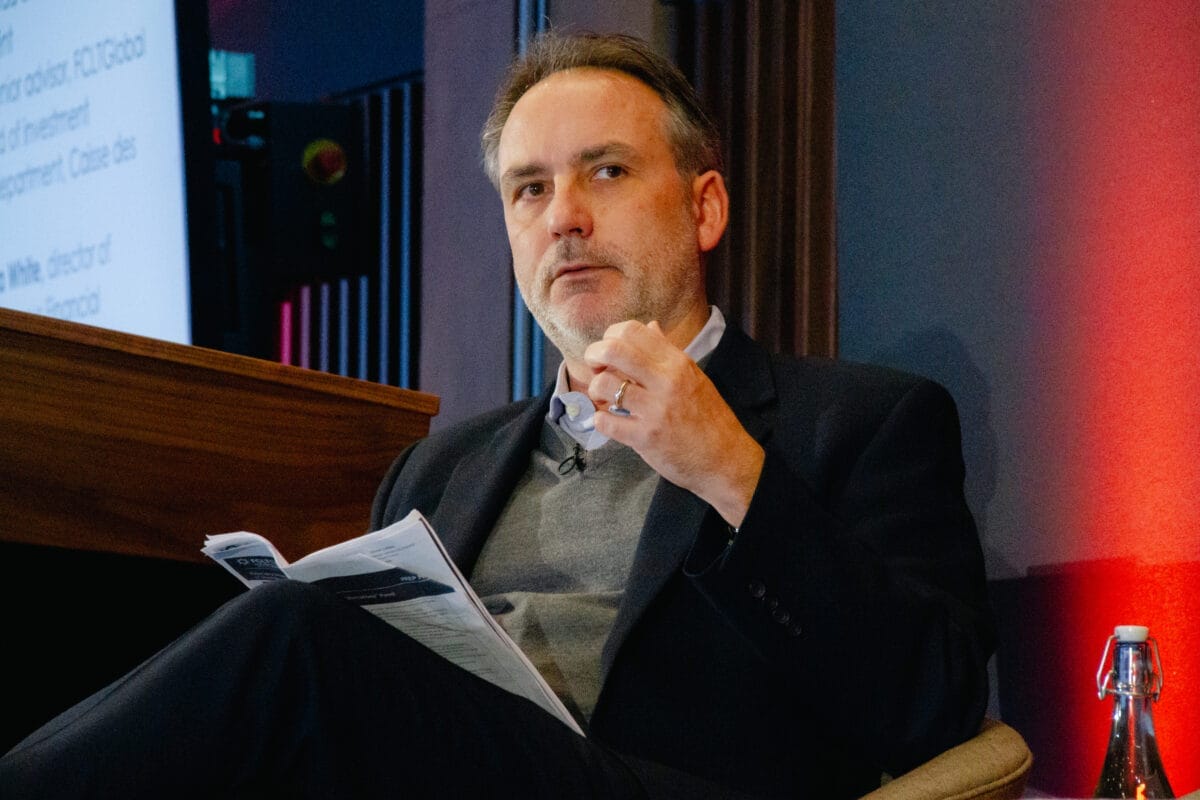
Olivier Lebleu is senior advisor at FCLTGlobal.

Leave a Comment

Why traditional investment committees can amplify group biases

Why traditional investment committees can amplify group biases

Investment committee meetings, a governance cornerstone at every asset owner organisation, run the risk of amplifying group biases and social dynamics, and can push the IC towards recommending more extreme investment positions collectively than the average of their individual views. Bernhard Scherer, head of portfolio implementation at ADIA, unpacks the thesis in a new paper.

Sort content by

NY Common makes further divestments, ups commitment to climate solutions 

The $260 billion New York State Common Retirement Fund will divest and restrict approximately $26.8 million of corporate bonds and actively traded public equities in eight integrated oil and gas companies, including ExxonMobil; and is doubling its commitment to the Sustainable Investments and Climate Solutions program.

Korea Investment Corporation focuses on alternatives push

KIC is looking to boost its alternatives allocation - particularly private credit - both directly and through managers. Influenced by what it sees as an unfolding AI-led industrial revolution it is looking for opportunities in fast-developing sectors including AI, semiconductors and healthcare, and has opened an office in Mumbai.

Investors trying to change the world: Why climate investing is so difficult

Asset owners are preparing their portfolios for the climate transition, reducing holdings in companies with high emissions and pledging billions to climate investments. But climate proofing portfolios is proving one of the most arduous and complex challenges investors have ever faced. Top1000funds.com takes a close look at the progress.

Denmark’s ATP creates new overlays to manage future bond equity correlation

ATP's Christian Kjær explains the rationale behind two new overlays to better navigate the risk of future correlations between bonds and equities which wrong footed the risk parity investor in 2022.

Embracing difference: Why investment teams must be cognitively diverse

Tough investment environments, pressure on costs and competition for jobs are creating pressure on investment teams to perform better. And investment professionals need to jettison some antiquated approaches to decision making to keep pace with social norms. Cognitive diversity in teams has been hailed as a saviour.

NBIM’s RI report showcases benefits of transparency

Risk-based divestments increased returns on Norges Bank Investment Management's equity portfolio by 0.07 per cent in 2023. Measuring the impact of its investment decisions, reported in NBIM's latest RI Report, is part of a concerted drive for greater transparency by the manager of Norway's Government Pension Fund Global.

Previous



