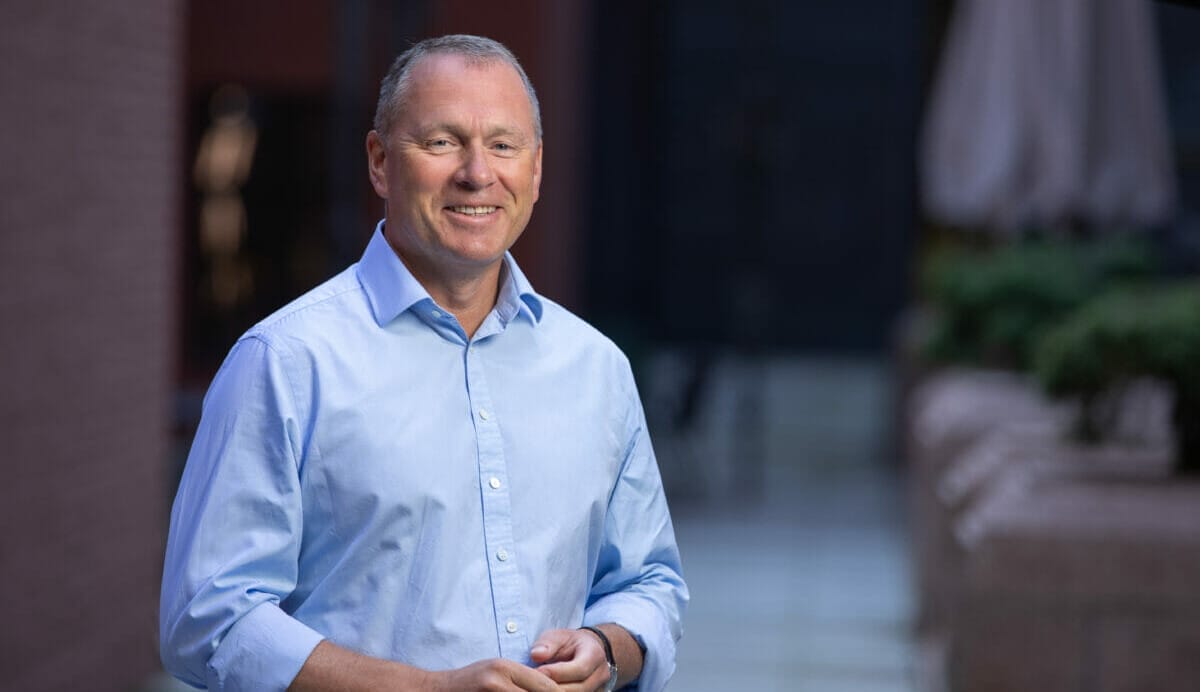

Brightwell ponders implications of shake up in UK pension scheme surpluses

Up until very recently, ‘DB pension schemes’ and ‘surplus’ were not phrases often heard in the same sentence, says Morten Nilsson, chief executive of investment manager Brightwell which manages the assets of the £47 billion British Telecom Pension Scheme, BTPS, one of the largest private sector defined benefit schemes in the UK

But thanks to rising interest rates making it cheaper for these schemes to meet the costs of their pension obligations, recent figures from The Pensions Regulator (TPR) reveal that out of around 5,000 defined benefit (DB) schemes in the UK, over 3,750 are now in surplus on a low dependency basis with a further 950 schemes approaching surplus.

Writing in a recent posting on Brightwell’s website, Nilsson calls the aggregate surplus totals of £250 billion, roughly 17 per cent of total DB assets, “staggering.”

“With such eye watering figures, it’s not surprising that the government is consulting with the industry on how to put this money to use. HMRC analysis shows that just £180 million in surplus has been successfully extracted between March 2018 and March 2023. This is largely because most schemes are unable to access surplus except at ‘wind up’.”

During wind-up, employers offload their pension schemes to insurers who promise to pay employees’ retirement payments at a fixed level under so-called bulk annuity arrangements.

As schemes seek to complete a transaction with an insurer, they typically move out of riskier assets such as equities and into bonds.

Sponsored Content

But he believes the rationale of such large value transfers of returns and surplus from a pension scheme to an insurance company, when pension funds could stay in control, benefiting their sponsor, is under more scrutiny. “Many schemes are questioning whether buy-out is in fact the ‘gold standard’ or whether they risk ‘selling the family silver.’”

Nilsson continues that buyouts mean pension funds are taking money away from sponsors that could otherwise be invested in the UK economy – or wherever they operate. The new laws could allow pension funds to share the surplus subject to the “appropriate funding levels,” encouraging schemes to “invest for surplus in productive asset allocations.”

Still, barriers to any change of mindset are high, some of which are outlined in research by Mallowstreet which gathered analysis from 27 pension schemes with over £1 billion AUM. Like the fact surplus generation is not an objective for trustee boards. Schemes argue they are run to meet the promised benefits to members and protect their outcomes, not to increase the return to the sponsor.

Another challenge lies in the fact a surplus can swiftly change to deficit. Schemes could find themselves paying out surplus one year, and being underfunded the next.

“Scheme funding is only ever a snapshot in time and the recent volatility shows that some unhedged schemes can easily swing from deficit to surplus in a relatively short period of time,” he warns.

Moreover, the fact the majority of UK DB schemes are closed and mature means few want to introduce greater investment risk. They are largely adopting a cash flow matching strategy that reduces dependency on their sponsors and the DB funding regime has historically encouraged schemes to de-risk and focus on cashflow matching as they mature.

Nilsson concludes that if the government wants to increase pension scheme’s investment in “productive assets,” changing the rules around surplus is unlikely to make a difference. But he says providing more flexibility around surplus intuitively feels like a good thing.

Using the surplus to enhance DB or DC benefits, or as a volatility buffer, could be attractive. Making it easier for surplus to be returned to sponsors may be helpful in giving them greater comfort on avoiding risks of overfunding. It could also allow greater investment in their own business priorities – productive finance in a more direct way. From the trustee perspective, it could provide the ability to make discretionary one-off payments to members.

Leave a Comment

PMT talks infra equity and how to balance stock concentration risk

PMT talks infra equity and how to balance stock concentration risk

Scenario testing has put inflation risk front and centre at PMT, the Netherlands’ third largest pension fund, and it's driving the investor to take stock of the inflation protection it gets from infrastructure. In an interview with Top1000funds.com, chief investment officer Hartwig Liersch unpacks the risk, as well as another initiative where it's balancing concentration risk in the equity allocation without hurting returns.

Sort content by

Returns, resilience and reinvention: What private markets’ top brass are worried about

Senior executives from some of the world's largest private market managers gathered in Berlin this month with a collective understanding: managers who move slowly on AI face not just weaker returns but the risk of owning businesses that have been competitively displaced before they can exit.

What a brief encounter with Elon Musk taught me about the limits of capitalism

In 2013, on the sidelines of the Milken Conference at the Beverly Hilton, my friend and then-colleague Sean Scallan and I found ourselves in a seven-minute private conversation with Elon Musk.   He was not yet the figure he is today. Tesla was struggling. SpaceX had launched but not yet proven itself. The idea of humans

How CIOs are building portfolios for an unpredictable world

As opposing macroeconomic and geopolitical forces collide, chief investment officers at leading pension funds say that trying to predict the future is a “loser’s game”. The question today is no longer what comes next, but how to build a portfolio that holds together in any investment regime.

Assault on universities fracturing the ‘social compact’ behind US growth

The breakdown of a decades-old bargain between the US government and its research universities threatens the engine that has driven American productivity and economic growth since the end of World War II, the Top1000funds.com Fiduciary Investors Symposium at Harvard heard.

TPA to usher in clearer accountability at CalPERS

CalPERS chief investment officer Stephen Gilmore said the $650 billion fund’s upcoming shift to a total portfolio approach will sharpen investment accountability and help it focus capital allocation decisions on fund-level objectives.

Blue Owl co-founder on doing fewer things better

In a fireside chat at FIS Harvard, Blue Owl co-founder Doug Ostrover said the fast-growing alternatives shop won’t expand “just for the sake of hubris” as it pursues market leadership through a tightly defined set of offerings. He also unpacked the recent redemption pressure the firm was under and how it plans to move past it.