
Why liquidity management will be harder in a post-COVID-19 world

Managing liquidity stresses is a fact of life for defined contribution funds, but the unprecedented early release schemes introduced by both the Australian and United States governments during the onset of Covid-19 brought this challenge to a new level.

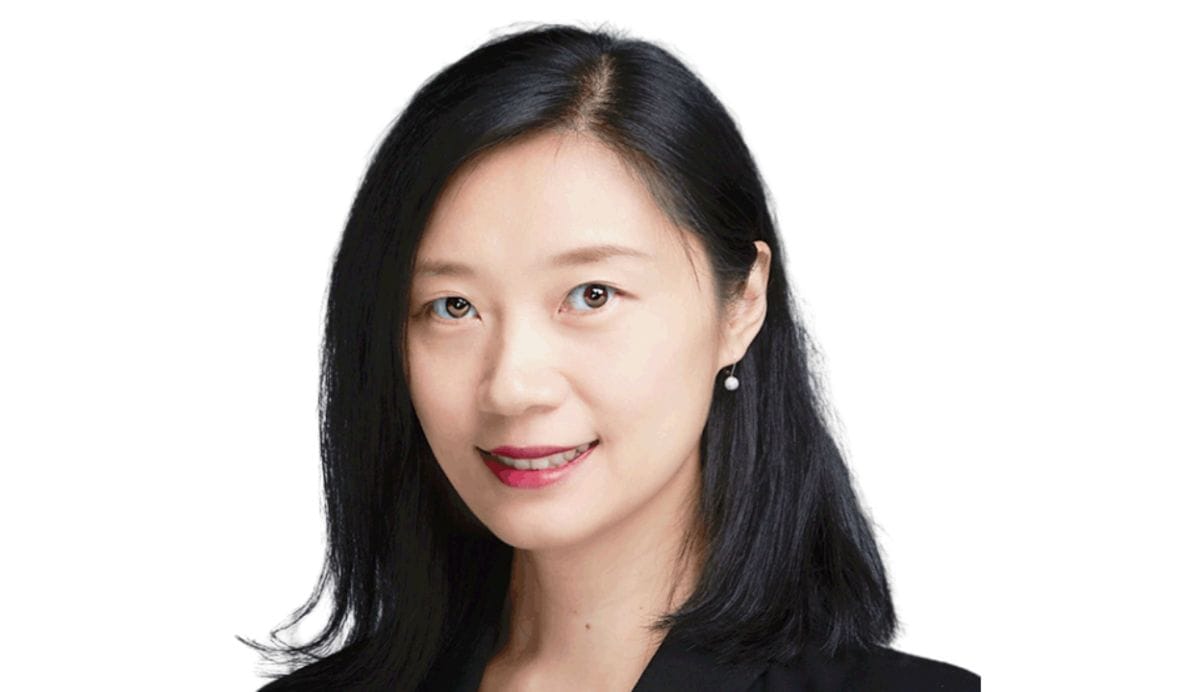
The superannuation landscape may be permanently changed on the back of this precedent, and collective defined contribution plans such as Australian superannuation funds and UK master trusts need to be prepared for either participant actions such as member switching, or government actions such as early release schemes, argues Michelle Teng of PGIM in a new research report (Super Funds & Master Trusts in a World of Member Switching, Early Release Schemes & Climate Calamities, available via the link).

Speaking to Conexus Financial managing editor Julia Newbould on the ‘Insight for Outcomes’ podcast series, Teng said funds were facing the confluence of two liquidity-challenging trends: the introduction of early release schemes and encouragement from governments that they support economic growth by investing in illiquid private assets like private equity and infrastructure.

Prudent CIOs are unlikely to keep asset allocations unchanged in the face of this new landscape, Teng said.

“Generally, CIOs would move some of the risk-seeking assets, which tend to be less liquid, to lower-risk and more liquid assets, for example from private assets to stocks, or from stocks to bonds and cash,” Teng said. “This change of portfolio allocation to better manage liquidity risk incurs a hidden cost of expected portfolio performance that affect all participants.”

But holding extra liquidity comes at a cost to performance, and funds cannot afford to respond to heightened liquidity risks by simply becoming defensive, particularly now that Australian funds are subject to the Australian Prudential Regulation Authority’s annual performance test, Teng said.

Sponsored Content

Rather, they need more advanced tools to help them quantify the cost of adapting their portfolios and make more confident asset allocation decisions.

“The challenge for CIOs is to coordinate their top-down asset allocations with their bottom-up private asset investing activities, and in the meantime they need to meet a number of liquidity demands,” Teng said.

Newbould asked whether early release schemes had shown governments may be willing to make funds available during natural catastrophes, which may become more frequent as the planet warms up.

“The short answer is we don’t know, but there is a possibility,” Teng said.

Members may rightfully question the point of having a retirement plan if they cannot afford to rebuild their house, she said, noting the United States passed legislation in 2021 allowing disaster distributions from retirement plans for calamities other than the Covid-19 pandemic.

More broadly, the impact of these decisions from governments will go far beyond the Covid-19 pandemic, Teng said, raising awareness across the industry about how to better manage liquidity.

Industry participants, including policymakers, need to better understand the tradeoff between the liberality of early access programs and expected portfolio performance in the long term, she said.

“Our research may help governments and policymakers identify portfolio allocation consequences and costs of contemplated rule changes,” Teng said. “These costs would be borne by all participants.”

Leave a Comment

La Caisse’s oil exit pays off as renewables portfolio pulls ahead of fossil fuels

La Caisse’s oil exit pays off as renewables portfolio pulls ahead of fossil fuels

Divesting from the oil sector has been a boon for La Caisse’s performance, as the Canadian pension giant says its energy investments have earned billions in value-add compared to the benchmark since the inception of its climate strategy. Head of sustainability Bertrand Millot unpacks the fund’s approach in an interview with Top1000funds.com.

Sort content by

Beyond traditional portfolio construction: incorporating uncertainty

Incorporating uncertainty into the asset allocation process is a complicated but essential ingredient of building portfolio resilience, something investors are valuing more than ever in an environment where inflation, geopolitical and climate risks dominate. GIC and BlackRock have both developed asset allocation frameworks that incorporate investors’ aversion for uncertainty.

Climate policy key to balancing incoming economic shocks

The methods central banks use to predict inflation are breaking down, and world governments will need to look beyond monetary policy and incorporate fiscal and climate policy levers to balance fragile economies, according to renowned economics professor Warwick McKibbin.

Leverage: Friend or foe?

Against the backdrop of rising rates, market turmoil and pension funds’ ever-growing illiquid allocations, leverage is going to increasingly come under the spotlight. Today’s changing macro picture of increasing interest rates and rising borrowing costs will put pressure on pension funds to ensure financing costs are compensated with expected returns.

Gulf SWFs have most exposure to Russia as crisis grows

Gulf SWFs funds face some of the biggest losses to their investments in Russia, particularly through investing alongside Russia's RDIF, a fund set up to attract foreign capital into the country.

Kotkin warns of Ukraine break up as key geopolitical risk

It is not war between Russia and Ukraine that investors should be concerned about, according to Professor Stephen Kotkin, but the destabilising effects of Russia’s actions that could impact globalisation and harm the west. Watch this video interview with Princeton University's geopolitical expert.

Climate tops risks, complicated by pandemic

Climate action failure tops the World Economic Forum’s Global Risks Report 2022 as the number one long-term threat to the world. The pandemic has added further complication with the resulting divergent economic recovery threatening the collaboration needed on climate and other global challenges.

Previous




